Political transitions often begin long before official announcements are made. They gather quietly, like weather shifting beyond the horizon. Conversations move through parliamentary corridors, private meetings, and party gatherings. Names are spoken with increasing certainty. Possibilities gradually become expectations. By the time a formal contest arrives, the outcome can sometimes seem to have been written into the atmosphere already.
Such is the mood settling over Westminster as the Labour Party prepares for a leadership contest that may prove less a battle than a confirmation. In the days following Prime Minister Keir Starmer’s decision to step down, attention has increasingly focused on Andy Burnham, the former Mayor of Greater Manchester whose path toward the party leadership appears remarkably clear.
The timing carries a sense of political acceleration. Only recently, Burnham returned to the House of Commons after winning a by-election in Makerfield, a victory widely interpreted as both a personal endorsement and a signal of growing dissatisfaction within Labour’s ranks. His return to Parliament was accompanied by a clear ambition: to place himself at the center of the conversation about Labour’s future.
Now, with Starmer preparing to leave office after a turbulent two-year premiership, that future appears to be approaching faster than many anticipated. Support has gathered around Burnham with notable speed. Former Health Secretary Wes Streeting, once considered his most serious rival, has endorsed him rather than mount a challenge of his own. The decision has fueled speculation that the leadership contest could become an uncontested transition rather than a prolonged internal struggle.
For Labour, the prospect of a smooth succession offers relief after months of political uncertainty. The party remains in government, yet it faces mounting pressures from multiple directions. Economic growth has disappointed expectations, public services continue to face strain, and voters increasingly divide their support among emerging alternatives on both the left and right. Labour strategists are keenly aware that extended infighting could deepen those challenges.
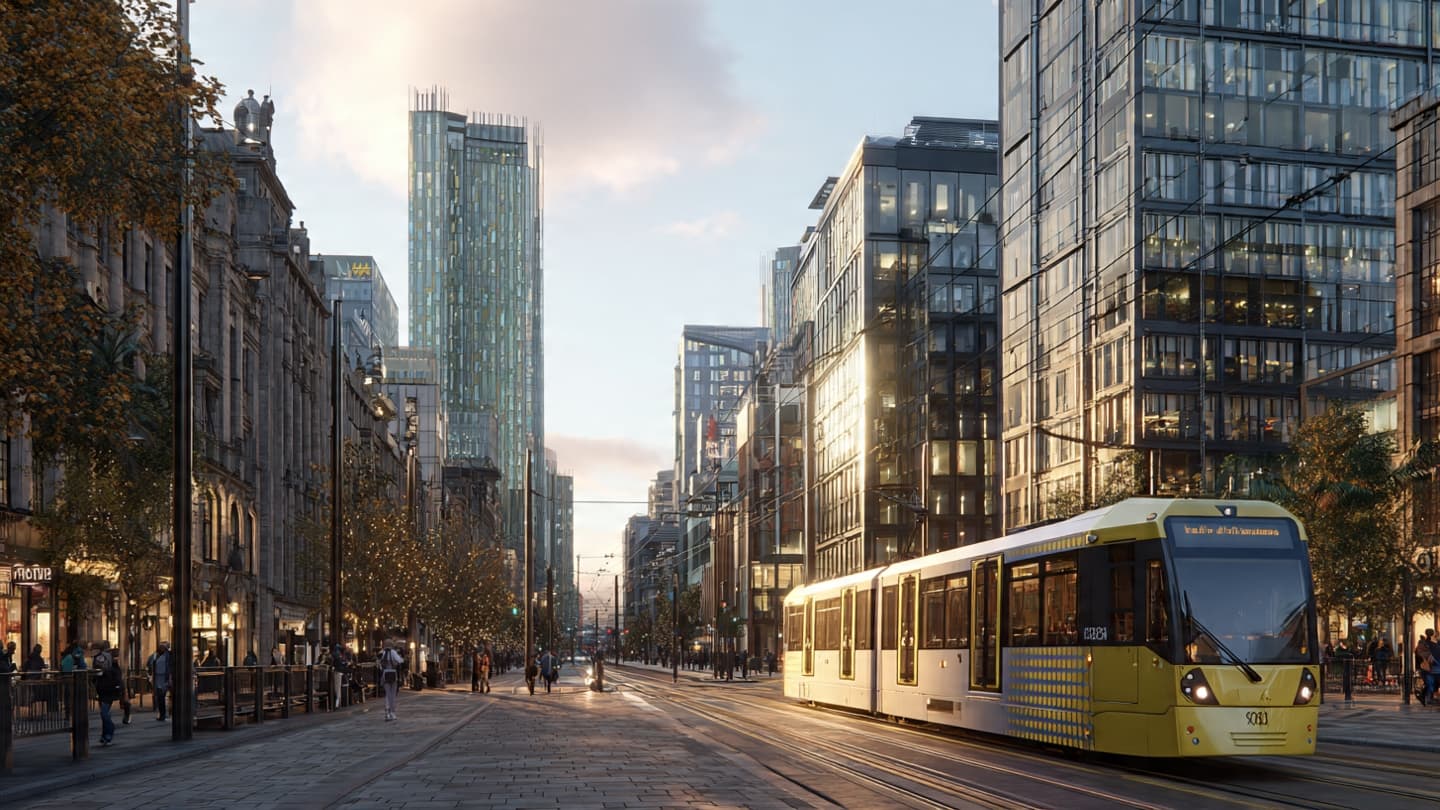
Burnham enters this moment with a political identity shaped far from Westminster. During his years leading Greater Manchester, he cultivated a reputation as a pragmatic advocate for regional development and local empowerment. Supporters often point to what has become known as “Manchesterism,” a model emphasizing cooperation between government, business, and local communities. The concept helped transform Burnham into one of Labour’s most recognizable figures outside London and now serves as the foundation of his national appeal.
Yet familiarity and popularity do not automatically answer every question. Some Labour members have argued that a leadership contest should take place even if Burnham is favored to win. Their reasoning is less about opposition than examination. They want a public discussion of economic priorities, fiscal policy, public services, and Britain's long-term direction before a new prime minister takes office. Burnham’s broad vision is well known; the details of how he intends to govern the country remain less clearly defined.
Outside Westminster, financial markets have largely greeted the prospect of transition with calm. Investors appear reassured by the likelihood of an orderly handover rather than a prolonged period of instability. After years in which Britain has experienced repeated changes in leadership, predictability itself has become a valued political commodity. Analysts note that the country may soon welcome its seventh prime minister since the Brexit referendum a decade ago, a reminder of how frequently the nation’s political landscape has shifted.
The symbolism of Burnham’s rise is also difficult to ignore. His journey from local government back to the national stage reflects a broader desire within parts of Labour to reconnect with voters beyond Westminster. In many ways, his candidacy represents not merely a change of leadership but an attempt to reshape the party’s relationship with the regions that helped define its history.
For now, however, the process remains unfinished. Leadership nominations are scheduled to open in July, and party rules still allow other candidates to emerge. Yet each passing day appears to strengthen the perception that the contest may become little more than a formal step toward an already anticipated outcome.
In the quiet intervals between resignation and succession, politics often reveals its most reflective moments. Governments continue their work. Parliament remains in session. Yet attention drifts toward what comes next. Whether Andy Burnham ultimately reaches Downing Street through a competitive race or an uncontested ascent, the transition marks another chapter in Britain’s ongoing search for political stability. The debates that follow may prove more consequential than the contest itself, but for now Westminster stands in a familiar pause, waiting for the next occupant of the nation’s highest office to step forward.
AI Image Disclaimer Illustrations were created using AI tools to represent the themes and locations discussed and are not actual photographs of the events described.
Sources
Associated Press Reuters The Guardian S&P Global Market Intelligence UK Parliament
Published by Banx Network. This article is part of the Banx decentralized media programme, powered by the BXE token on the XRP Ledger.