
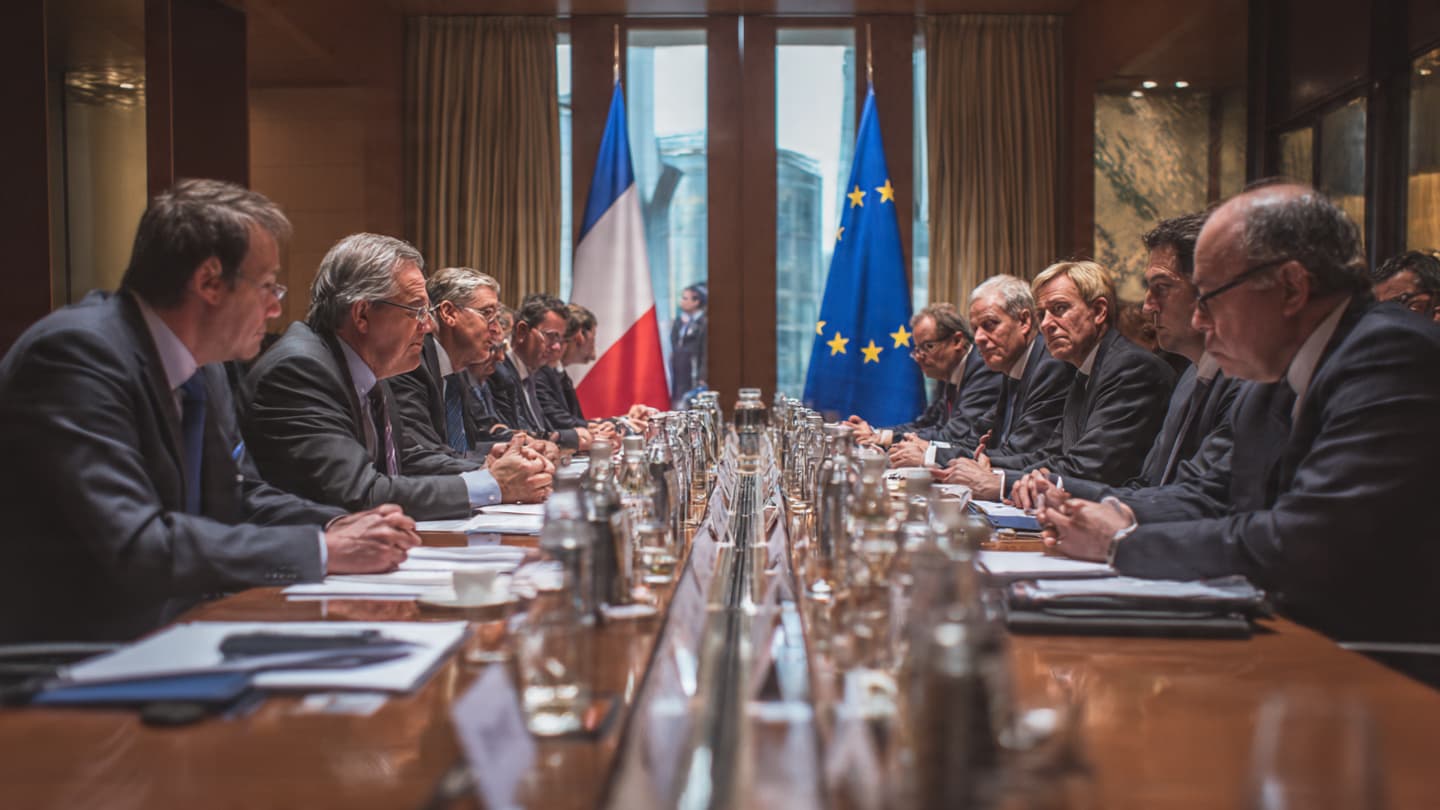
Europe's history has often been shaped by the relationship between France and Germany. Once marked by conflict and rivalry, that relationship has gradually transformed into one of cooperation, becoming a cornerstone of European integration. This week, another chapter was added as both countries reached a new agreement concerning the governance of defense company KNDS.
The agreement aims to strengthen oversight and operational coordination within KNDS, a major European defense group created through the merger of France's Nexter and Germany's Krauss-Maffei Wegmann. The company plays a significant role in the production of armored vehicles and future defense technologies.
Officials from Paris and Berlin described the arrangement as an important step toward reinforcing Europe's defense industrial base. The agreement is expected to clarify governance structures and facilitate joint decision-making between stakeholders from both countries.
The timing reflects broader changes in Europe's security environment. In recent years, European governments have increased defense spending while emphasizing the importance of strategic autonomy and industrial resilience.
KNDS has been central to several ambitious defense programs, including efforts to develop next-generation military systems. Policymakers view closer industrial coordination as essential for maintaining competitiveness and reducing duplication across Europe's defense sector.
Analysts note that Franco-German cooperation has not always progressed smoothly. Differences over procurement priorities, export policies, and industrial interests have occasionally slowed major projects. Nevertheless, both governments continue to regard collaboration as strategically necessary.
Supporters of the agreement argue that clearer governance structures could accelerate future projects and improve efficiency. They also believe stronger industrial partnerships may contribute to Europe's broader security ambitions.
The agreement comes as European leaders continue discussing how to strengthen collective defense capabilities while maintaining close partnerships within NATO. Industrial cooperation remains an important component of those discussions.
For France and Germany, the latest accord represents more than a corporate arrangement. It also reflects a continuing effort to balance national interests with shared European objectives in an increasingly complex geopolitical landscape.
AI Image Disclaimer: Some accompanying visuals have been generated using artificial intelligence to illustrate the themes discussed in this report.
Sources Verified: Reuters, AFP, Élysée Palace, Deutsche Welle, Politico Europe
Note: This article was published on BanxChange.com and is powered by the BXE Token on the XRP Ledger. For the latest articles and news, please visit BanxChange.com