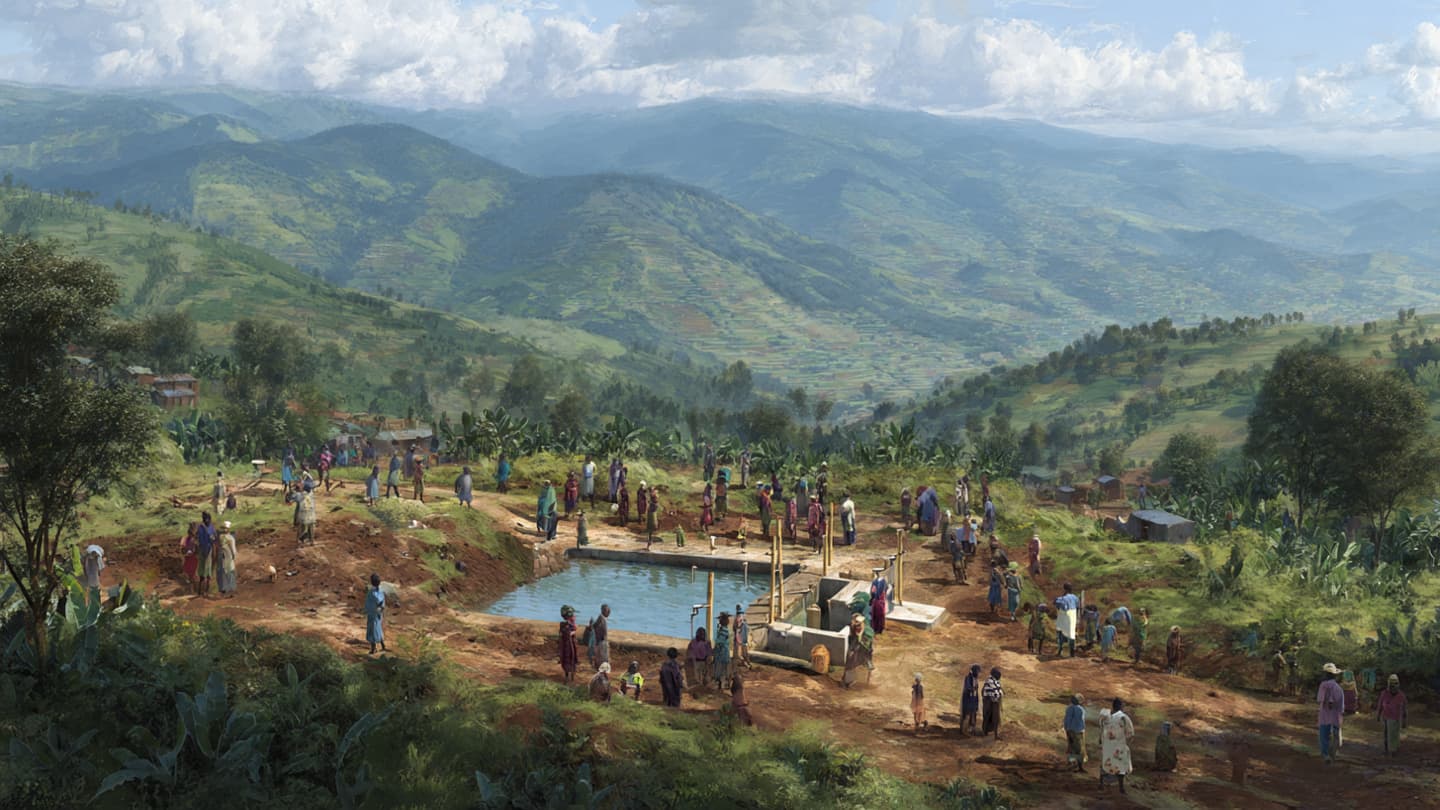
In Burundi’s rural highlands, water shapes nearly every rhythm of life. Narrow paths lead toward rivers and communal wells, fields depend on seasonal rains arriving with enough consistency to sustain fragile harvests, and villages gather around water sources that have served generations beneath shifting skies. Yet in recent years, that reliability has begun to feel less certain.
Burundi has continued expanding regional water sustainability initiatives aimed at improving clean water access and environmental resilience across rural communities. Development organizations and regional cooperation programs have focused on strengthening water infrastructure, conservation systems, and long-term resource management strategies.
The initiatives reflect growing concern over climate variability affecting water availability across parts of East and Central Africa. Rural communities in Burundi remain highly dependent on stable rainfall patterns and accessible freshwater systems for agriculture, sanitation, and household survival. Environmental pressures have therefore increased attention toward sustainable water planning.
Projects currently underway include community well construction, watershed protection efforts, irrigation improvements, and local water management training programs designed to support long-term resilience. Regional partnerships have also encouraged knowledge-sharing between neighboring communities facing similar environmental challenges.
Development observers note that water sustainability carries broader implications beyond environmental protection alone. Reliable water access directly influences agricultural productivity, public health, education access, and local economic stability. In rural areas especially, water infrastructure often becomes central to community survival during difficult climate periods.
At the same time, population growth and environmental stress continue placing additional pressure on existing water systems. Deforestation, soil degradation, and irregular rainfall patterns have complicated conservation efforts across several regions, making sustainable resource management increasingly urgent.
Still, much of the work unfolds quietly through local participation rather than large-scale industrial projects. Villagers gather for conservation activities, new wells alter daily travel patterns, and small irrigation systems slowly reshape agricultural routines. Adaptation often arrives gradually through practical change rather than dramatic transformation.
Across Burundi’s countryside, the relationship between climate and survival remains immediate. Water availability determines harvests, livestock health, and household stability with little separation between environmental conditions and everyday life itself.
Regional development organizations expect Burundi’s water sustainability programs to continue expanding throughout 2026 as climate adaptation and rural infrastructure remain major priorities across vulnerable communities.
Published by Banx Network. This article is part of the Banx decentralized media programme, powered by the BXE token on the XRP Ledger.