The universe occasionally offers rare visitors, carrying stories from eras long before Earth existed. Among the countless objects moving through space, some originate far beyond our solar system, preserving records of cosmic history across billions of years.
Astronomers studying the interstellar comet designated 3I/ATLAS believe it may be significantly older than our solar system itself. Preliminary analyses suggest that the object could have formed billions of years before the Sun and planets emerged approximately 4.6 billion years ago.
Interstellar objects are particularly valuable to scientists because they originate outside our solar system. Unlike comets formed around the Sun, these travelers provide direct evidence of processes occurring in distant stellar environments.
The designation 3I/ATLAS marks only the third confirmed interstellar object ever detected passing through the solar system. Earlier discoveries, including 'Oumuamua and Comet Borisov, generated widespread scientific interest and prompted extensive observational campaigns.
Researchers are analyzing the comet's trajectory, composition, and brightness using telescopes around the world. Early findings indicate characteristics that may distinguish it from typical solar system comets.
Scientists suggest that if age estimates are confirmed, 3I/ATLAS could represent one of the oldest objects ever directly observed by humanity. Such ancient material could preserve information about conditions present in the early universe.
Observations of interstellar objects help astronomers compare planetary formation processes across different star systems. These comparisons contribute to broader theories regarding the evolution of galaxies and planetary environments.
Because interstellar visitors move rapidly through the solar system, astronomers have only limited opportunities to gather data. International research teams are therefore coordinating observations while the object remains accessible.
Whether or not future studies confirm its extraordinary age, 3I/ATLAS has already expanded scientific curiosity, reminding observers that the solar system occasionally receives guests carrying messages from the distant past.
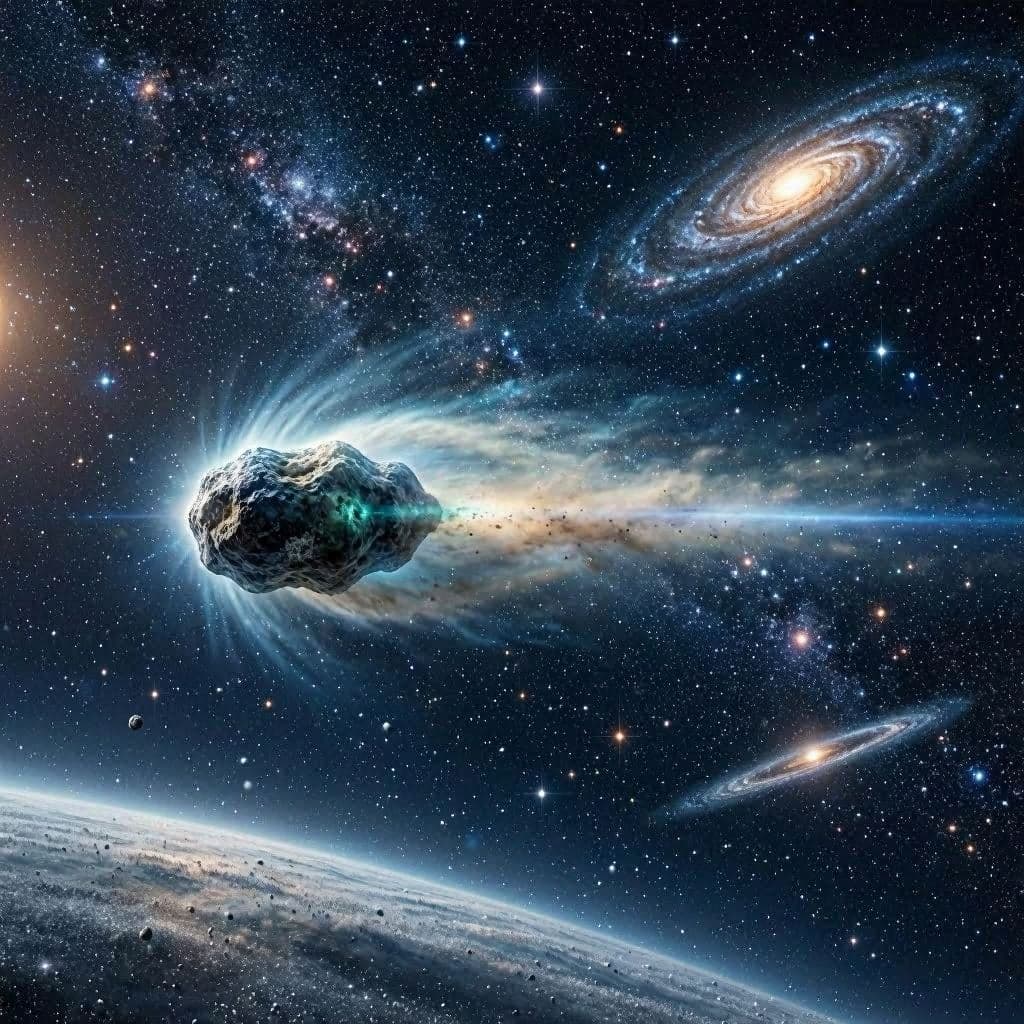
AI Image Disclaimer: Some illustrations used in this article are AI-generated visual interpretations created for educational and editorial purposes.
Source Verification Check: CBS News, NASA, Reuters, Nature, Space.com
Published by Banx Network. This article is part of the Banx decentralized media programme, powered by the BXE token on the XRP Ledger.