The universe occasionally delivers unexpected visitors. Emerging from the immense darkness between stars, these rare objects carry stories written long before Earth itself existed. Astronomers now believe one such traveler may be among the oldest cosmic bodies ever observed.
Scientists studying the interstellar comet designated 3I/ATLAS have suggested that the object could be approximately 12 billion years old. If confirmed, the comet would rank among the oldest known objects to pass through the solar system.
Interstellar objects originate beyond the Sun's gravitational domain and travel through space between star systems. Only a handful have been detected, making each discovery exceptionally valuable to researchers.
Astronomers identified 3I/ATLAS using advanced sky-survey instruments designed to detect moving celestial bodies. Early observations indicate that the object's trajectory and composition differ from typical comets formed within the solar system.
Researchers believe the comet may have originated during an early epoch of galactic evolution, potentially preserving material dating back to the formative stages of the Milky Way. Such ancient material offers a unique opportunity to study conditions that existed billions of years ago.
Detailed spectroscopic observations are now underway as scientists attempt to determine the object's composition. Measurements of dust, ice, and gas emissions could reveal important information about the environments in which the comet formed.
The discovery also highlights advances in astronomical observation technologies. Modern survey systems are increasingly capable of identifying faint and fast-moving objects traversing vast distances through space.
Although much remains unknown about 3I/ATLAS, researchers agree that the object represents an extraordinary scientific opportunity. Continued observations may provide fresh insights into the history of the galaxy and the origins of planetary systems.
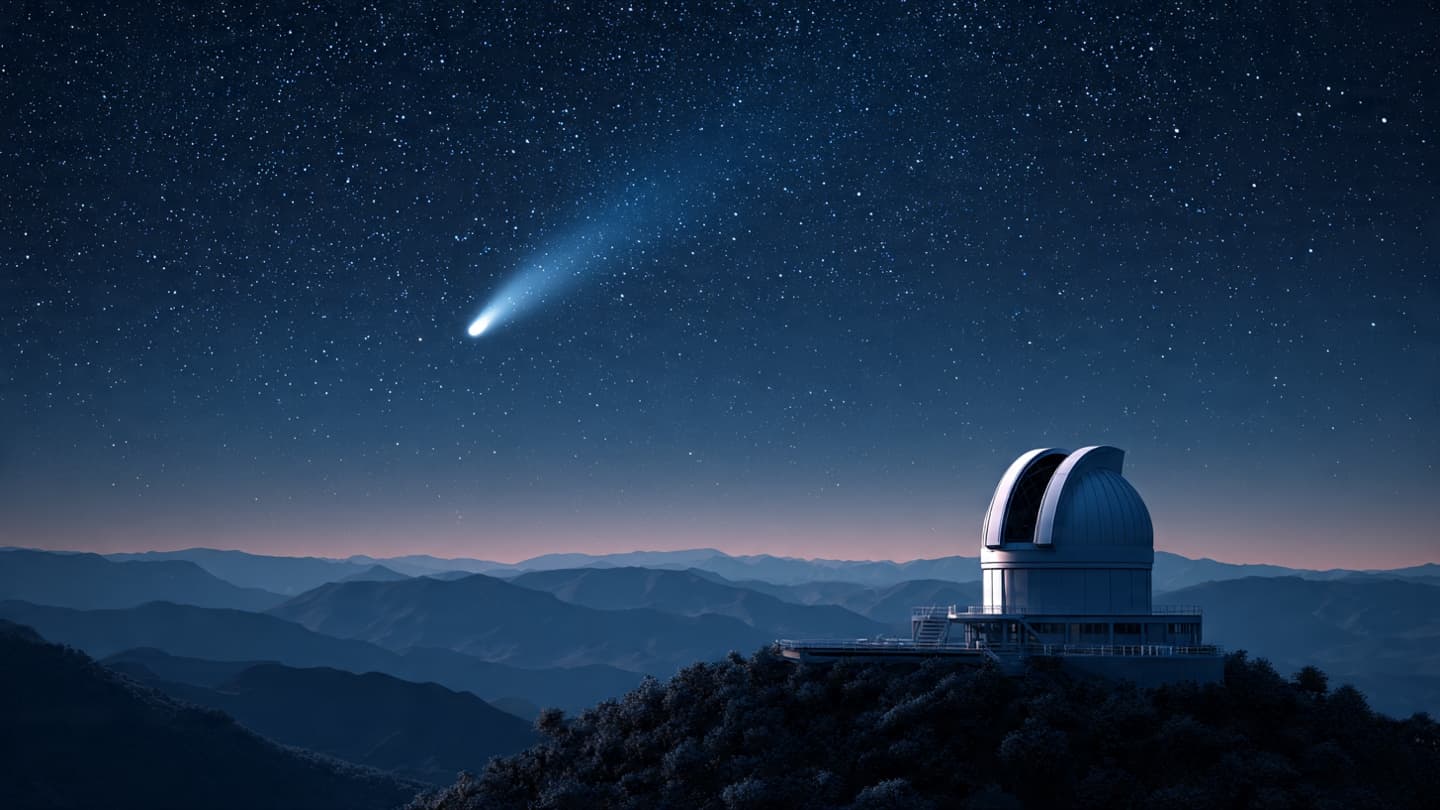
AI Image Disclaimer: The visual representations in this article are AI-generated and intended solely for editorial illustration.
Sources (verification check): Reuters, Nature, Space.com, European Space Agency
Published by Banx Network. This article is part of the Banx decentralized media programme, powered by the BXE token on the XRP Ledger.