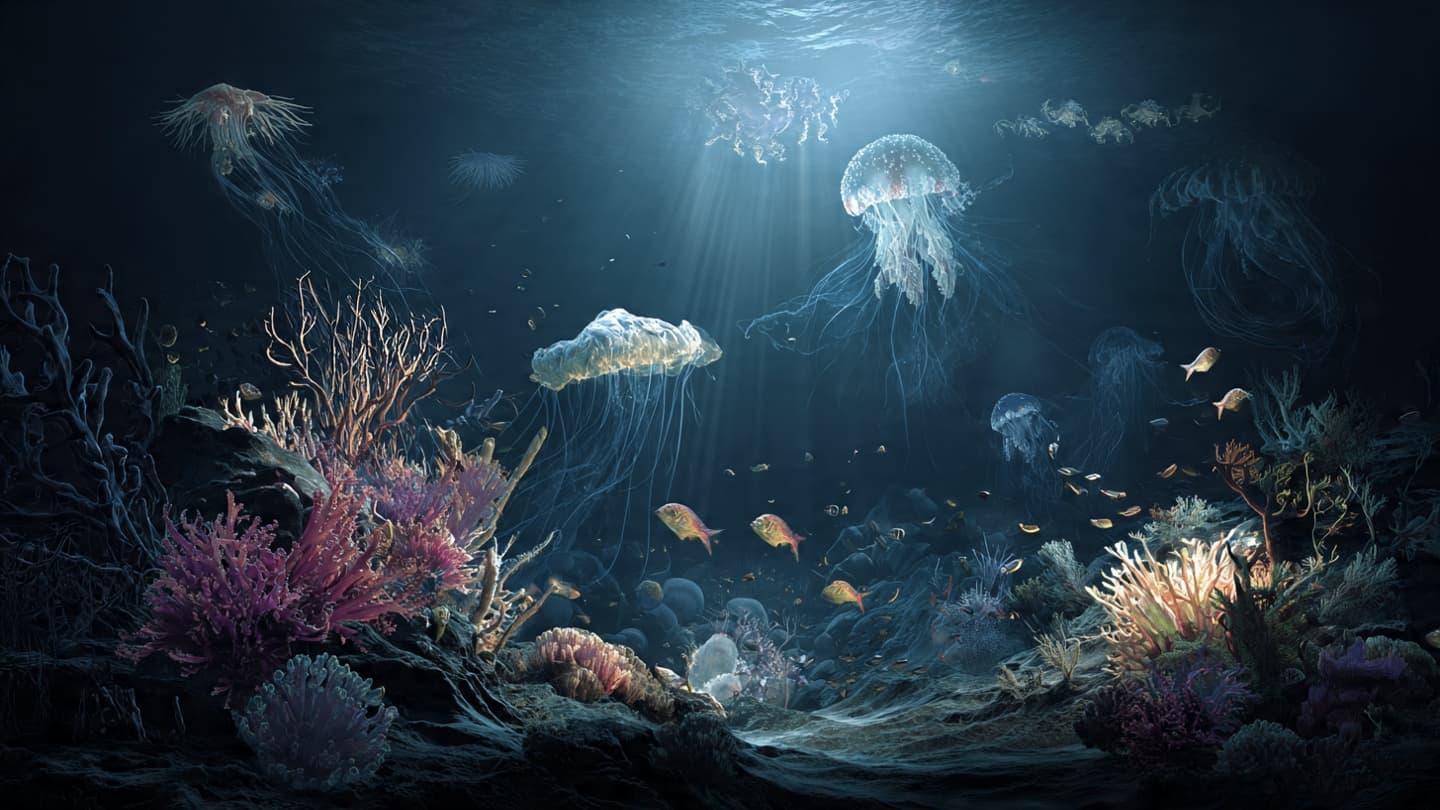
The deep ocean remains one of Earth's least explored environments. Hidden beneath kilometers of water, where sunlight never penetrates and food is scarce, life has evolved in ways that continue to surprise scientists.
Researchers have discovered that certain deep-sea animals may survive for years without consuming food, relying on exceptionally slow metabolic processes and unique biological adaptations. The findings offer new insights into how life persists under some of the planet's harshest conditions.
Deep-sea ecosystems are characterized by extreme pressure, near-freezing temperatures, and limited energy sources. Unlike surface environments, organic material reaching the seafloor is often scarce and unpredictable.
Scientists conducting the study observed that some species significantly reduce their metabolic activity during prolonged periods of food scarcity. This strategy enables them to conserve energy and endure conditions that would be fatal for many other organisms.
Researchers believe these adaptations evolved over millions of years in response to the challenging conditions of the deep ocean. Understanding such mechanisms may help scientists better comprehend biological resilience across diverse environments.
The findings could also influence research beyond marine biology. Some scientists suggest that studying extreme life forms on Earth may provide clues about the potential for life in extraterrestrial environments, including icy moons within the outer solar system.
Deep-sea exploration has accelerated in recent years due to advances in remotely operated vehicles, submersibles, and imaging technologies. Each expedition continues to reveal species and ecological processes previously unknown to science.
Although much of the deep ocean remains unexplored, discoveries such as these underscore the remarkable adaptability of life. Researchers emphasize that continued exploration is essential for understanding and protecting these fragile ecosystems.
AI Image Disclaimer: Illustrations accompanying this article were generated using artificial intelligence for visual representation only.
Sources (verification check): Reuters, Nature, National Geographic, NOAA
Published by Banx Network. This article is part of the Banx decentralized media programme, powered by the BXE token on the XRP Ledger.