
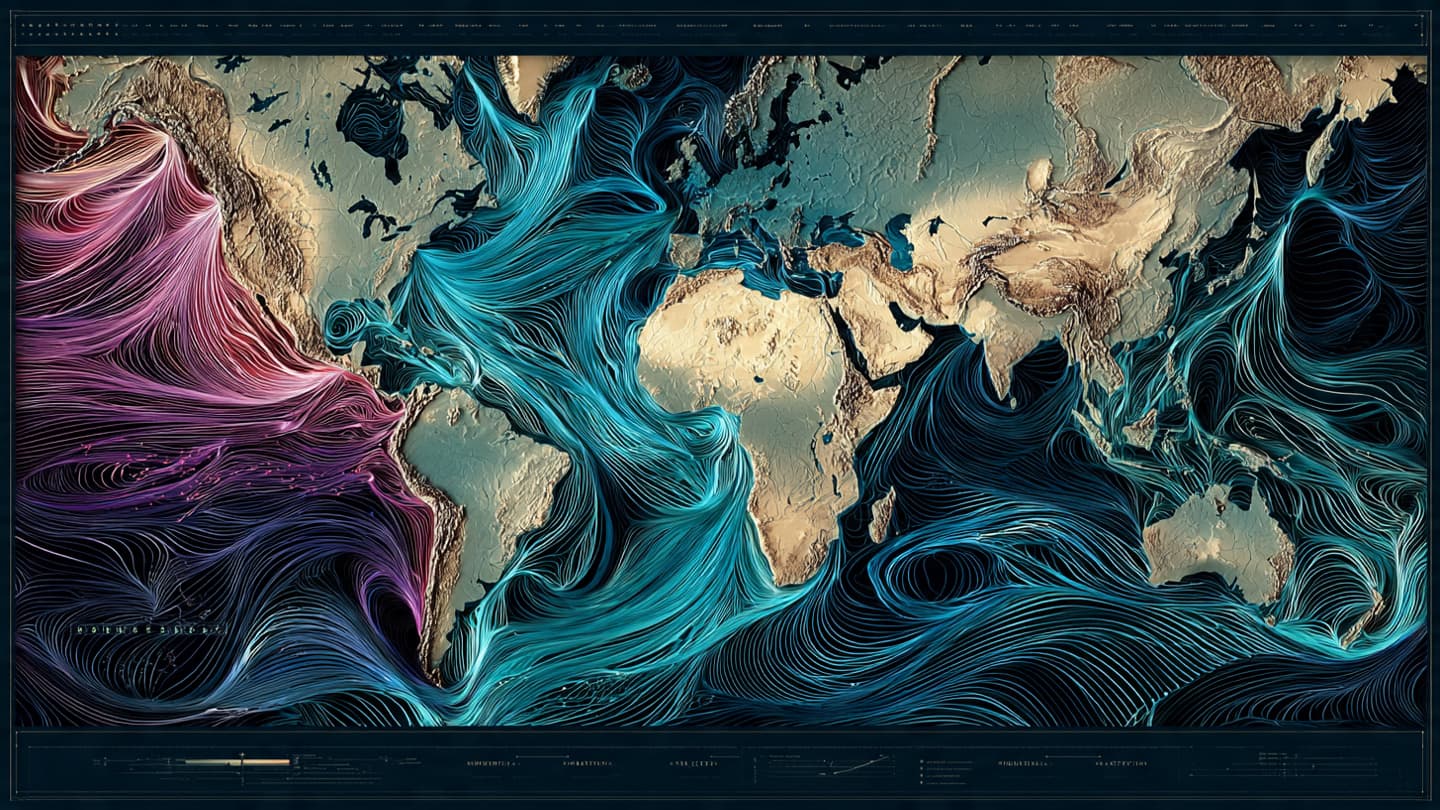
The world's oceans often appear constant from the surface. Yet beneath the waves, enormous currents move heat, nutrients, and energy across vast distances, quietly influencing climate systems that affect billions of people. A new scientific study has renewed attention on one of the most important of these systems: the Atlantic Meridional Overturning Circulation, often referred to as AMOC.
Researchers suggest that the circulation system could weaken more rapidly than some previous projections indicated. The findings have generated discussion among climate scientists seeking to better understand long-term environmental trends.
AMOC functions as a major component of Earth's climate system. By transporting warm water northward and returning cooler water southward, it helps regulate temperatures across large regions, including parts of Europe and North America.
Scientists have monitored the circulation for decades using satellite observations, ocean buoys, and climate models. While evidence suggests variability over time, predicting future changes remains a complex scientific challenge.
The new study analyzed extensive climate data and simulation results to assess how rising global temperatures may influence ocean circulation patterns. Researchers examined interactions involving freshwater input, ocean density, and heat distribution.
Experts caution that uncertainty remains regarding the exact timing and magnitude of any future weakening. Climate systems involve numerous interconnected processes, making long-term forecasting inherently difficult.
Even so, many researchers agree that understanding AMOC is important because significant changes could affect regional weather patterns, sea levels, and marine ecosystems. Continued monitoring remains a high priority within the scientific community.
International research organizations are expanding efforts to collect oceanographic data. Improved observations help scientists refine models and evaluate competing hypotheses regarding future climate behavior.
The study contributes to an ongoing scientific conversation rather than providing a final answer. As knowledge continues to evolve, researchers emphasize the importance of sustained observation, transparent analysis, and international cooperation in understanding the oceans that shape life on Earth.
AI Image Disclaimer: Visuals used with this article are AI-generated representations created to illustrate environmental and scientific concepts discussed in the report.
Sources Verification Check Verified through:
Nature Climate Change Science Magazine Reuters National Oceanic and Atmospheric Administration (NOAA) The Guardian Science
Published by Banx Network. This article is part of the Banx decentralized media programme, powered by the BXE token on the XRP Ledger.



