Opening: In the vast, silent theaters of interstellar space, where stars are born from clouds of dust and ice, chemistry plays out on a cosmic scale. For decades, astronomers have peered into these stellar nurseries, identifying the basic building blocks of life. Now, the James Webb Space Telescope (JWST) has lifted the veil further, detecting complex organic molecules in regions far beyond our own galaxy. This discovery is not just a new entry in a catalog; it is a profound reminder that the ingredients for life are not unique to Earth, but are woven into the fabric of the universe itself.
Body: The telescope’s sensitive infrared instruments have identified signatures of methanol, ethanol, and other complex organic compounds in icy grains surrounding young stars in distant galaxies. These molecules, often referred to as the "seeds of life," were previously difficult to detect due to their faint signals and the obscuring effects of cosmic dust. JWST’s unprecedented resolution and sensitivity have allowed scientists to pierce through this veil, revealing a chemical richness that was only theorized before.
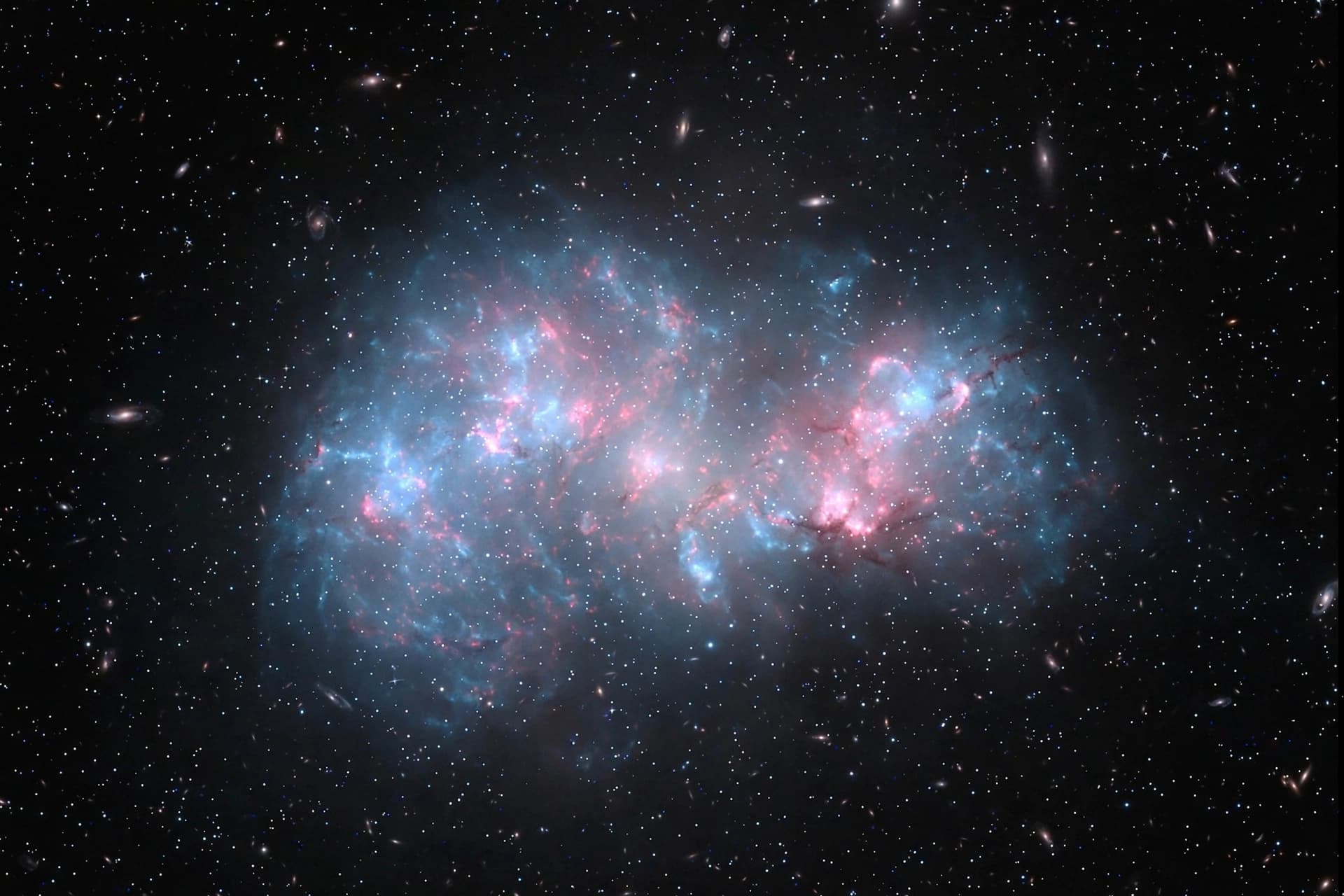
What makes this finding particularly significant is its location. By detecting these molecules outside the Milky Way, astronomers have confirmed that the processes leading to complex chemistry are universal. It suggests that wherever stars form, regardless of the galaxy, the potential for prebiotic chemistry exists. This universality expands the scope of astrobiology, implying that the conditions for life may be more common than we once dared to hope.
The detection also provides insights into the physical conditions of these distant star-forming regions. The presence of specific ices indicates temperatures and densities that allow for complex reactions to occur on grain surfaces. These laboratory-like conditions in space act as crucibles, transforming simple atoms into more complex structures. Understanding this process helps scientists model how planetary systems evolve and how organic material might be delivered to newborn planets.
For the scientific community, this is a moment of validation and excitement. It confirms the power of JWST to transform our understanding of the cosmos. The data collected is not just about identifying molecules; it is about reconstructing the history of chemical evolution in the universe. Each spectral line is a clue, helping researchers piece together the story of how matter organizes itself into complexity.
However, the journey of discovery is never complete. While these molecules are precursors to life, they are not life itself. The leap from organic chemistry to biology remains one of the greatest mysteries. Yet, by mapping the distribution of these compounds, astronomers are narrowing down the places where that leap might have occurred. It is a step-by-step process of elimination and confirmation.
As JWST continues its mission, more such discoveries are expected. The telescope is essentially opening a new window into the chemical universe, allowing us to see what was once invisible. This capability invites us to rethink our place in the cosmos, not as isolated observers, but as participants in a vast, chemically connected web.
Closing: The detection of complex organic molecules by the James Webb Space Telescope marks a significant milestone in astronomy. It reinforces the idea that the universe is chemically rich and dynamic, offering new perspectives on the origins of life and the potential for habitability in distant worlds.
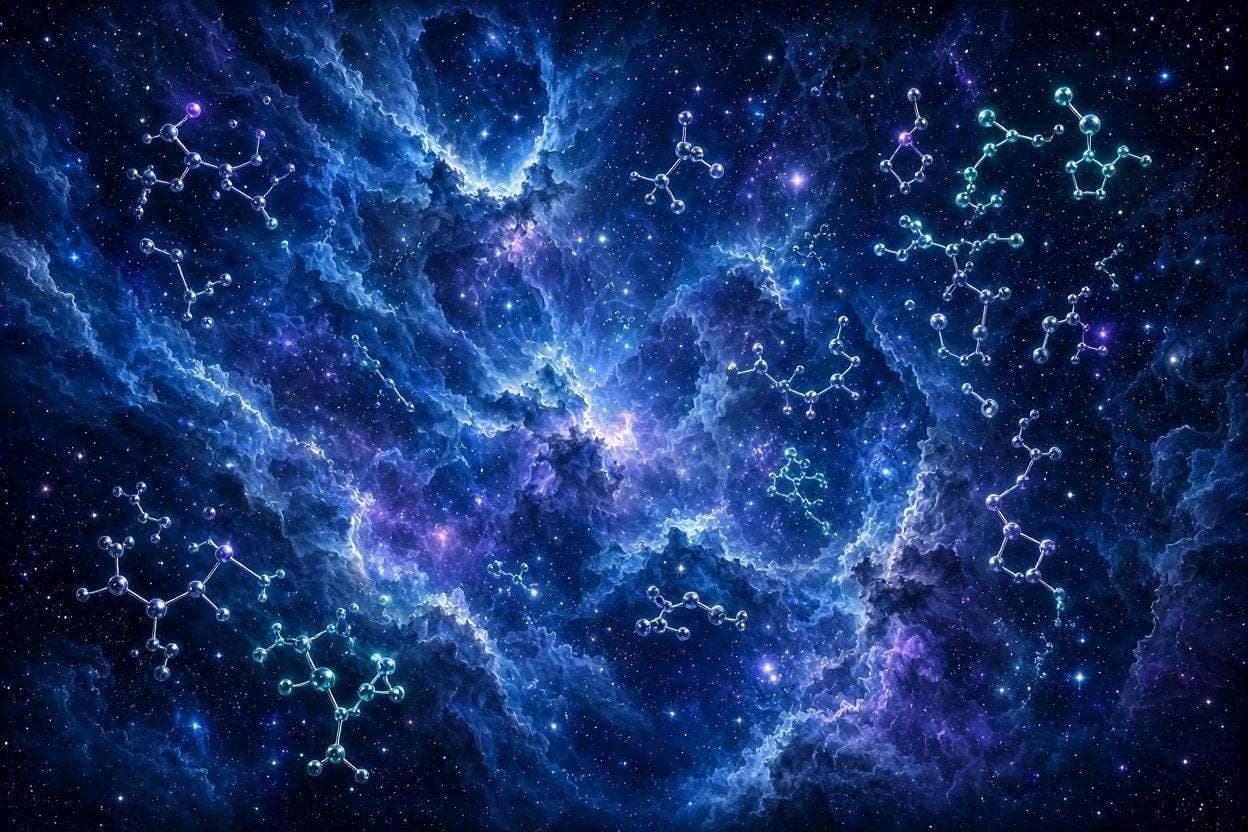
AI Image Disclaimer: The visual representations in this article are AI-generated illustrations of molecular clouds and space telescopes, intended for conceptual interpretation rather than literal depiction.
Sources: ScienceDaily, Euronews, EurekAlert, NASA, ESA
Published by Banx Network. This article is part of the Banx decentralized media programme, powered by the BXE token on the XRP Ledger.