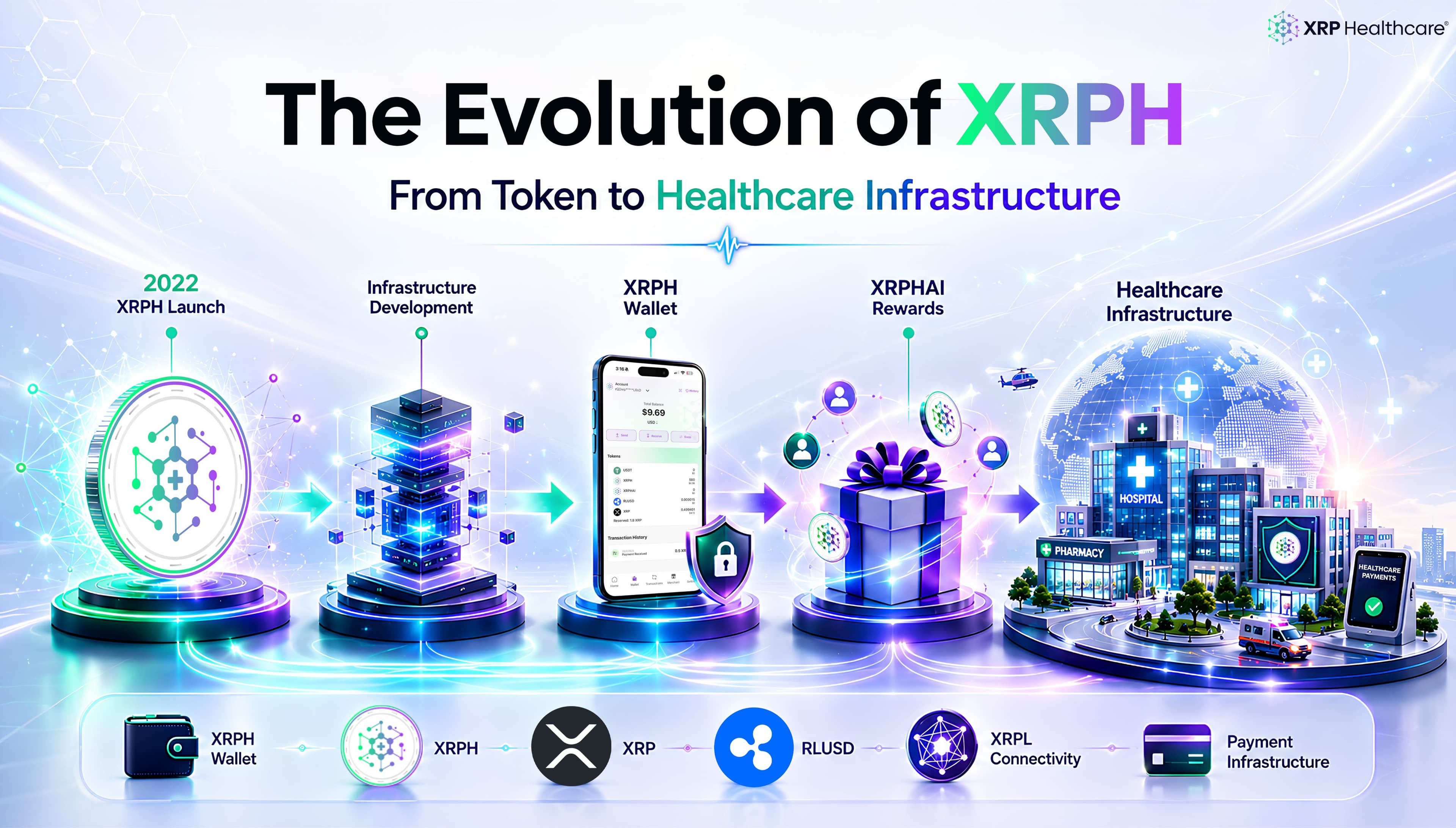
XRP Healthcare has announced a broader strategic vision that positions its XRPH ecosystem as healthcare infrastructure rather than simply a cryptocurrency token. The initiative aims to integrate blockchain technology into healthcare services by connecting digital wallets, payment systems, patient engagement tools and healthcare providers through a unified platform. According to the project, XRPH has evolved from an individual digital asset into a broader ecosystem designed to support real-world healthcare applications. The roadmap includes wallet connectivity, interoperability between different blockchain networks, healthcare rewards programs and payment infrastructure that could facilitate medical transactions more efficiently. One of the primary goals is improving interoperability, a long-standing challenge within healthcare systems. Medical providers often rely on separate databases and software platforms that struggle to exchange patient information securely. Blockchain advocates argue distributed ledger technology could improve data integrity, permission management and transparency while allowing patients greater control over their health records. The platform also explores digital payment solutions for healthcare services. Blockchain-based settlements may reduce transaction costs, accelerate payments and simplify international healthcare billing, particularly in regions with limited banking infrastructure. Smart contracts could automate insurance claims, provider reimbursements and other administrative processes. Healthcare remains one of the largest industries exploring blockchain adoption beyond financial services. Numerous companies are researching decentralized identity, pharmaceutical supply chain tracking, medical record management and secure patient authentication using distributed ledger technology. Despite growing interest, significant regulatory, privacy and technical challenges remain. Healthcare information is highly sensitive and subject to strict legal protections in many jurisdictions. Successful implementation requires compliance with data protection regulations while maintaining interoperability across existing healthcare systems. For XRP Healthcare, expanding beyond token utility into infrastructure represents an effort to create long-term value through practical healthcare applications rather than speculation alone. Future adoption will depend on partnerships with healthcare providers, regulators and technology companies, as well as successful deployment of real-world services.
Published by Banx Network. This article is part of the Banx decentralized media programme, powered by the BXE token on the XRP Ledger.