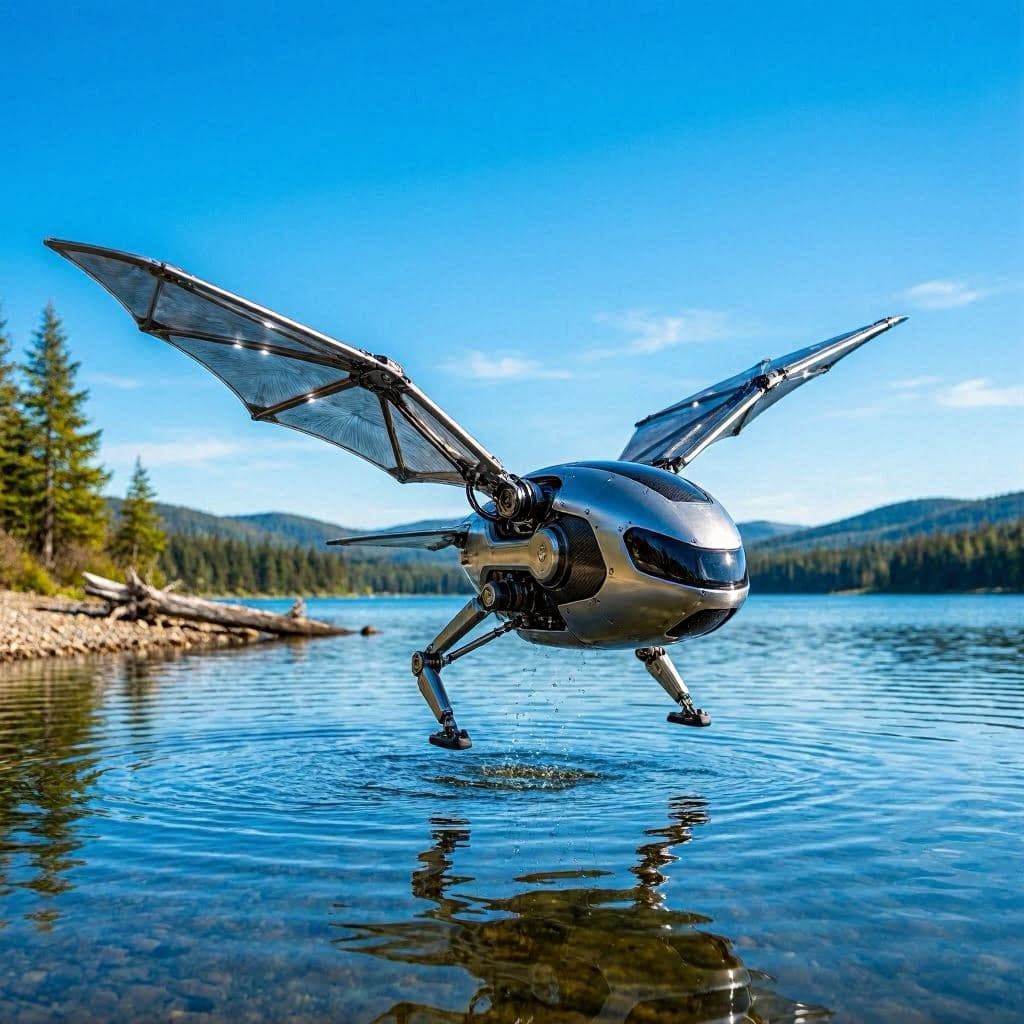
Nature has long been the ultimate engineer, crafting solutions to complex problems through millions of years of evolution. The Atlantic puffin, with its ability to transition seamlessly between the air and the ocean, is a prime example of this biological mastery. Now, researchers have developed a new winged robot that mimics this dual capability, offering a glimpse into the future of multi-domain exploration. This innovation is not merely a technical achievement; it is a tribute to the elegance of natural design, inviting reflection on how biomimicry can expand the horizons of robotics and environmental monitoring.
Body: The robot, designed by engineers inspired by avian anatomy, features wings that function as both airfoils and hydrofoils. In the air, they generate lift for efficient flight, while underwater, they provide thrust for swimming. This dual functionality allows the machine to navigate two distinct mediums with a single set of actuators, reducing complexity and weight. It represents a significant leap forward in the field of amphibious robotics, which has traditionally struggled with the conflicting demands of aerodynamics and hydrodynamics.
For scientists studying coastal ecosystems, such a device offers unprecedented access. Traditional drones cannot enter the water, and submarines cannot fly. A robot that can do both can monitor bird colonies from above and then dive to observe marine life below, providing a holistic view of the environment. This versatility makes it an invaluable tool for conservationists seeking to understand the intricate connections between terrestrial and aquatic habitats.
The engineering challenges were substantial. Water is nearly 800 times denser than air, requiring different structural strengths and movement patterns. The team had to develop materials that were lightweight enough for flight but robust enough to withstand underwater pressure. They also created control algorithms that could adapt instantly to the change in medium, ensuring stability during the critical transition phase.
Energy efficiency is another key advantage of the puffin-inspired design. By using the same mechanism for both locomotion modes, the robot avoids the need for separate propulsion systems, which consume more power. This efficiency extends its operational range, allowing for longer missions without recharging. It is a sustainable approach that aligns with the growing emphasis on green technology in robotics.
Potential applications extend beyond environmental science. Search and rescue operations could benefit from a robot that can fly over disaster zones and then swim into flooded areas. Military surveillance and infrastructure inspection are other fields where such versatility would be highly valued. The technology demonstrates how specialized biological traits can be translated into broad industrial utility.
Public interest in bio-inspired robots continues to grow, driven by their aesthetic appeal and functional ingenuity. Seeing a machine move with the grace of a living creature fosters a deeper appreciation for both nature and engineering. It bridges the gap between the organic and the synthetic, suggesting a future where technology works in harmony with the natural world rather than against it.
As development continues, researchers aim to improve the robot’s autonomy and sensor capabilities. Future versions may include advanced cameras and environmental sensors, enabling real-time data collection. The goal is to create a fully autonomous explorer that can operate in remote and hazardous environments, expanding our reach into the unknown.
Closing: In the end, the puffin-like robot is a testament to the power of looking to nature for inspiration. It highlights the potential of biomimicry to solve complex engineering problems. As these machines take to the skies and seas, the hope is that they will help us better understand and protect the delicate balance of our planet.
AI Image Disclaimer: Please note that any accompanying visuals for this narrative are artificially generated interpretations meant to evoke the spirit of the story, not documentary evidence.
Sources: Science Robotics IEEE Spectrum New Atlas
Published by Banx Network. This article is part of the Banx decentralized media programme, powered by the BXE token on the XRP Ledger.