The universe has always been a source of profound mystery, but with the advent of the James Webb Space Telescope, those mysteries have deepened rather than dissolved. Since coming online, Webb has peered further back in time than any instrument before it, revealing a cosmos that defies many of our established expectations. Astrophysicists find themselves in a state of productive confusion, as the data streaming back from the telescope challenges long-held theories about galaxy formation, black hole growth, and the early evolution of the universe. It is a moment of humble realization that our map of the cosmos may need significant redrawing.
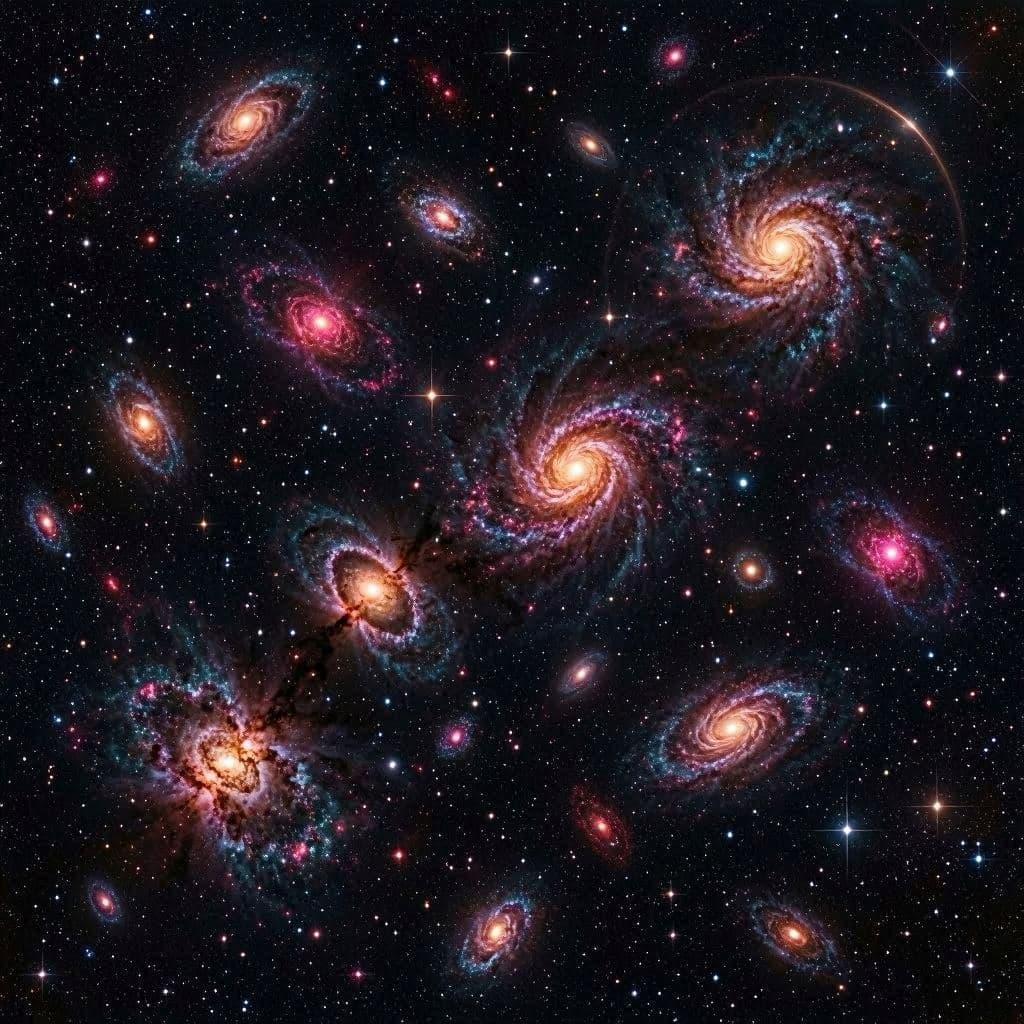
Body: One of the most striking discoveries has been the presence of massive galaxies and black holes in the very early universe, existing just a few hundred million years after the Big Bang. According to previous models, such structures should not have had enough time to form and grow to such immense sizes. Yet, Webb’s infrared eyes have spotted them clearly, shining brightly in the cosmic dawn. This discrepancy suggests that our understanding of how matter clumped together in the early epochs may be incomplete, or that there were processes at work we have yet to identify.
Another area of puzzle is the rate of universal expansion. Webb’s observations have contributed to the ongoing tension between different measurements of the Hubble constant, the value that describes how fast the universe is expanding. Some data from Webb align with earlier findings from the Planck satellite, while others seem to support local measurements that suggest a faster expansion rate. This inconsistency, known as the "Hubble tension," remains one of the most significant unsolved problems in cosmology, hinting at new physics that may lie beyond the standard model.
Furthermore, Webb has provided unprecedented details about the composition of exoplanet atmospheres and the formation of stars in distant nebulae. These observations are not just confirming what we suspected; they are revealing complexities and variations that were previously invisible. The telescope’s ability to detect specific molecular signatures allows scientists to study the chemical building blocks of life in other solar systems, adding a new layer of depth to the search for habitable worlds.
The implications of these findings are far-reaching. If early galaxies formed more quickly than expected, it may mean that the first stars were different from what we imagined, perhaps more massive or efficient at producing heavy elements. This would affect our understanding of how the universe became enriched with the materials necessary for planets and life. Astrophysicists are now revisiting their simulations, adjusting parameters to see if they can replicate the vibrant, mature universe Webb is showing us.
This period of uncertainty is also a time of excitement for the scientific community. Each new image or spectrum released by Webb offers a clue, a piece of the puzzle that might lead to a breakthrough. Collaborations between theorists and observers are intensifying, as they work together to interpret the data and propose new hypotheses. The dialogue between observation and theory is the engine of scientific progress, and Webb has fueled it with an abundance of fresh material.
As we continue to analyze the data, it is clear that Webb has not just answered questions; it has asked new ones. The "new universe" it reveals is more dynamic, more complex, and more surprising than the one we thought we knew. This is the nature of exploration: the further we look, the more we realize how much remains hidden. The telescope serves as a reminder that our knowledge is always provisional, subject to revision in the face of new evidence.
Closing: The James Webb Space Telescope has opened a new chapter in our understanding of the cosmos, one filled with intriguing puzzles and unexpected discoveries. As astrophysicists work to make sense of this new universe, we are invited to share in their wonder and curiosity. The journey of discovery is far from over, and each answer brings us closer to the next great question.
AI Image Disclaimer: The images associated with this article are AI-generated interpretations designed to visualize the astronomical concepts discussed.
Sources: Quanta Magazine NASA Goddard Space Flight Center European Space Agency University of California Riverside
Published by Banx Network. This article is part of the Banx decentralized media programme, powered by the BXE token on the XRP Ledger.