
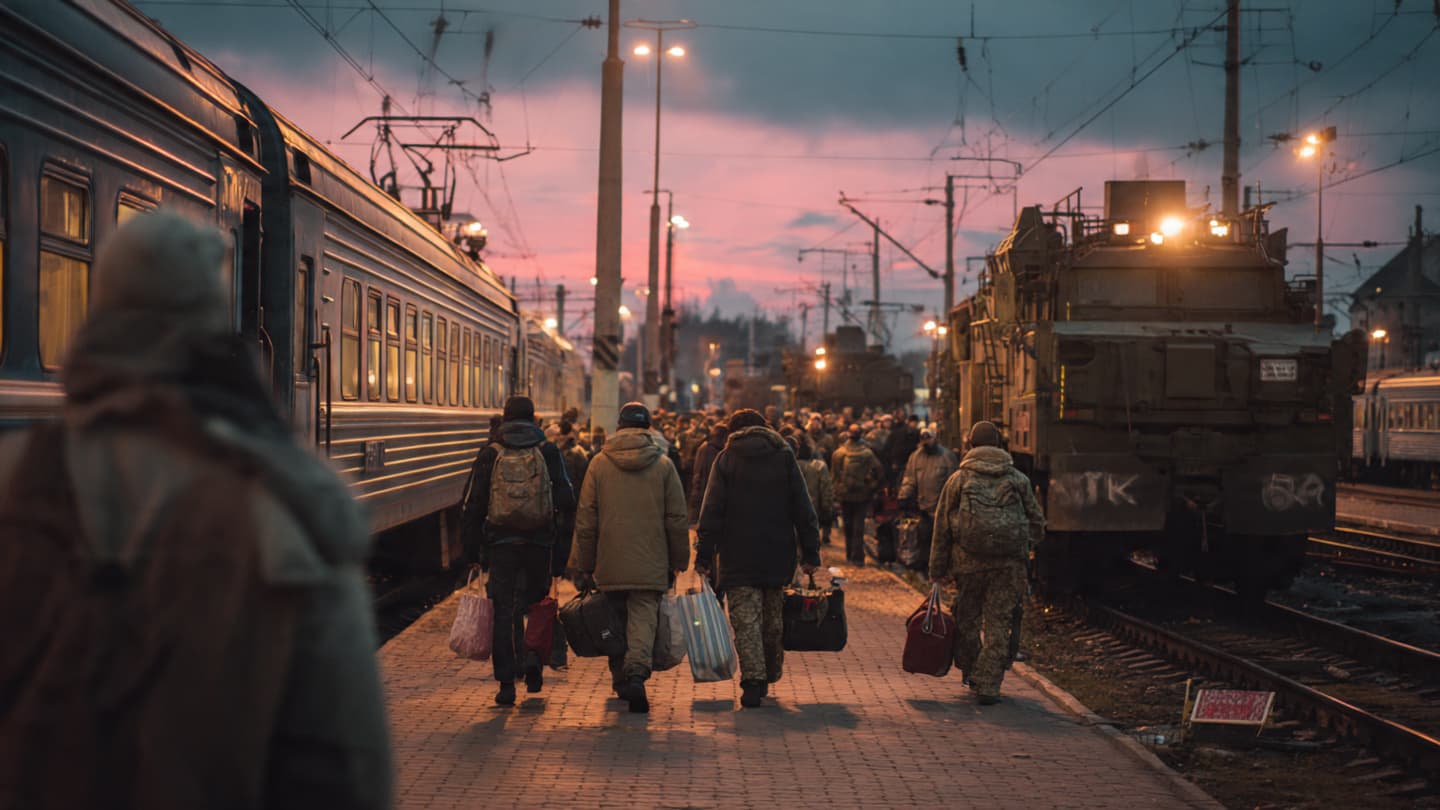
In the borderlands between Russia and Ukraine, seasons continue to pass across damaged roads and blackened fields with a strange indifference. Spring rain settles into trenches that have outlasted expectations, while distant villages move through routines shaped increasingly by absence — shuttered homes, delayed letters, names spoken quietly over kitchen tables. The war, now measured not in weeks but in years, has become part of the landscape itself.
Amid this long attrition, Ukrainian officials claim that Russian military deaths have surpassed 83,000 since the beginning of 2026 alone, a figure presented by General Staff of the Armed Forces of Ukraine as evidence of the mounting human cost facing Moscow’s military campaign. The numbers cannot be independently verified, and casualty estimates from both sides have frequently diverged throughout the conflict. Yet the scale of the claim reflects a broader reality acknowledged across military analyses: the war continues consuming manpower at an extraordinary pace.
At the same time, reports from Russia suggest authorities are intensifying efforts to recruit new soldiers, relying on expanded contract incentives, regional campaigns, and continued enlistment drives to sustain operations along a front line stretching hundreds of miles. In cities from Moscow to provincial industrial centers far from the battlefield, recruitment advertisements have become increasingly visible — appearing on buses, billboards, train stations, and social media feeds. Promises of salaries, bonuses, and social benefits now accompany appeals framed around patriotism and national duty.
The search for manpower has become one of the defining undercurrents of the war. Modern conflict, despite its drones and satellites, still depends heavily on the bodies required to occupy trenches, rotate exhausted units, maintain logistics, and hold ground through long periods of attrition. Analysts have noted that Russia’s strategy increasingly appears built on endurance — absorbing losses while leveraging its larger population and industrial capacity against Ukraine’s own strained resources.
For Ukraine, casualty estimates also serve another purpose beyond battlefield accounting. They reinforce narratives of resistance and resilience at a time when international military support faces political debates and public fatigue in parts of Europe and the United States. Kyiv continues emphasizing the scale of Russian losses as evidence that Moscow’s advances come at immense cost, even as Ukrainian forces themselves endure relentless pressure across eastern and southern fronts.
Meanwhile, ordinary life inside both countries unfolds beneath the shadow of mobilization. In Russia, train stations still fill with commuters carrying coffee cups and briefcases beneath electronic advertisements encouraging enlistment. Factories continue operating across regions tied to defense production. In Ukraine, air raid sirens interrupt school lessons and evening traffic while families navigate a wartime existence increasingly defined by uncertainty and adaptation.
The emotional geography of the war has also shifted over time. What once felt abrupt and shocking in the early months of invasion has settled into something more prolonged and heavy — a conflict woven into routines, economies, and generational memory. Cemeteries expand quietly on the edges of towns. Veterans return carrying visible and invisible injuries. Children grow older under the distant sound of artillery.
The casualty figures themselves remain part of an information battlefield where numbers function both as military assessment and political language. Independent observers have repeatedly cautioned that wartime statistics are difficult to verify in real time, particularly in conflicts shaped by propaganda, restricted access, and fluid front lines. Still, even conservative estimates from outside analysts suggest enormous losses on both sides since the war began.
For Russia, sustaining recruitment without triggering broader domestic instability remains a delicate balance. Previous mobilization waves prompted anxiety, emigration, and scattered protests, leading authorities to rely increasingly on financial incentives and regional recruitment systems rather than large-scale compulsory measures. The Kremlin continues portraying the conflict as both necessary and manageable, even as the demands of prolonged warfare steadily accumulate.
Beyond the battlefield, the war’s global consequences continue radiating outward — affecting energy markets, grain exports, defense spending, diplomatic alliances, and the broader architecture of European security. Yet beneath those geopolitical calculations lies a simpler and more enduring reality: wars of attrition are ultimately measured in human endurance, in the slow depletion of lives, labor, and time.
As evening settles over eastern Europe, smoke drifts above damaged industrial zones while trains move through the darkness carrying supplies, recruits, and evacuees between distant regions. Somewhere along the sprawling front, soldiers wait through another cold night beneath muddy skies, listening for drones in the silence between shellfire.
And far from the battlefield, in apartment blocks, rural towns, and crowded stations across Russia and Ukraine alike, families continue counting days, messages, and absences — quiet reminders that the arithmetic of war is never confined to official statements alone.
AI Image Disclaimer: Illustrative visuals accompanying this article were generated with AI technology and are intended as conceptual imagery only.
Sources:
Reuters BBC News Institute for the Study of War Associated Press Al Jazeera
Note: This article was published on BanxChange.com and is powered by the BXE Token on the XRP Ledger. For the latest articles and news, please visit BanxChange.com