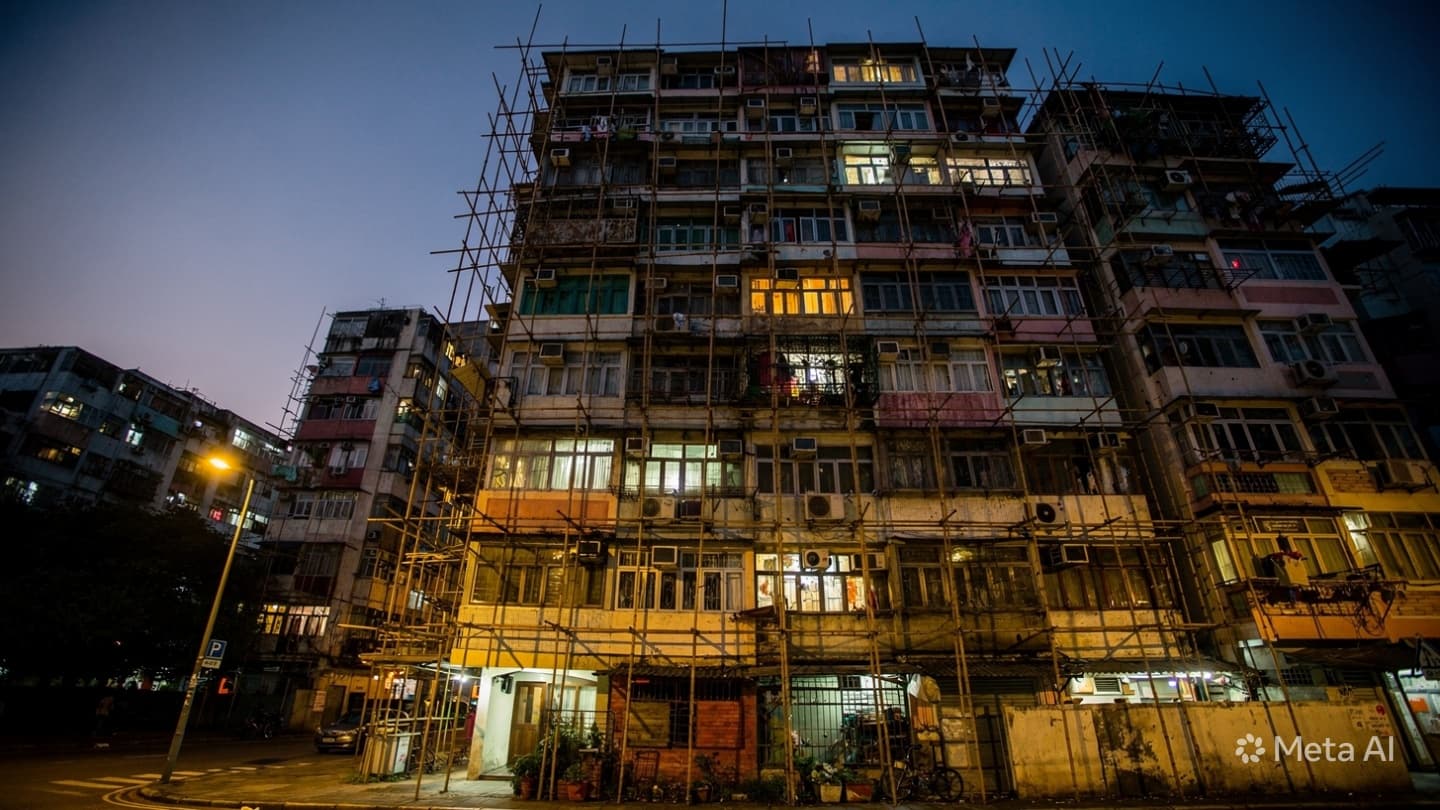
The city breathes in rhythms of steel and glass, yet in the older veins of Jordan, the air holds a different weight. Here, time seems to curl into the corners of aged facades, where the history of a thousand lives is pressed into the narrow corridors of buildings like the Man Yuen. On a night that began with the mundane hum of urban existence, the atmosphere shifted as the scent of smoke cut through the familiar dampness of a humid evening. It is a haunting reality that, in the quiet spaces where we retreat to rest, the margin between a sanctuary and a tragedy can be as thin as a partition wall.
As the dusk gave way to a deeper dark, the quiet rhythm of the building was fractured by the sudden arrival of heat. Reports indicate that within a unit on the thirteenth floor, a space partitioned into nine distinct cells of living, a blaze claimed the life of a seventy-one-year-old man. Four others were pulled from the grip of the smoke, their stories now inextricably linked to the heat that consumed their neighbor’s final hours. For those who watch from the outside, it is a stark reminder of how quickly the architecture of a home can become an enclosure of peril.
The Man Yuen, standing for over six decades, was draped in the skeletal reach of scaffolding, a shroud of ongoing renovation that added a layer of complexity to the night. As the flames sought oxygen and purchase, the structure itself seemed to hold its breath. Firefighters moved with the precision of those who understand the language of burning buildings, suppressing the outer reach of the inferno while hundreds of residents filtered into the cool night air. The exodus of three hundred souls, descending stairwells under the flicker of emergency lights, turned a private moment of catastrophe into a collective passage of survival.
In the aftermath, the narrative of the fire is written in the language of investigation. Officials have confirmed that the building’s fire safety systems were operational, a small but significant comfort in the wake of such a loss. The alarm, once sounded, served as the frantic heartbeat of the building, urging its inhabitants toward the threshold of safety. Yet, even with systems in place, the physical constraints of subdivided life—the narrow passages and the dense clustering of cubicles—create a unique topography of vulnerability.
To reflect on such a night is to acknowledge the fragility of the urban grid. We build upward, we divide space into smaller fractions, and we trust in the integrity of the materials that surround us. When those materials fail, or when the simple act of living involves a proximity to risk that is unseen until the moment of crisis, we are left to grapple with the reality of our shared environment. The tragedy on Ferry Street is not merely a report of loss; it is a question whispered into the dense, humid air of the district.
The sorrow of the loss lingers in the charred remains of the thirteenth floor, where the metal frame of a bed stands as a quiet witness to what was. Neighbors, left with the memory of cries for help and the visceral smell of burnt insulation, now navigate the halls with a renewed awareness of their own surroundings. They move through the stairwells with a heightened sense of the path ahead, their steps marking the transition from the safety of home to the uncertainty of the street.
There is a profound loneliness in such events, even when three hundred people stand together on the pavement, watching the embers glow in the distance. The tragedy unfolds in the singular unit, in the innermost cell, where the life of one man ended while the city continued its relentless cycle of motion. It is a reminder that we are all, to some extent, occupants of these temporary structures, caught in the tension between the stability we crave and the volatility of the elements.
As the sun rose over Hong Kong, the scaffolding remained, a testament to the ongoing effort to fortify the aging structure. The residents who returned found not the homes they left, but spaces irrevocably altered by smoke and the weight of what occurred. The questions that remain—the calls for better safety, the scrutiny of subdivided spaces, and the quiet mourning of the departed—will drift through the corridors for some time to come.
According to reports from the Fire Services Department, the blaze was reported at approximately 10:49 p.m. on Thursday, May 21, 2026. Emergency responders deployed one hose and two breathing apparatus teams to the Man Yuen Building on Ferry Street. One fatality was confirmed at the scene, and four individuals were transported to the hospital for treatment. The building, which held a valid annual inspection certificate, remains under investigation as authorities assess the structural safety of the affected units and the surrounding floor.
Published by Banx Network. This article is part of the Banx decentralized media programme, powered by the BXE token on the XRP Ledger.