
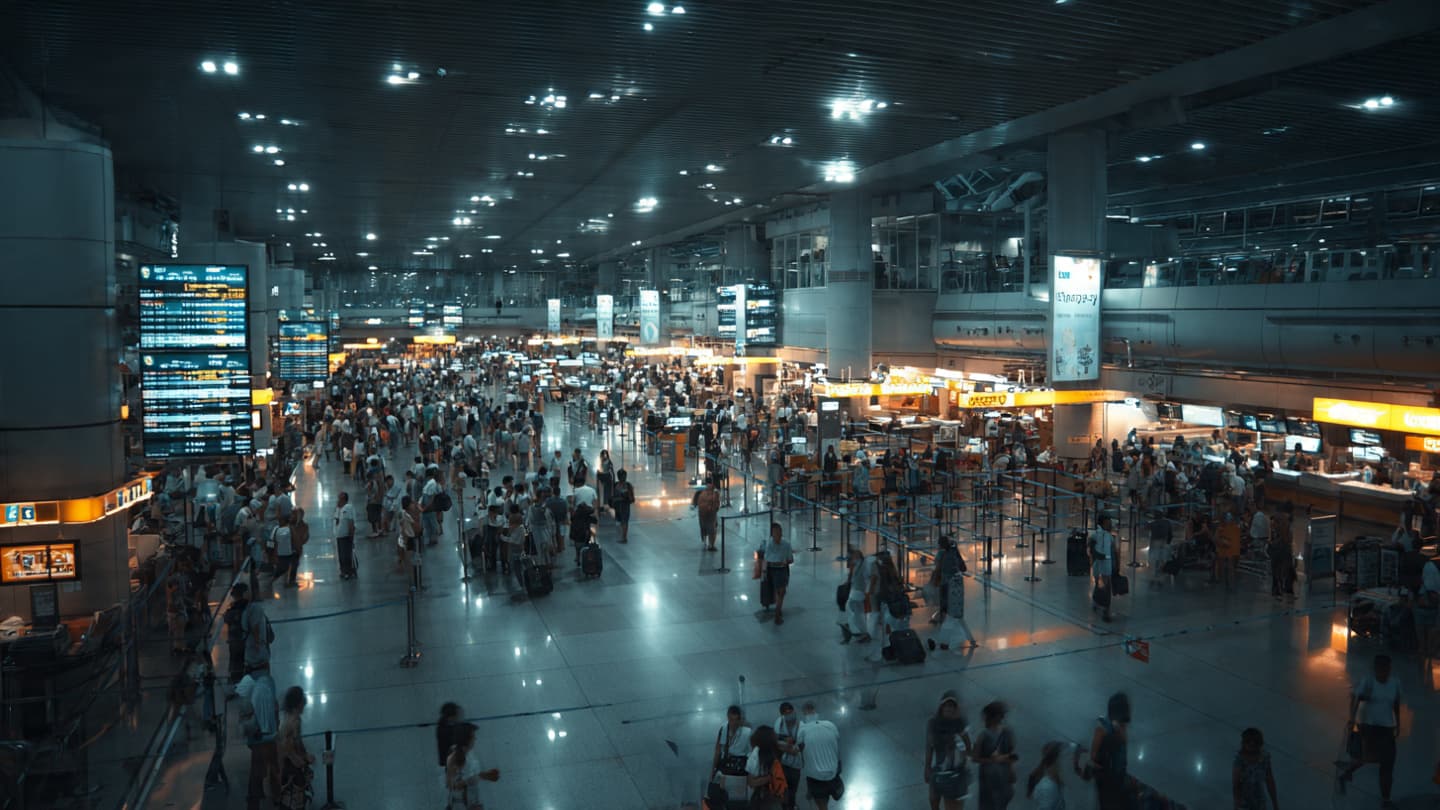
By evening, Bangkok glows with its familiar intensity. Motorbikes weave through humid streets, market stalls release the scent of grilled food into the air, and travelers from across the world drift between temples, rooftop bars, and crowded train platforms. For decades, Thailand has cultivated an image of openness — a country where movement feels easy, where borders seem softened by hospitality, sunlight, and the rhythm of tourism itself.
Yet even places built around welcome occasionally pause to reconsider the terms of arrival.
This week, the government of Thailand announced tighter visa regulations for tourists, citing concerns over crimes involving foreign nationals and the misuse of visa-free entry schemes. Officials said the measures are intended to strengthen oversight of visitors staying in the country while preserving Thailand’s position as one of the world’s most important travel destinations.
The changes come after months of rising public discussion surrounding illegal business activity, organized scams, overstayed visas, and criminal networks allegedly involving some foreign visitors. Thai authorities have increasingly conducted raids and investigations linked to online fraud operations, unauthorized employment, and transnational crime groups operating within the country’s tourism economy. While officials emphasized that the vast majority of tourists obey the law, they argued that immigration systems needed adjustment to address growing security concerns.
Tourism has long shaped the modern identity of Thailand. From the beaches of Phuket and Krabi to the dense energy of Bangkok and the quieter mountains of Chiang Mai, millions of visitors arrive each year seeking warmth, affordability, spirituality, or escape. The industry supports vast networks of hotels, restaurants, transport workers, street vendors, and small businesses whose livelihoods depend on the constant movement of travelers through airports and resort towns.
That dependence became painfully visible during the pandemic years, when silent beaches and empty hotel corridors replaced the usual flow of international arrivals. Since reopening, Thailand has worked aggressively to revive tourism through visa exemptions, promotional campaigns, and easier entry requirements designed to attract visitors back in large numbers.
Now, however, the government appears to be recalibrating the balance between openness and control.
Officials have suggested that some visa-free policies unintentionally created opportunities for foreign criminal groups to establish operations under the cover of tourism. Reports involving cyber fraud compounds, money laundering, and illegal work arrangements have drawn regional attention in recent years, particularly as Southeast Asia faces growing concerns about organized online scam networks moving across borders.
The tighter rules may include shorter visa-free stays for some nationalities, stricter documentation checks, and closer monitoring of long-term tourist activity. Authorities insist the measures are not intended to discourage ordinary visitors, but rather to improve accountability within immigration systems that have struggled to keep pace with rapidly changing travel patterns.
Still, the announcement introduces uncertainty for parts of the tourism industry. Businesses recovering from years of economic disruption remain sensitive to any policy that could slow visitor numbers. In resort areas and nightlife districts, where economies often depend almost entirely on international arrivals, even small regulatory changes are watched carefully.
There is also a deeper emotional dimension to the conversation. Tourism in Thailand has never been merely economic; it is woven into the country’s international image and everyday social fabric. Entire neighborhoods have grown around the rhythms of temporary visitors — guesthouses, dive shops, cafés, tuk-tuk routes, and night markets shaped by the expectations of people passing through. Tightening visa rules therefore feels, to some, less like administrative reform and more like a subtle shift in atmosphere.
Yet concerns over security continue pressing against that openness. Governments across Asia and beyond are increasingly confronting the challenge of maintaining accessible tourism while responding to transnational crime that moves easily through digital networks and international mobility. Airports and immigration counters have become places where hospitality and surveillance now exist side by side.
As planes continue descending toward Bangkok beneath monsoon clouds and travelers wheel suitcases through brightly lit terminals, Thailand enters another moment of adjustment — not closing its doors, but narrowing them slightly, measuring more carefully who enters and how long they stay.
And somewhere between the crowded beaches and immigration checkpoints, the country continues its quiet effort to protect both its openness and its sense of order, knowing how difficult it can be to preserve one without unsettling the other.
AI Image Disclaimer The visuals accompanying this article were generated using AI and are intended as illustrative interpretations of real-world events.
Sources
Reuters Bangkok Post Associated Press Ministry of Tourism and Sports of Thailand BBC News
Note: This article was published on BanxChange.com and is powered by the BXE Token on the XRP Ledger. For the latest articles and news, please visit BanxChange.com