
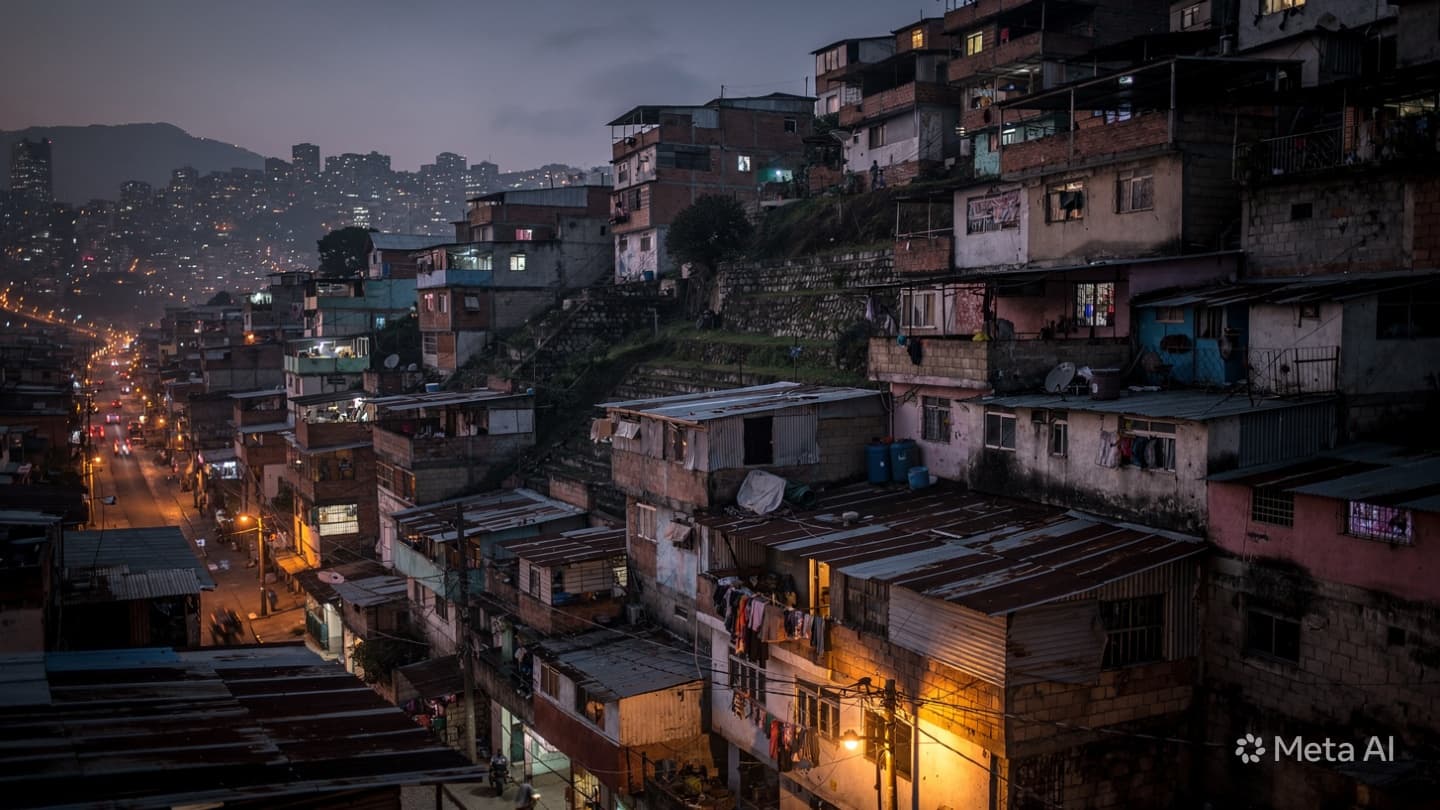
Petare is a place of immense density, a sprawling vertical landscape where every square meter is a testament to the resilience and the struggle of those who have built their lives upon its slopes. It is a neighborhood that functions as a world unto itself, governed by its own internal rhythms and social hierarchies, where the boundary between the private sanctuary of the home and the public vulnerability of the alleyway is constantly negotiated. When the sharp, intrusive sound of a shooting incident breaks the evening air, it is a reminder that the neighborhood’s complex peace is always susceptible to the violent ruptures of the world outside, and the pressures contained within.
The report of a homicide in Petare carries a weight that is familiar yet deeply unsettling. In a setting defined by such proximity, violence is never an isolated event; it is a collective experience. When a life is cut short in an alleyway or a communal space, the shockwaves are felt through the immediate network of neighbors and families. The event, while reduced to a line in a news report or a brief police update, represents a permanent, irreparable hole in the social fabric of the slum, a tragedy that forces the community to once again reconcile its desire for normalcy with the persistent shadow of insecurity.
The investigation into the shooting, as conducted by local police, is often a race against the difficulty of the terrain and the understandable reluctance of witnesses to speak. In a neighborhood where trust is a currency guarded with immense care, the process of finding the truth is as much about navigating social barriers as it is about forensic evidence. The police, often seen as outsiders, must operate within a space where they are not always welcome, and where the lines between law enforcement and local actors are frequently blurred, creating a complex, often fraught environment for the pursuit of justice.
The discourse surrounding such violence often touches on the systemic issues that make the slum such a difficult, contested space. It is a reflection of broader urban inequalities, where the lack of formal infrastructure, the scarcity of economic opportunity, and the erosion of social programs create an environment where illicit power structures can flourish. The homicide is a symptom of these wider failures, a localized tragedy that points to a systemic, structural crisis that the city of Caracas has struggled to address for generations.
Yet, there is a persistent, quiet dignity in the way the residents of Petare respond to these moments of rupture. Despite the recurrent nature of the violence, the community continues to persist, to build, and to find ways to support one another through the trauma of such events. It is a resilience that is not born of a lack of awareness, but of a deep, profound commitment to the survival of the neighborhood. The homicide is a tear in that fabric, one that the community works to stitch back together, even as the risk of future events remains a permanent fixture of their daily horizon.
As the police conclude their initial scene investigation and the neighborhood begins to settle back into its routine, the impact of the loss continues to be felt in the everyday interactions of the residents. There is a somber acknowledgment of the event, a shared, silent grief, and then a return to the work of survival. The neighborhood persists, moving forward with the heavy, persistent knowledge that the safety of the individual is inextricably linked to the complex, ongoing struggles of the collective.
Local police in Caracas have initiated an investigation into a homicide following a shooting incident reported in the Petare slum on June 17, 2026. Authorities stated that the victim was discovered in a residential sector, and efforts to identify the assailant are currently underway amidst reports of local disturbances in the vicinity. The police have increased patrols in the area to maintain order and have appealed for community assistance as they work to untangle the circumstances surrounding the fatal encounter.
Note: This article was published on BanxChange.com and is powered by the BXE Token on the XRP Ledger. For the latest articles and news, please visit BanxChange.com