
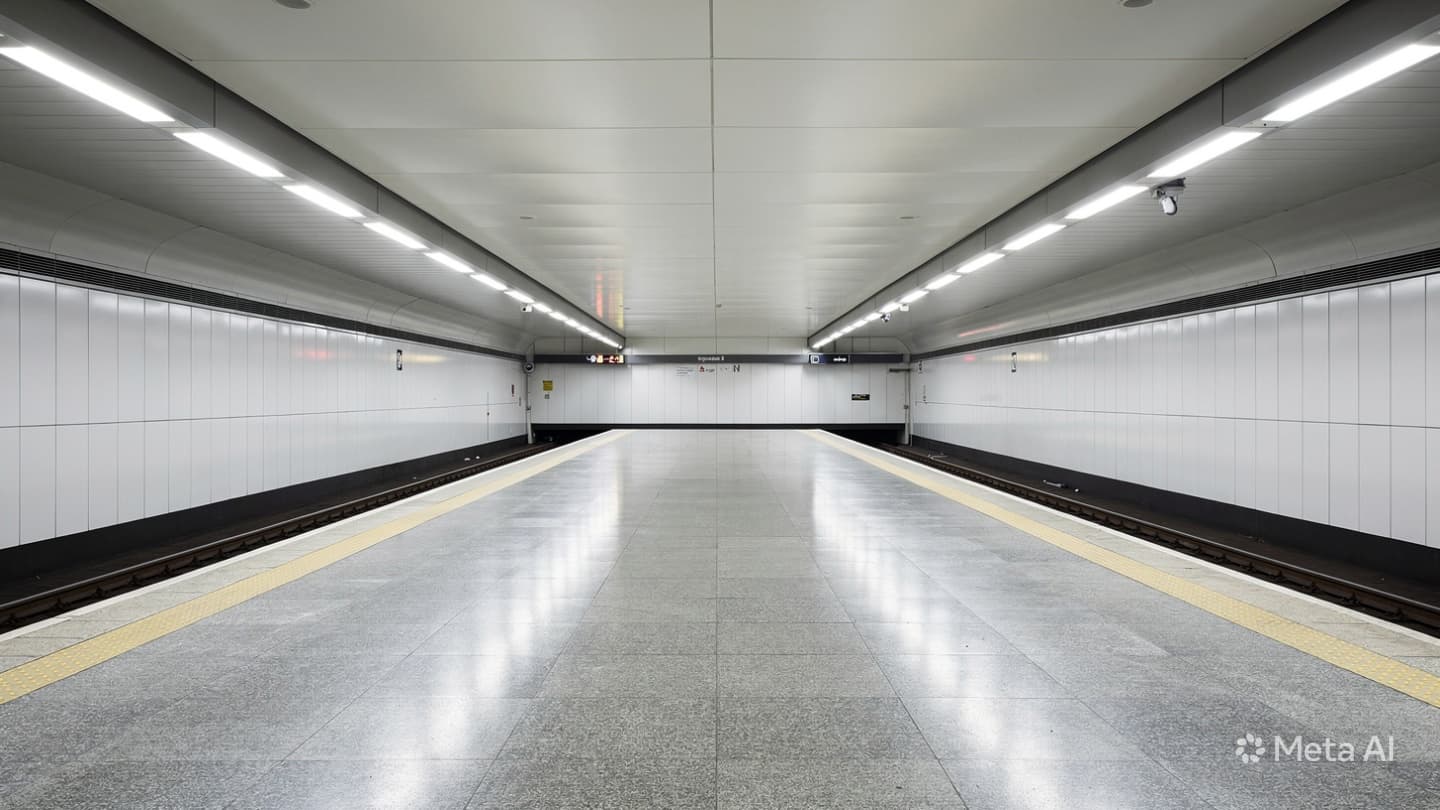
The subterranean world of a modern transit system is designed for anonymity, a place of smooth tile and concrete where thousands brush shoulders without ever meeting eyes. Below the suburban streets of Chengdu, the trains arrive with mechanical precision, their doors sliding open to swallow and release the daily tide of humanity. It is a space defined by movement, by the collective urge to get somewhere else, to cross the distance between labor and rest. In these deep tunnels, the rhythm of the city feels absolute, a continuous loop of electric hums and automated announcements.
On an ordinary evening, as the dinner hour neared, that predictable rhythm was shattered by an act of sudden, localized violence. Within the brightly lit confines of a suburban station, the shared safety of the public square vanished in a sequence of frantic movements and sharp panic. A blade, cold and out of place among the backpacks and mobile screens, altered the course of several lives in a matter of moments. When the commotion cleared, a single individual lay mortally wounded on the gray stone floor, the platform suddenly transformed into a scene of absolute stillness.
The contrast between the sterile, tiled environment and the raw reality of human mortality is a heavy thing to contemplate. The bright fluorescent tubes overhead continued to hum, casting a harsh, unblinking light over the area where emergency medical personnel knelt in vain. Passengers who had been looking at their phones moments before found themselves standing in a stunned circle, witnesses to a departure they could neither understand nor prevent. The transition from a mundane commute to a historic tragedy happened with the terrifying speed of a shutter click.
Security forces arrived quickly, their heavy boots echoing through the cavernous halls as they secured the perimeter and detained the suspect. The swift response brought a semblance of order back to the concrete terminal, but the atmosphere remained thick with shock and unanswered questions. For hours after the event, the station existed in a strange limbo, closed to incoming passengers while investigative teams mapped the platform and collected evidence. The trains passed through without stopping, their dark windows flashing past the empty benches like ghosts.
In the suburban neighborhoods that feed into this specific transit artery, the news spread quietly through digital networks, bringing a cold chill to the evening. Subway stations are supposed to be neutral ground, the safe conduits that connect our private homes to our public obligations. To have that safety punctured creates a subtle shift in how people view the strangers standing next to them on the escalator tomorrow. It forces a realization that the peace of the city relies on a fragile, unwritten contract of mutual restraint.
By midnight, the Chengdu Public Security Bureau had issued its preliminary findings, their spare prose stripping the event down to dates, names, and legal charges. Yet the official record cannot capture the heavy silence that settles over a home when a commuter fails to return. Somewhere in the suburban sprawl, a dinner went cold, and a phone rang unanswered into the early hours of the morning. The true weight of the crime is found in those domestic spaces, away from the flashing lights and police tape.
The station will be scrubbed clean before the first morning train departs, the stone floors polished until no trace of the evening remains. Commuters will stream through the turnstiles, coffee cups in hand, their steps hurried as they chase the clock toward their morning shifts. Most will walk directly over the spot without knowing, their minds occupied by deadlines and daily chores. Life in the metropolis demands this collective amnesia; the gears must keep turning, and the tracks must remain clear.
Yet, for a few who were there, the sound of the closing doors will carry a different resonance from this day forward. They will remember the sudden break in the crowd, the shouting, and the heavy realization of how quickly a life can be undone. The city will heal its physical scars with characteristic speed, but the subterranean corridors will hold the memory of a dark June night when the journey home ended far too soon.
Note: This article was published on BanxChange.com and is powered by the BXE Token on the XRP Ledger. For the latest articles and news, please visit BanxChange.com