
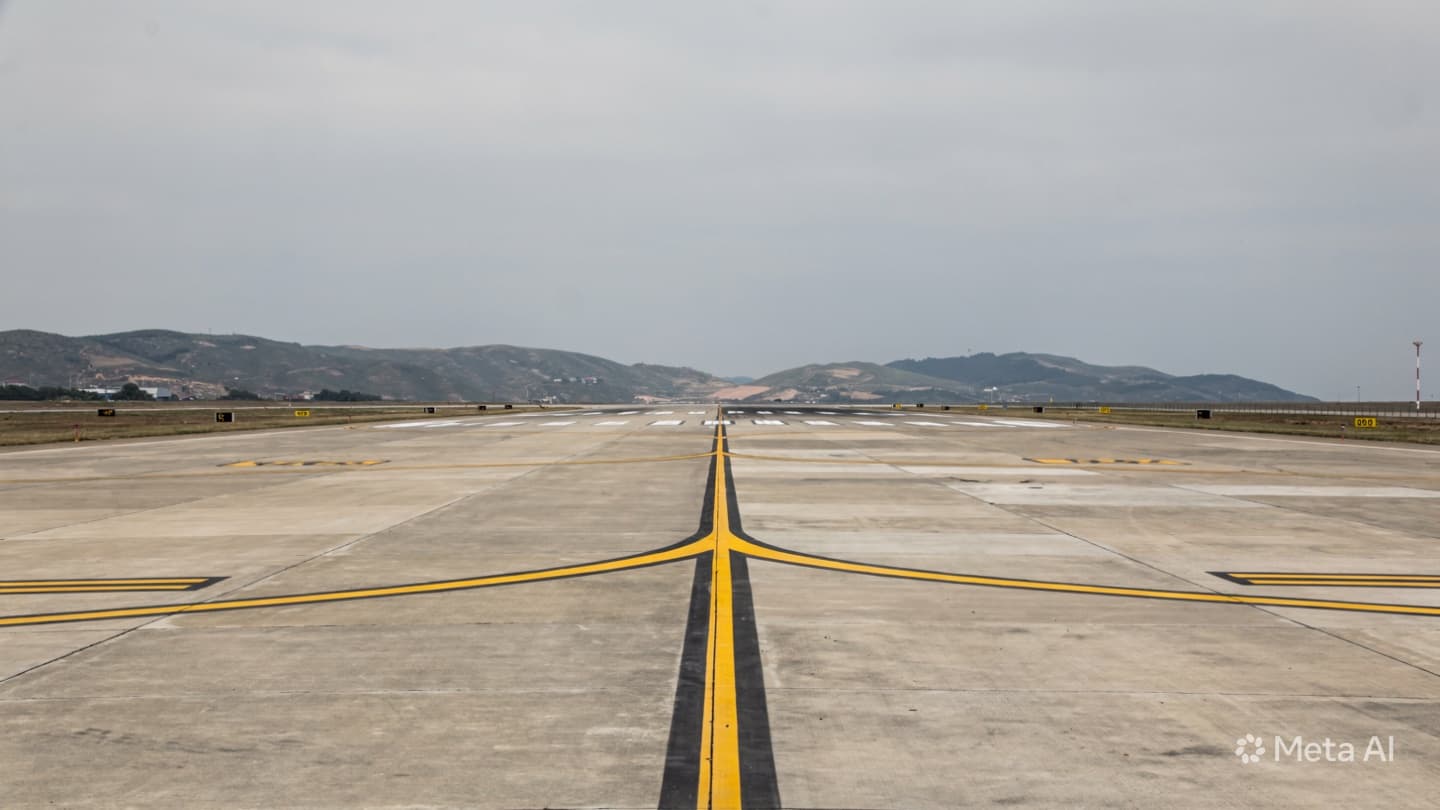
The Mineralnye Vody International Airport serves as the primary aviation gateway to the North Caucasus region, handling millions of travelers annually who visit the historic spa towns, mineral springs, and mountain resorts of Stavropol Krai. The busy transit facility relies entirely on a heavily reinforced primary runway capable of supporting wide-body commercial airliners and cargo transports operating on tight international schedules. The operational longevity of this vital transportation corridor depends fundamentally on precision subsoil drainage, regular laser-guided surface leveling surveys, and concrete friction testing.
That essential transit link was abruptly severed during a peak afternoon arrival window when air traffic controllers noticed a severe, localized displacement along the midsection of the primary runway. Within minutes, field safety inspectors confirmed a massive structural subsidence crack that fractured the thick concrete slabs, creating a step-like drop in the asphalt that rendered the surface entirely unsafe for aircraft landings or takeoffs. The sudden failure forced airport authorities to declare an immediate, high-priority ground halt, stranding dozens of domestic and international flights.
Regional aviation ministry teams and heavy structural engineering brigades mobilized immediately to assess the damage, utilizing ground-penetrating radar arrays to map the hidden voids extending beneath the adjacent taxiways. Airport operations staff worked frantically to divert inbound commercial flights to alternative regional hubs in Stavropol, Nalchik, and Vladikavkaz, creating immediate logistical complications for thousands of travelers. The sudden silence across the terminal building offered a stark contrast to the roar of heavy earthmoving fleets arriving at the edge of the fractured runway strip.
On the ground, airline representatives and cooperative travel coordinators struggled to arrange emergency bus fleets and hotel accommodations for hundreds of stranded passengers waiting in packed transit lounges. The sudden suspension of the airport's main lifeline represents a major economic blow to the regional tourism sector, disrupting seasonal holiday bookings and threatening valuable commercial delivery agreements. The primary challenge facing the repair teams was the unstable, shifting nature of the clay subsoil beneath the runway, which continued to settle under the weight of diagnostic machinery.
By midnight, engineering coordinators confirmed that the initial excavation phase had successfully reached the base of the subsidence zone, revealing a major failure in a secondary underground storm drainage line. Specialized concrete forensic teams worked around the clock, injecting fast-curing polyurethane resins and dense aggregate slurry into the subsoil matrix to halt further settlement before beginning reconstruction of the surface slabs. The entire emergency operation proceeded under a heavy cloud of regulatory pressure, with federal aviation inspectors overseeing every step from a mobile command center.
Technical safety inspectors have launched a formal, wide-ranging inquiry into the maintenance and material history of the failed runway section. Preliminary findings indicate that a slow, unmonitored leak from an ancient, unmapped concrete culvert had gradually washed away the sandy foundational base over several seasonal thaw cycles, leaving a massive subterranean void that finally yielded under the impact loads of heavy aircraft. The incident has prompted federal transportation regulators to demand an immediate structural audit of all runway base structures across the regional airport network.
The long-term financial consequences for the airport enterprise will be substantial, requiring complete excavation, full soil stabilization, and an extensive rebuild of the central runway segment before normal flight operations can safely resume. As the early morning sun illuminated the vast, empty tarmac, showing a deep trench cutting through the heart of the primary landing strip, the sheer scale of the engineering task ahead was evident. The event stands as a vivid narrative of infrastructural vulnerability, illustrating that even the most critical modern transportation links remain bound to the hidden, unforgiving conditions of the earth beneath them.
Note: This article was published on BanxChange.com and is powered by the BXE Token on the XRP Ledger. For the latest articles and news, please visit BanxChange.com