
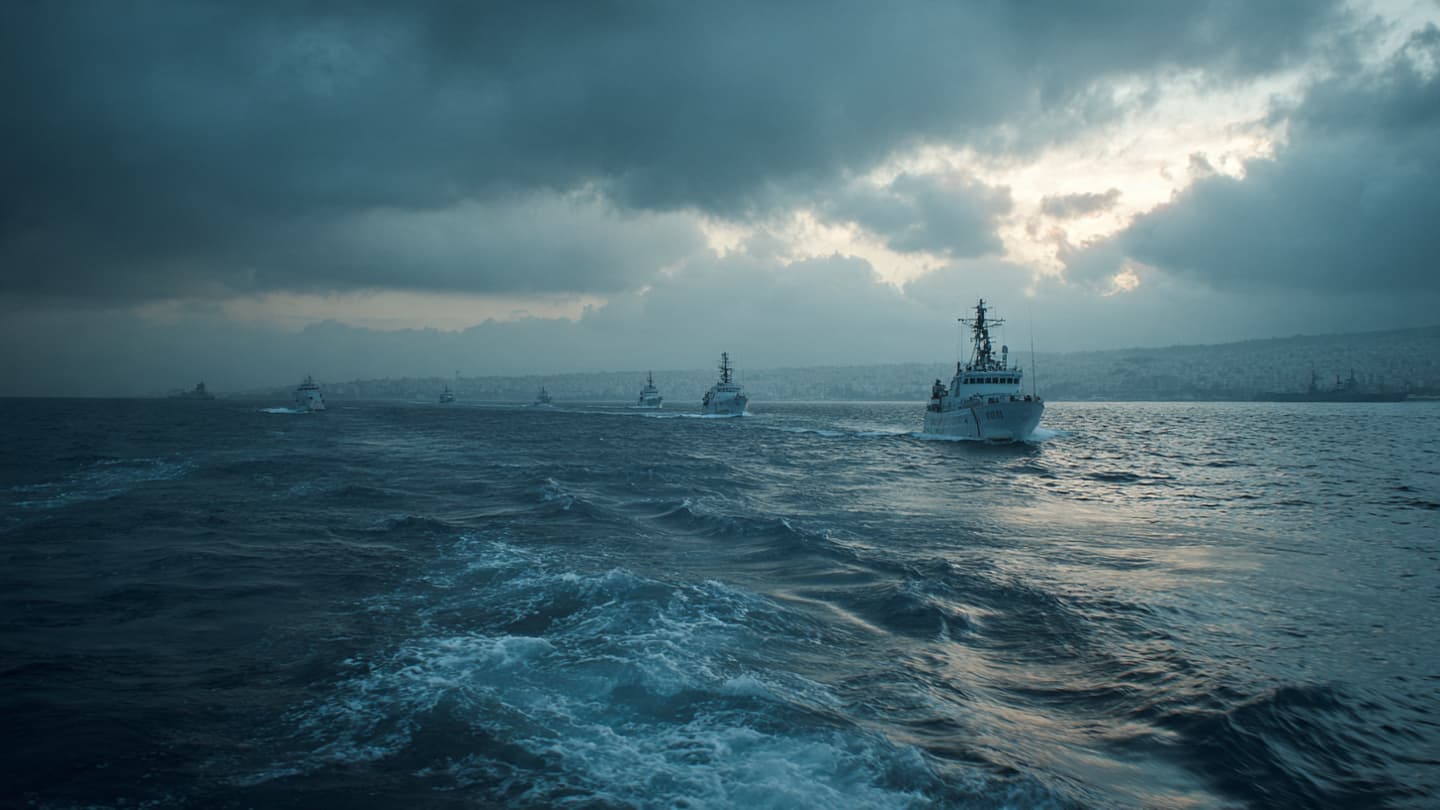
The Mediterranean often carries the appearance of calm from a distance. In the early hours, its surface reflects pale light like folded glass, while fishing boats and cargo vessels move quietly between ports shaped by centuries of trade, migration, and war. Yet these waters also hold another history — one marked by patrol routes, intercepted journeys, and political boundaries drawn far beyond the horizon visible from shore.
It was across this tense expanse that a flotilla carrying activists and humanitarian aid toward Gaza became the center of another unfolding chapter in the long conflict surrounding the enclave. According to organizers and rights groups, at least 87 activists detained after Israeli forces intercepted the aid flotilla have begun a hunger strike while in custody, protesting their detention and the seizure of the vessels attempting to reach Gaza by sea.
The flotilla, organized by pro-Palestinian campaign groups and international activists, had set sail with symbolic humanitarian cargo and calls for greater international attention to conditions inside Gaza. Participants came from multiple countries, including aid workers, lawyers, medical volunteers, and activists who described the voyage as both humanitarian mission and political statement. Israeli authorities, meanwhile, maintained that the naval blockade around Gaza remains necessary for security reasons and warned in advance that unauthorized vessels attempting to breach it would be stopped.
When naval forces intercepted the boats in the eastern Mediterranean, images and testimonies quickly spread across international media and advocacy networks. Supporters described confusion and confrontation during the boarding operations, while Israeli officials stated that passengers were detained according to security procedures before being transferred for processing. In the days that followed, lawyers and human rights organizations reported that dozens of those detained had launched a hunger strike, refusing food while demanding release and protesting the broader blockade surrounding Gaza.
The hunger strike unfolded against the backdrop of a conflict already heavy with exhaustion and grief. Gaza’s humanitarian conditions have remained under intense global scrutiny amid continuing military operations, displacement, and shortages of food, medicine, and infrastructure. Aid convoys on land continue facing delays and logistical challenges, while sea-based humanitarian initiatives carry both symbolic weight and political risk.
For many involved in the flotilla movement, the voyage represented more than transportation of supplies. It reflected a long tradition of maritime activism in the region, where ships become floating demonstrations — small spaces of protest moving across international waters toward heavily contested shores. Previous flotilla missions over the past decade have similarly drawn international attention, diplomatic friction, and fierce debate over legality, sovereignty, and humanitarian access.
The Israeli government continues to argue that unrestricted maritime access to Gaza could allow weapons smuggling and threaten national security. Critics of the blockade, however, describe it as a system that deepens civilian suffering and isolates the territory from broader economic and humanitarian lifelines. Between those positions lies a widening landscape of international concern, where diplomacy often struggles to keep pace with events unfolding on the ground — and at sea.
Meanwhile, families of detained activists wait across several countries for updates filtered through lawyers, consular officials, and advocacy groups. Some detainees are reportedly being held pending deportation procedures, while negotiations continue quietly between governments and legal representatives. The hunger strike has added urgency to those discussions, introducing another layer of vulnerability into an already fragile situation.
Beyond the legal arguments and diplomatic statements, the image that remains is strikingly simple: people refusing food while held far from home, after a voyage intended to carry aid toward a besieged coastline. The sea surrounding Gaza, vast and open in appearance, has once again become a place where humanitarian aspiration collides with military control and geopolitical fear.
As evening settles over Mediterranean ports and naval vessels continue their silent patrols beneath fading light, the detained activists remain suspended between protest and uncertainty. Their hunger strike now joins the wider language of the conflict itself — a struggle expressed not only through weapons and negotiations, but also through bodies, endurance, and the quiet insistence of being seen.
AI Image Disclaimer These images are AI-generated artistic representations intended to illustrate the subject matter described.
Sources
Reuters Associated Press Al Jazeera United Nations Amnesty International
Note: This article was published on BanxChange.com and is powered by the BXE Token on the XRP Ledger. For the latest articles and news, please visit BanxChange.com