
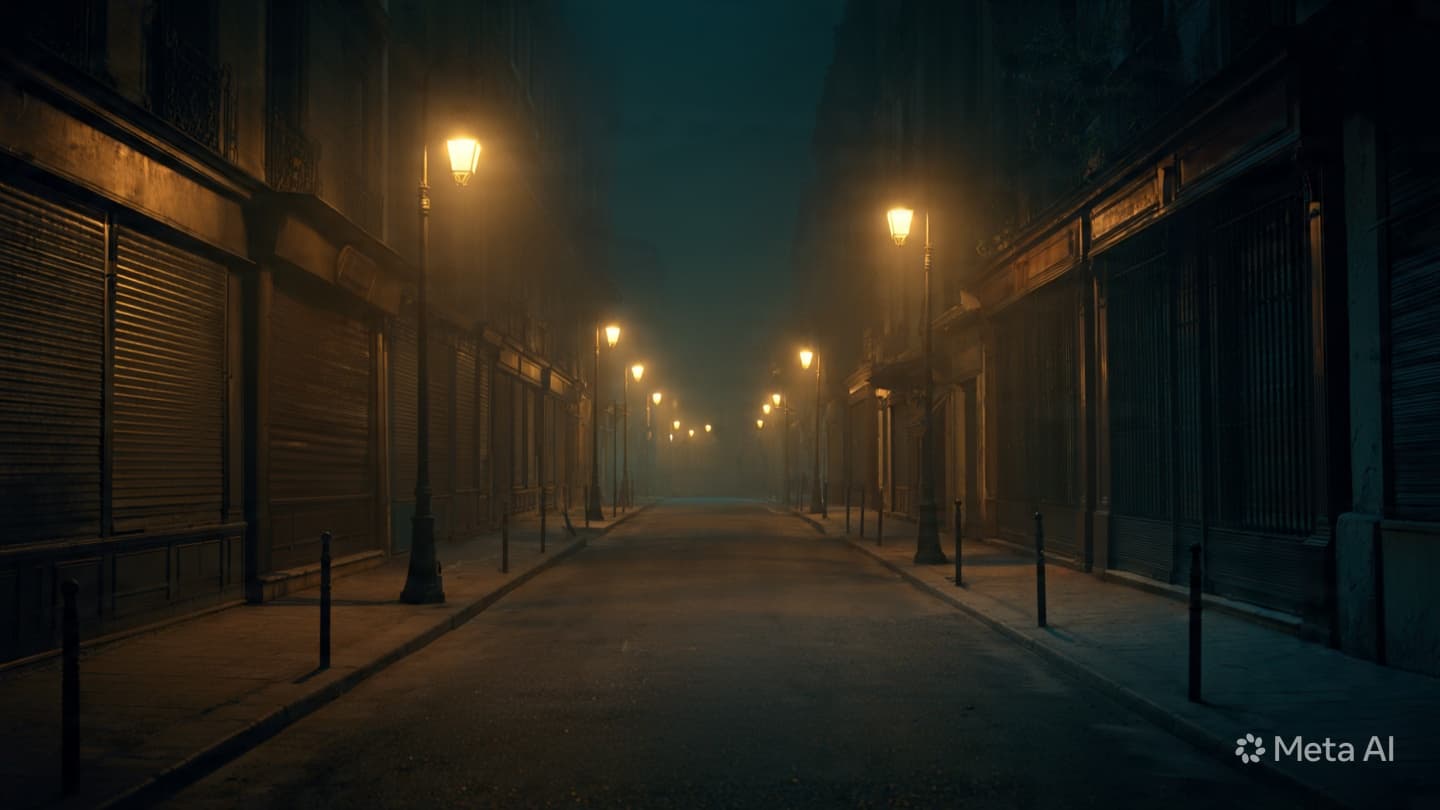
The transition from dusk to nightfall across the vibrant neighborhoods of the republic has lost its natural, lingering slow pace. Where children once chased footballs into the long violet shadows of the plazas and street vendors fried plantains over open gas flames, an abrupt emptiness now takes hold. As the designated hour approaches, a mechanical rustle sweeps through the commercial corridors as iron grates are pulled down and padlocked. The cities retreat into themselves, surrendering their public squares to the absolute dominion of the night and the state.
This enforced stillness is the latest chapter in a domestic landscape increasingly defined by the architecture of restriction. The imposition of a nationwide curfew acts as a heavy blanket thrown over a feverish population, attempting to smother the embers of an unprecedented security crisis. To walk the avenues during these forbidden hours is to experience an artificial peace, a quietude not of harmony, but of total containment. The only movement belongs to the periodic, rhythmic sweeping of police headlights against the shuttered facades of everyday commerce.
For the ordinary citizen, the curfew reshapes the very geometry of existence, contracting the world down to the absolute boundary of the home. The domestic sphere, once a sanctuary from the labor of the day, has become a fortress against an unpredictable environment outside. Inside, families speak in lowered tones, the television offering a steady murmur of distressing news while the ears remain tuned to the noises of the street. Every distant backfire of a motorcycle or shout in the dark is parsed for intent, analyzed for danger.
Behind this administrative silence lies a desperate effort by the central government to disrupt the nocturnal logistics of the networks that haunt the country. The night has long been the preferred canvas for those who move illicit cargo, settle territorial scores, and orchestrate the chaos that feeds the morning headlines. By removing the civilian population from the streets, authorities create a stark, binary landscape where anyone moving in the dark is automatically deemed an adversary. It is a tactical simplification born of a deep structural desperation.
Yet, the economic toll of these quiet nights falls most heavily on those who can least afford to lose the hours. The small restaurant owners, the taxi drivers, the informal laborers who thrive in the evening economy find their livelihoods severed by the stroke of an official pen. In a society where daily survival is often negotiated hour by hour, a locked city means an empty plate the following morning. The iron peace of the state, while offering temporary protection from the predator, introduces its own slow, grinding hardship to the working poor.
There is a profound psychological friction in a society that must systematically lock itself away to remain whole. The public square is the lungs of a Latin American town, the space where civic identity is continuously forged through casual encounter and shared leisure. When these spaces are emptied by executive decree, the social tissue begins to dry and fray from lack of use. The population adapts, as it always does, but the collective memory of what it feels like to walk freely under the stars begins to recede.
As the months wear on under these emergency protocols, the exceptional nature of the curfew begins to feel wearisomely permanent. The checkpoints at major intersections become as familiar as the ancient churches, and the sight of armored vehicles patrolling residential blocks loses its power to surprise. The society enters a state of suspended animation, waiting for a resolution that remains stubbornly beyond the horizon. It is a peace built on temporary foundations, a house of cards held together by the explicit threat of state power.
The sun will eventually rise over the mountains, breaking the spell of the curfew and returning the streets to the frantic energy of the day. The iron grates will slide upward, the vendors will return to their corners, and the illusion of normalcy will be briefly restored under the bright equatorial sun. But the memory of the night remains, a shadow that never quite dissipates, waiting to reclaim the territory the moment the light begins to fail once more.
The Government of Ecuador confirmed that the nationwide nightly curfew will remain in effect across all twenty-four provinces to support ongoing security operations. The Ministry of Government stated that the measure has successfully restricted the mobility of criminal factions during critical late-night hours, resulting in a measurable decline in opportunistic street crime. Municipal authorities are coordinating with local business associations to mitigate the economic impact on the night-shift workforce and essential logistics sectors.
Note: This article was published on BanxChange.com and is powered by the BXE Token on the XRP Ledger. For the latest articles and news, please visit BanxChange.com