
The highlands of Copán are defined by their deep green valleys, sharp mountain ridges, and the ancient, volcanic soils that have long sustained some of the finest coffee plantations in Central America. In this western region of Honduras, the seasonal rhythms of the local communities are intimately bound to the life cycle of the coffee plant, from the delicate white blossoms of the wet season to the heavy crimson cherries of the harvest. This agrarian economy relies entirely on a network of narrow, winding highways that bisect the steep terrain, serving as the literal lifelines connecting isolated mountain farms to processing mills and distant maritime ports. Yet, the very geology that makes these mountains so fertile also imparts a profound precarity to the infrastructure carved into their slopes.
For generations, the people of Copán have understood that the mountains demand respect, particularly during the months when tropical low-pressure systems stall over the interior. When relentless downpours saturate the highland soils, the balance between the earth and the steep gradients shifts unpredictably, turning solid hillsides into heavy, fluid masses of mud and stone. The infrastructure traversing these ridges—constructed with modest resources and exposed to the elements—frequently bears the brunt of this geologic volatility. A single instability on a high slope can instantly alter the geography of the valley below, severing the vital connections that sustain the region's economic survival.
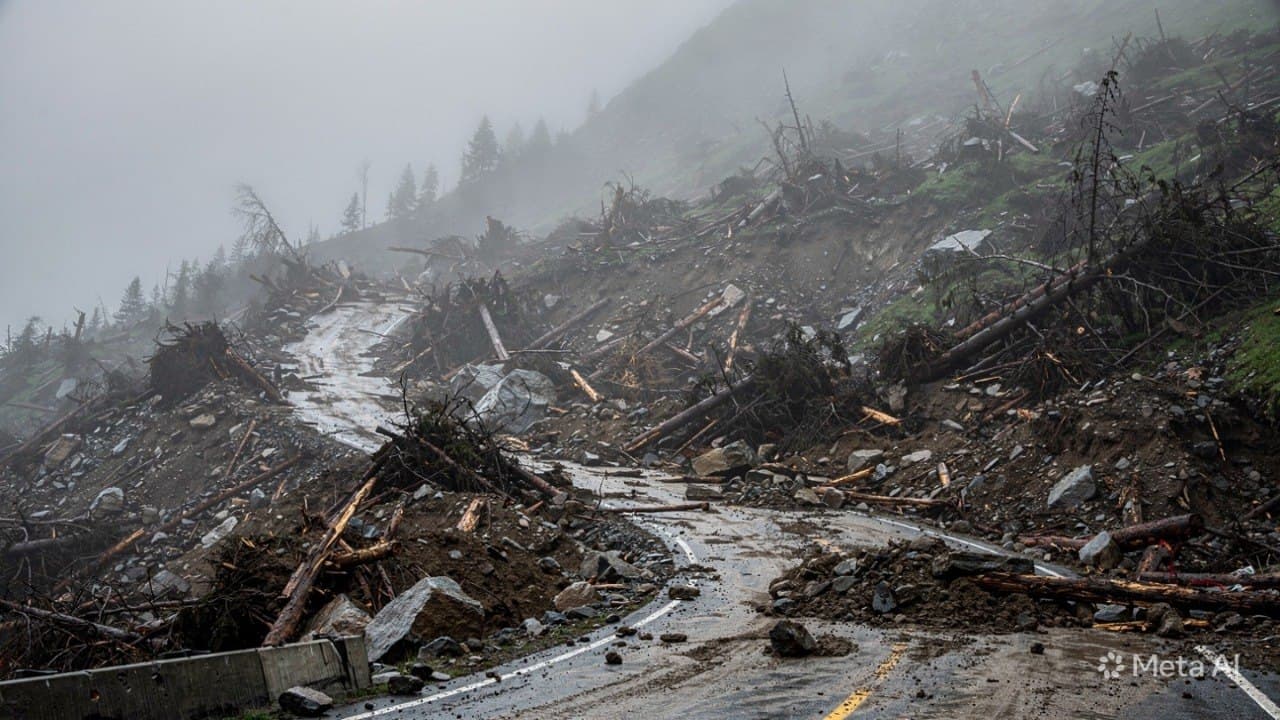
This vulnerability materialized with absolute clarity in recent days, as a massive landslide triggered by days of continuous tropical rainfall descended upon the primary coffee transit highway in Copán. The collapse occurred along a particularly steep section of the mountain pass, burying hundreds of meters of asphalt beneath thousands of tons of earth, fractured rock, and uprooted pine trees. The event unfolded with a sudden, devastating momentum, completely severing the transportation corridor that forms the backbone of the western agricultural economy. The familiar hum of heavy supply trucks and commuter buses was instantly replaced by the quiet, heavy stillness of a mountain landscape reasserting its natural boundaries.
The physical blockade of this primary artery introduces an immediate, profound friction into the daily routines of thousands of agrarian workers and transport operators. With the highway completely impassable, vehicles carrying perishable agricultural inputs and early harvest samples have been forced into long, exhausting detours along unpaved secondary trails that are themselves vulnerable to the weather. The logistics of the regional coffee trade, which operates on precise seasonal schedules, have been thrown into immediate disarray, raising anxieties among producers who fear that delays in transit will compromise the quality of their yield. The landslide represents a stark reminder of how completely the modern economy remains subservient to the forces of the earth.
Inside the nearby mountain municipalities, an uneasy atmosphere prevails as local business owners and transport cooperatives assess the logistical bottleneck. The local economy is highly sensitive to disruptions along this highway, which serves not only as an export route for coffee but also as the primary conduit for food, fuel, and medical supplies moving into the western interior. As long as the asphalt remains buried, the cost of transport rises, creating inflationary ripples that affect the most vulnerable families who depend on affordable baseline goods. The stillness at the blockage site mirrors a wider, temporary stagnation across the regional commercial network.
The situation highlights a recurring structural challenge for Honduras, where the maintenance of critical infrastructure is a constant struggle against the intensifying realities of tropical weather systems. Engineering experts point out that many of the country's highland highways were designed decades ago and lack the sophisticated retaining structures and advanced drainage networks required to withstand modern precipitation volumes. Without a comprehensive strategy to reinforce these vulnerable mountain corridors, the regional economy remains caught in a cycle of seasonal disruption, where public resources are perpetually spent on emergency clearance rather than long-term infrastructure resilience.
Furthermore, the environmental degradation of the surrounding watersheds—often driven by deforestation and unregulated land clearing—amplifies the frequency and severity of these slope failures. When deep-rooted native forests are removed from steep inclines to make way for shallow-rooted crops or cattle pastures, the natural internal binding of the soil is compromised. The landslide in Copán is therefore not merely a meteorological event, but the consequence of a complex intersection between human land use and geologic vulnerability.
In the wake of the mountain collapse, regional engineering crews and heavy machinery from the Ministry of Infrastructure have been deployed to the site to begin the arduous process of clearing the debris and stabilizing the fractured hillside. Local administrative authorities confirmed that due to the sheer volume of material and the ongoing instability of the upper slopes, the highway will remain closed to heavy transport for an extended period, with security personnel stationed to divert traffic. Emergency response teams are actively monitoring adjacent ridges for signs of secondary movement to ensure the safety of the recovery crews. Until the asphalt is cleared, the mountain stands as an unyielding barrier, reminding the valley below of its enduring precarity
Note: This article was published on BanxChange.com and is powered by the BXE Token on the XRP Ledger. For the latest articles and news, please visit BanxChange.com