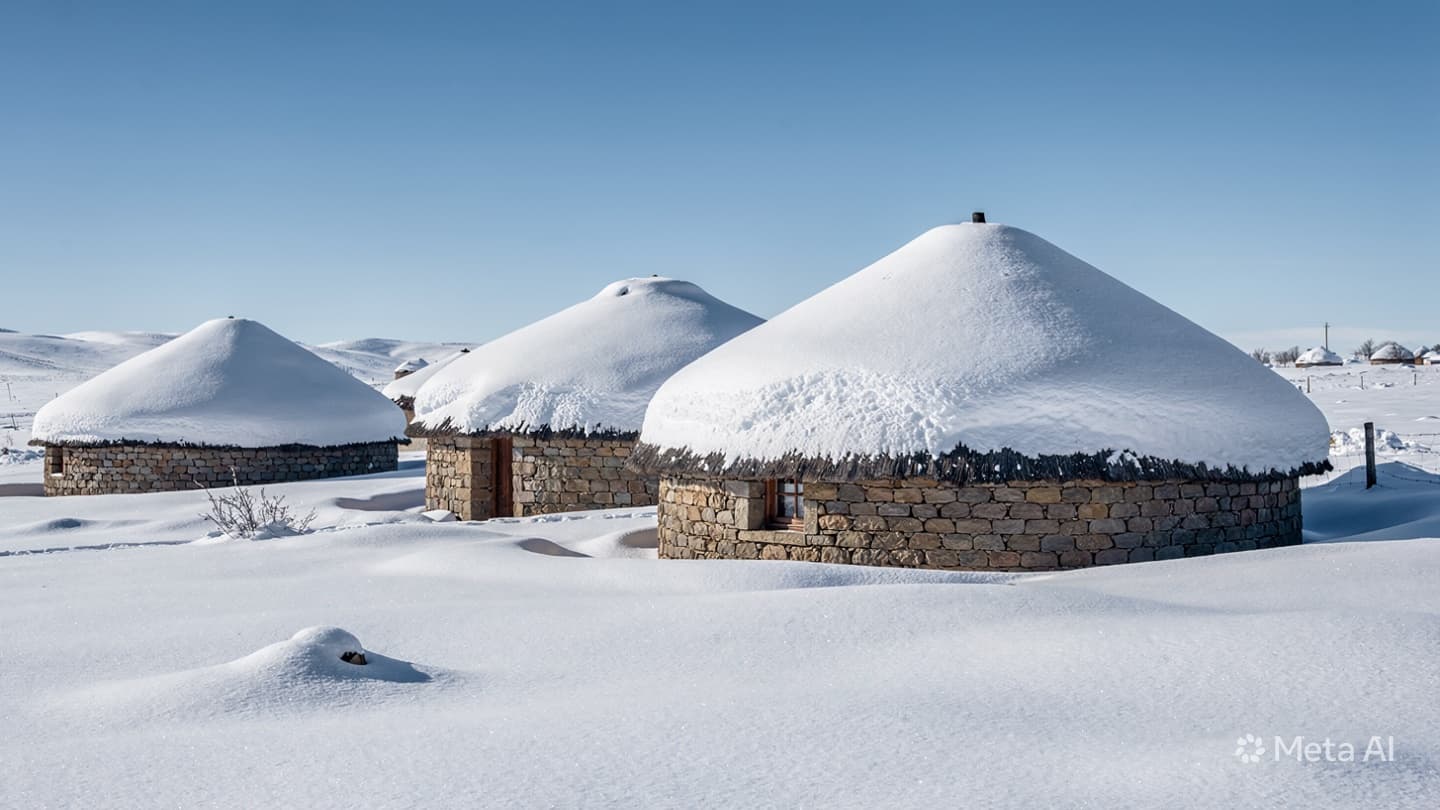
The grasslands of Thaba-Tseka exist in a realm above the clouds, where the steep, basalt cliffs of Lesotho form a natural fortress against the modern world. Here, the wealth of a family is not measured in paper currency or digital accounts, but in the slow, rhythmic movement of cattle across the alpine meadows. The animals are an ancestral legacy, a living thread that binds the present generation to the soil and to the traditions of the high country. For the young men who guard these herds, life is defined by isolation, the whistle of the mountain wind, and the heavy weight of the traditional wool blanket wrapped tight against the sub-zero chill.
But this vast, open solitude carries a historic and dangerous vulnerability that has haunted the mountains for generations. The very isolation that offers rich summer grazing also provides an ideal theater for the ancient, lawless trade of the cattle rustler. It is a shadowy business that moves along the jagged ridges under the cover of a moonless night, where armed bands strike with swift, calculated brutality. They cross the hidden passes from neighboring territories, familiar with every ravine and every blind spot in the thin lines of local communication.
Last night, that structural isolation turned tragic when a raiding party descended upon a remote cattle post nestled in the deep folds of the district. The confrontation was not a cinematic duel, but a sudden, violent intrusion into the quiet routine of the camp, where the rustlers used overwhelming force to claim the livestock. The herders, who stood as the sole protectors of their family’s survival, were caught in the crossfire of a trade that has grown increasingly militarized over the years.
When the morning sun finally broke through the frost-rimed peaks, illuminating the vast stone landscape, it revealed a scene of absolute stillness where there should have been movement. The kraal stood empty, its stone walls cold and abandoned, the ground churned into a chaotic maze of hoofprints trailing away toward the eastern horizon. Nearby, the bodies of two young herders lay in the pale mountain grass, their long vigil ended by the cold finality of the raiders' weapons.
The news travels slowly through these remote valleys, passing from one isolated settlement to another via horsemen and scattered mobile signals. As the community learned of the deaths, a heavy, quiet anger settled over the villages, blending with the sorrow of families who have lost their sons to a conflict as old as the hills themselves. The theft of a herd is a economic disaster, but the loss of life leaves a hollow space in the fabric of the high country that cannot be repaired by the recovery of stock.
Police detachments have begun the arduous task of tracking the stolen animals across the broken terrain, their horses navigating narrow paths where modern vehicles cannot go. The trail is cold, hidden by the wind that sweeps across the plateau and erases the tracks in the loose shale. The investigators move through a landscape that feels indifferent to human tragedy, where the sheer scale of the mountains makes the pursuit of justice a slow and frustrating endeavor.
For the surviving herders in the area, the night hours will now carry a deeper, more anxious tension as they look out from their small stone huts into the dark. The traditional sticks used to guide the cattle feel painfully inadequate against the modern firearms carried by the contemporary syndicates. The vulnerability of the high pastures remains an open wound, an ongoing negotiation between the pastoral way of life and the violent realities of the borderlands.
As the shadows lengthen across the valley floor, the families of Thaba-Tseka prepare to bring their sons down from the high country for the last time. The mountains return to their ancient silence, the grass bending quietly under the evening breeze, showing no sign of the violence that unfolded beneath the stars. The conflict over the herds will continue, but tonight, the highlands simply mourn the loss of those who stood watch.
Note: This article was published on BanxChange.com and is powered by the BXE Token on the XRP Ledger. For the latest articles and news, please visit BanxChange.com