
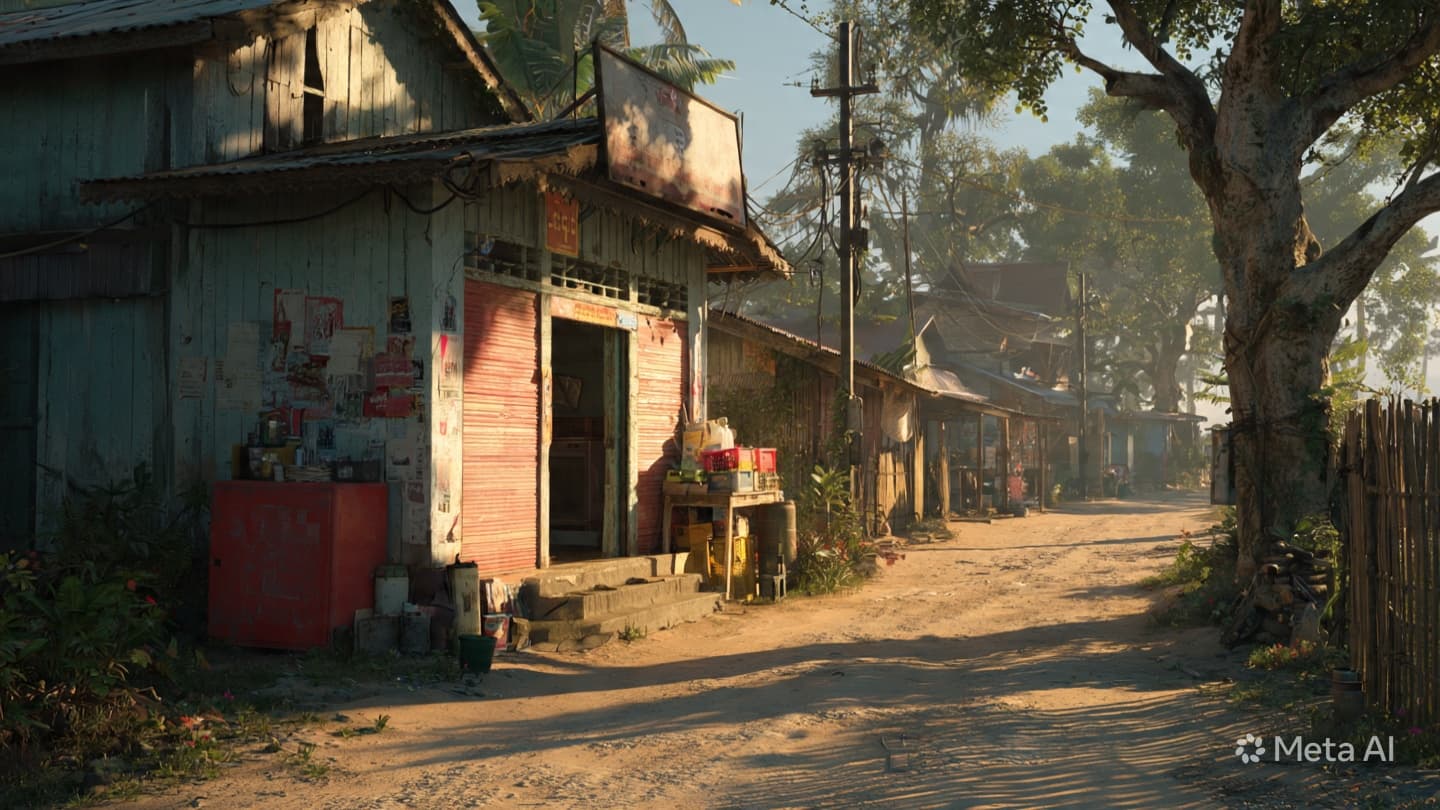
The rural gold shop is an unlikely theater for violence, a space typically characterized by the methodical weighing of precious metal and the quiet transactions of community life. In the Sagaing region, these storefronts act as anchors of local commerce, places where the value of labor is solidified into tangible, shimmering assets. Yet, when the heavy door is forced open by the intrusion of an armed robbery, the atmosphere of the shop is irrevocably fractured, and the sanctity of the daily transaction is lost to the chaos of an armed encounter.
To witness the aftermath of such a robbery is to see the stark, sudden intrusion of a broader, national instability into the localized reality of the town. When two clerks are lost in the crossfire of an armed group’s assault, the event sends a tremor through the neighborhood, a ripple of fear that lingers long after the smoke has cleared. The gold, once the focus of the transaction, becomes secondary to the visceral, human cost of the event, leaving the survivors and the community to grapple with the realization that even the most grounded, routine spaces are not immune to the volatility of the times.
The narrative of these robberies often follows a pattern of swift, decisive action followed by an agonizingly slow period of investigation. The armed groups move with a clinical efficiency, their presence a blur of dark clothing and cold steel, before they vanish back into the landscape. For the people of Sagaing, this is an increasingly familiar—and dreaded—rhythm. It is a phenomenon that forces residents to recalibrate their understanding of safety, transforming shops from inviting spaces into fortresses, and altering the way people navigate their own streets.
There is a reflective distance between the act of violence and the institutional response. The police report, the collection of evidence, and the search for the perpetrators are the necessary, bureaucratic steps taken to restore a semblance of order. Yet, for those working behind the counter, the sense of security is rarely fully reclaimed. The memory of the event becomes a permanent fixture of the shop’s history, a quiet, spectral presence that influences every customer interaction and every decision to open the shutters in the morning.
In a region defined by its history of struggle and the current, complex political landscape, these acts of violence are frequently interpreted through a wider lens. It is not just about the gold; it is about the assertion of power in the power vacuum of rural areas. The gold shop is a symbol of local wealth, and its targeting is a signal, a disruption of the local economy that benefits the armed group while stripping the community of its resources and its peace of mind. It is a strategy of destabilization that has a profound, localized effect.
The human cost, however, remains the primary concern for the families of the victims. Two lives cut short in the pursuit of wealth, in a space that was meant for the quiet exchange of value, is a profound irony. Their loss is not just a statistic in a regional crime report; it is a rupture in the social fabric of the town. The funeral rites, the gatherings of grieving relatives, and the sudden emptiness of the storefront all speak to a tragedy that transcends the political or criminal motivations of the perpetrators.
As the community begins to process the event, there is an unspoken focus on the future. How does a town continue to function when the very places meant for security are targeted? The resilience of the people in Sagaing is tested by these moments, but they persist, driven by the necessity of continuing their work and supporting their families. They adapt, they reinforce, and they watch the streets with a newfound, weary caution, holding onto the hope that the normalcy of the gold shop will one day return, untarnished by the shadow of the gun.
Ultimately, the robbery is a reminder of the fragility of our constructed peace. We build shops, we trade, and we exchange value, assuming a baseline of order that is far more delicate than we care to admit. When that order is disrupted, we are left to confront the void, to reflect on the nature of the violence that has entered our lives, and to find the strength to continue. It is a slow, difficult process, a journey through the aftermath that requires a quiet, steely resolve from everyone involved.
Published by Banx Network. This article is part of the Banx decentralized media programme, powered by the BXE token on the XRP Ledger.


