
The commercial centers of Podgorica move with a rapid, digital economy, where retail hubs, banking institutions, and daily cash transactions drive the financial heartbeat of the capital. In these busy urban districts, the flow of paper currency remains an essential component of small-scale commerce, sustaining the thousands of daily interactions between merchants and consumers. This constant exchange of banknotes requires absolute trust in the integrity of the state's financial instruments, a baseline security that protects both the small business owner and the larger banking networks. But within this high-volume cash ecosystem, organized syndicates continually seek to introduce high-quality counterfeit currency, hoping to exploit the speed of retail environments to launder forged notes into legitimate circulation.
The networks that specialize in the production and distribution of counterfeit currency operate with a high level of technical sophistication, shifting away from crude paper copies toward precision offset printing and chemical paper treatments. These syndicates utilize advanced digital imaging software and specialized inks to replicate the complex security features—including holographic strips and watermarks—of major denominations. The strategy relies on local distribution rings that target high-volume cash businesses, such as night markets, gas stations, and busy grocery stores, where cashiers are less likely to inspect individual bills during peak hours. The economic impact of this fraud is direct, draining profits from independent retailers and undermining public confidence in the physical currency.
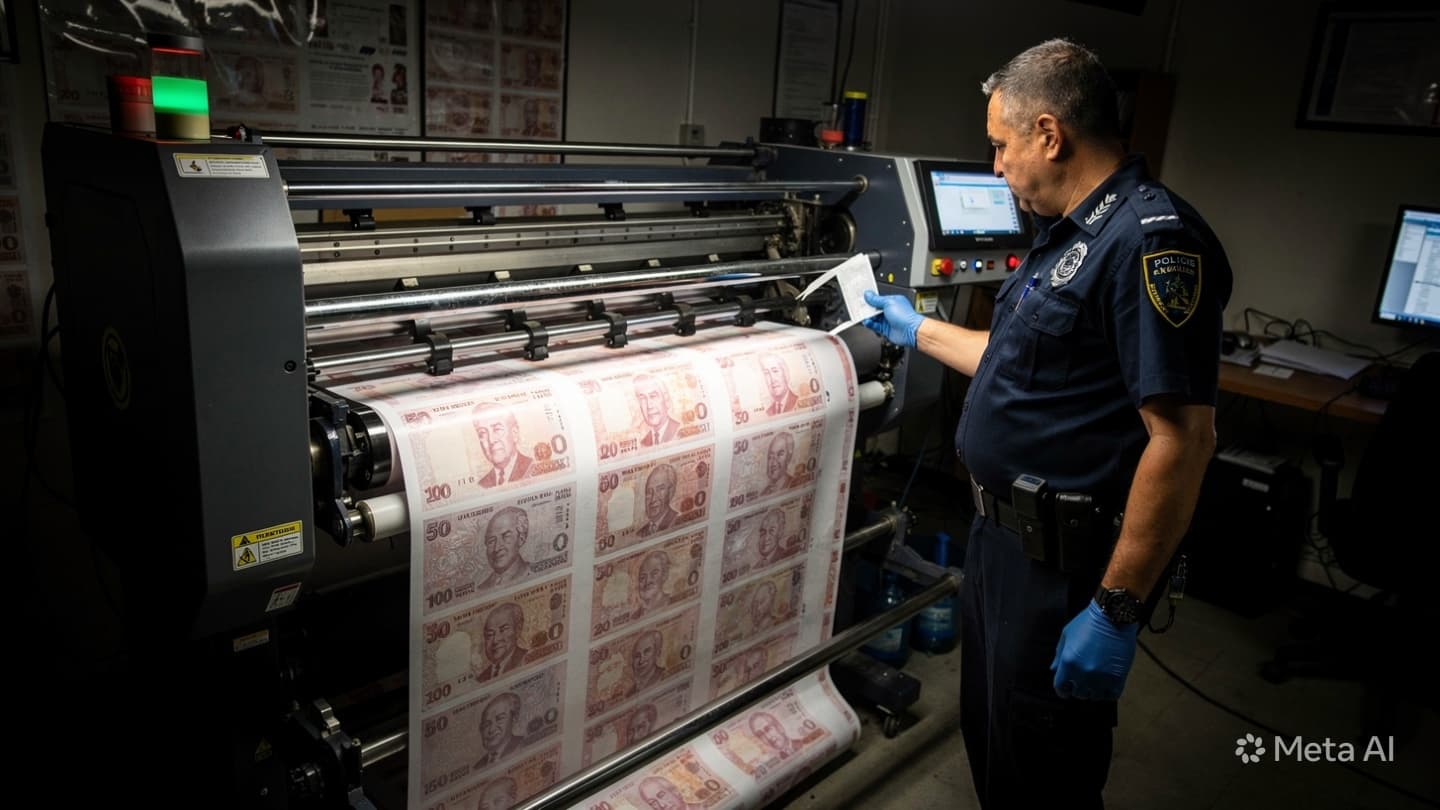
The recent intervention by the economic crimes unit of the national police was the culmination of a multi-month intelligence operation that relied on undercover buys and detailed forensic analysis of seized banknotes. Acting on a coordinated tactical plan, specialized police units executed simultaneous search warrants on a series of residential apartments and commercial storage facilities situated in the capital's suburbs. Inside the primary target location, officers discovered a fully operational, clandestine printing workshop equipped with high-grade digital presses, chemical drying racks, and thousands of partially finished high-denomination banknotes. The raid resulted in the immediate arrest of three key organizers and the seizure of a massive volume of illicit financial materials.
There is a precise, methodical atmosphere that characterizes the forensic phase of such an economic crackdown, where specialized investigators spend hours cataloging the technical equipment and chemical components used in the fraud. Every printing plate, ink cartridge, and paper ream is secured as critical evidence, their chemical profiles destined to be matched against counterfeit notes currently circulating in the regional market. For the financial authorities, the discovery of such a sophisticated production cell is a sobering reminder of the constant technical evolution of financial crime. The seized banknotes remained stacked in uncut sheets on the printing tables, a silent testament to a multi-million euro fraud network that was dismantled before its inventory could be deployed.
The technical analysis of the forged currency has revealed that the syndicate was utilizing a specific polymer blend designed to mimic the exact tactile feel of official banknotes, making detection by touch alone nearly impossible for the average consumer. This level of production quality suggests the involvement of international criminal networks that export specialized raw materials across European borders to localized assembly points. Financial analysts emphasize that Podgorica remains a primary hub for these currency distribution attempts due to its high concentration of cash-reliant hospitality and retail businesses. The success of this police operation has been hailed as a significant victory for the preservation of regional financial stability.
As the state prosecutors move to file formal charges related to large-scale currency counterfeiting, organized financial fraud, and money laundering, banking institutions are updating their detection protocols. The central bank has issued a fresh technical bulletin to commercial merchants, detailing the subtle anomalies in the micro-printing of the seized notes to help cashiers identify any remaining counterfeits left in circulation. The government has reiterated its commitment to upgrading national forensic capacities, recognizing that the defense of the financial system requires continuous technological parity with modern criminal syndicates. The printing workshop remains locked under judicial seal, its machinery silent and dark.
The retail lanes of the capital resume their regular, noisy commercial rhythm, with cash registers chiming as the morning shopping rush peaks. Financial inspectors continue their routine sweeps of local markets, distributing security pens and electronic scanners to independent shopkeepers to strengthen the first line of defense against fraudulent paper. The legal apparatus prepares a complex case against the detained printing specialists, who face lengthy prison sentences under federal anti-counterfeiting statutes. The capital's financial infrastructure returns to its regular state of monitoring, its security ensured by the quiet, technical vigilance of the state's economic defenders.
Note: This article was published on BanxChange.com and is powered by the BXE Token on the XRP Ledger. For the latest articles and news, please visit BanxChange.com