The bustling urban avenues of our expanding regional cities possess an enduring, vibrant relationship with the complex network of subterranean utilities and drainage systems that run silently beneath the pavement, sustaining thousands of households above. Life inside these densely populated neighborhoods moves to a rapid, predictable cadence, governed by the morning rush hour and the shared utilization of public walkways. To an outside observer, the heavy layers of concrete and asphalt appear entirely solid, a secure foundation that has supported the weight of the city for decades. Yet, when an undetected water main leak or shifting groundwater channel causes gradual subterranean erosion, that familiar street surface can become a thin, structural mask over an immense void.
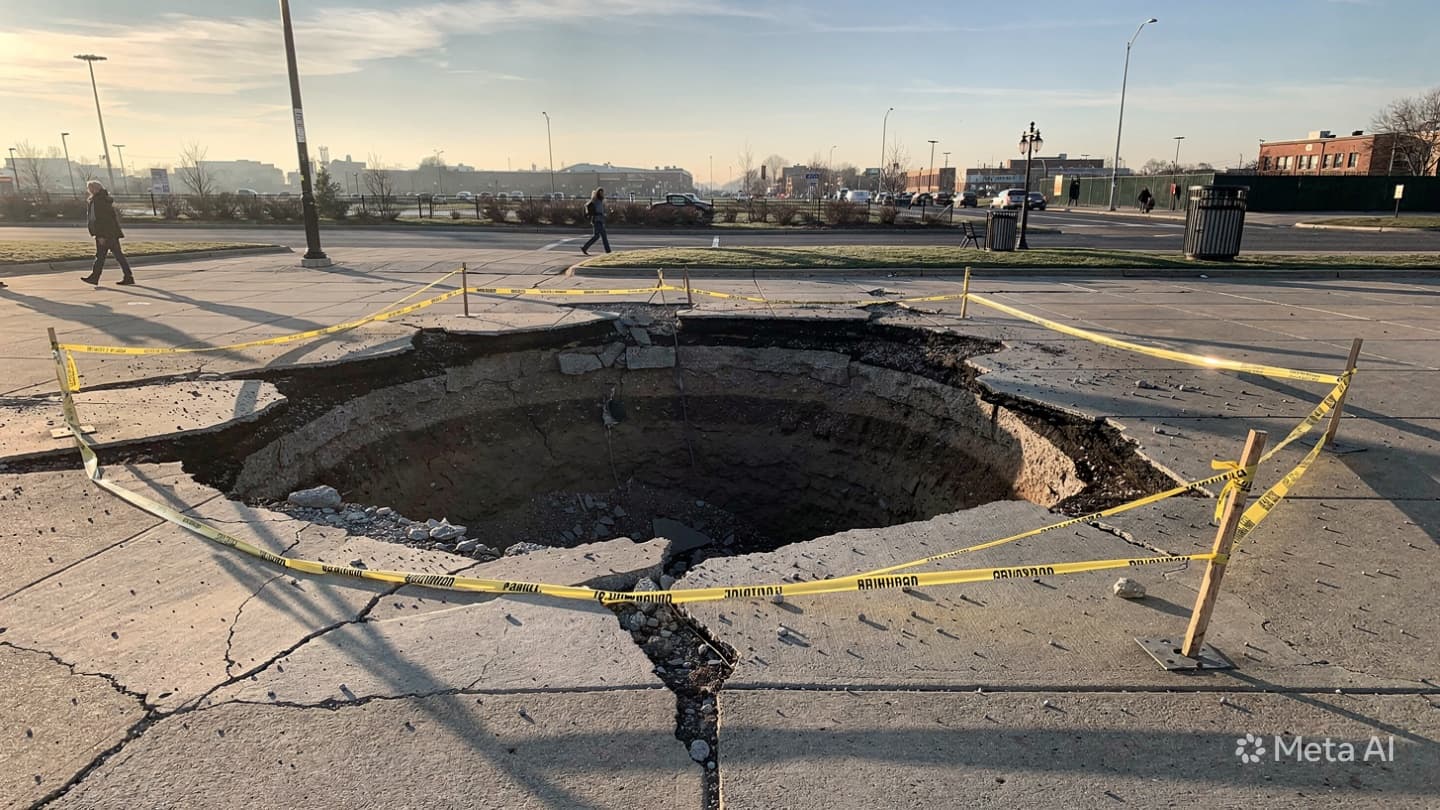
On this particular night, the hidden geology beneath a residential sidewalk reached a critical point of instability, as decades of silent water erosion completely washed away the supporting alluvial soil matrix. The collapse occurred during the quiet hours of the early morning, entirely out of sight, leaving only a fragile crust of asphalt bridging a deep, water-filled cavern below. There is an implicit trust in the physical permanence of the earth we walk upon, built on the assumption that the sidewalk remains a predictable space for public movement. Yet, the silent removal of sub-base material alters the integrity of the urban landscape completely, transforming a familiar path into a zone of immediate structural peril.
The transition from a routine morning walk to a fatal infrastructure failure happens in a fraction of a second, preceded only by the brief, hollow sound of fracturing asphalt. As a pedestrian steps onto the compromised section of the walkway, the unsupported crust collapses instantly under the sudden application of shifting weight, plunging the individual into the dark chasm below. In the dark, the sheer vertical depth of the sinkhole and the presence of fast-flowing mud make it extraordinarily difficult for anyone caught in the collapse to find purchase or call for assistance. It is a sequence where the hidden vulnerability of our built environment becomes visible against the backdrop of a regular neighborhood street.
When the municipal rescue teams and specialized shoring crews finally secured the crumbling edges of the crater and lowered their recovery equipment, the true nature of the structural failure was revealed. The recovery of a local resident from the bottom of the water-choked void cast a profound, heavy sorrow over the entire residential block, bringing an abrupt halt to the morning routines of the street. The surrounding pavement, marked by ragged fractures and dangling utility conduits, stood as a silent witness to the sudden violence of the earth's collapse. The street grew quiet, save for the hum of vacuum trucks and the hushed voices of neighbors gathering behind the police tape.
The loss of life within a standard civic corridor carries a unique weight, representing a sudden, tragic rupture in the physical infrastructure intended to provide safe transit through the modern city. The sidewalk was designed by municipal planners to offer a secure, illuminated path for the community, rather than a place of sudden physical entrapment. It forces an unspoken reflection on the invisibility of subterranean decay and the limitations of surface visual inspections in older urban districts. The remaining residents stood along their courtyard gates, looking at the wide, dark opening in the road with a quiet sense of vulnerability and shared grief.
By noon, municipal geologists and utility engineers had established a wide safety perimeter around the breach, their ground-penetrating radar arrays introducing a clinical focus to the scene. The technical task of mapping the extent of the underground void, stabilizing adjacent water lines, and evaluating the structural integrity of neighboring foundations was handled with precise focus. Yet, despite the methodical nature of the engineering inquiry, the emotional weight of the tragedy settles deep into the foundation stones of the neighborhood. For the inspection teams, the incident is a matter of soil compaction and hydraulic shear, but for the community, it is a deeply human loss.
The technical investigations that follow urban ground collapses are meticulous, examining the age of underlying drainage pipes, the history of local water pressure fluctuations, and the composition of the sub-base material. It is a necessary ritual of modern civil engineering, translating a morning of structural crisis into a series of municipal recommendations meant to reinforce urban transit grids. The implementation of automated leak detection sensors, the frequency of subterranean sonar scans, and the enforcement of stricter utility maintenance schedules will all be thoroughly re-evaluated. But for those who walk these streets daily, the engineering reports provide no immediate comfort.
Eventually, the broken water lines will be repaired, the deep cavern will be backfilled with structural concrete, and a fresh layer of smooth asphalt will restore the sidewalk to its original state. The morning commuters will pass over the spot once more, children will walk to the local parks, and the memory of the overnight void will slowly fade into the background of a busy neighborhood. But for a long while, the slight variance in the color of the new pavement will stand as a somber reminder of the unpredictable intersections of human movement and the silent forces beneath the street. It remains a quiet warning that the earth retains its ultimate authority over the paths we build.
The China Daily Regional Dispatch confirmed that an overnight sinkhole opened due to subterranean water erosion on June 13, 2026, fatally swallowing a pedestrian in a residential district. Municipal engineers stated that a long-term leak in a high-pressure water main had silently hollowed out a five-meter-deep cavern beneath a public sidewalk over several months. Emergency services utilized specialized shoring equipment to stabilize the crater walls before recovering the body of a local resident who fell into the void during an early morning walk. The Bureau of Urban Planning has cordoned off the three-block area to conduct immediate ground-penetrating radar scans of adjacent utility corridors.
Published by Banx Network. This article is part of the Banx decentralized media programme, powered by the BXE token on the XRP Ledger.