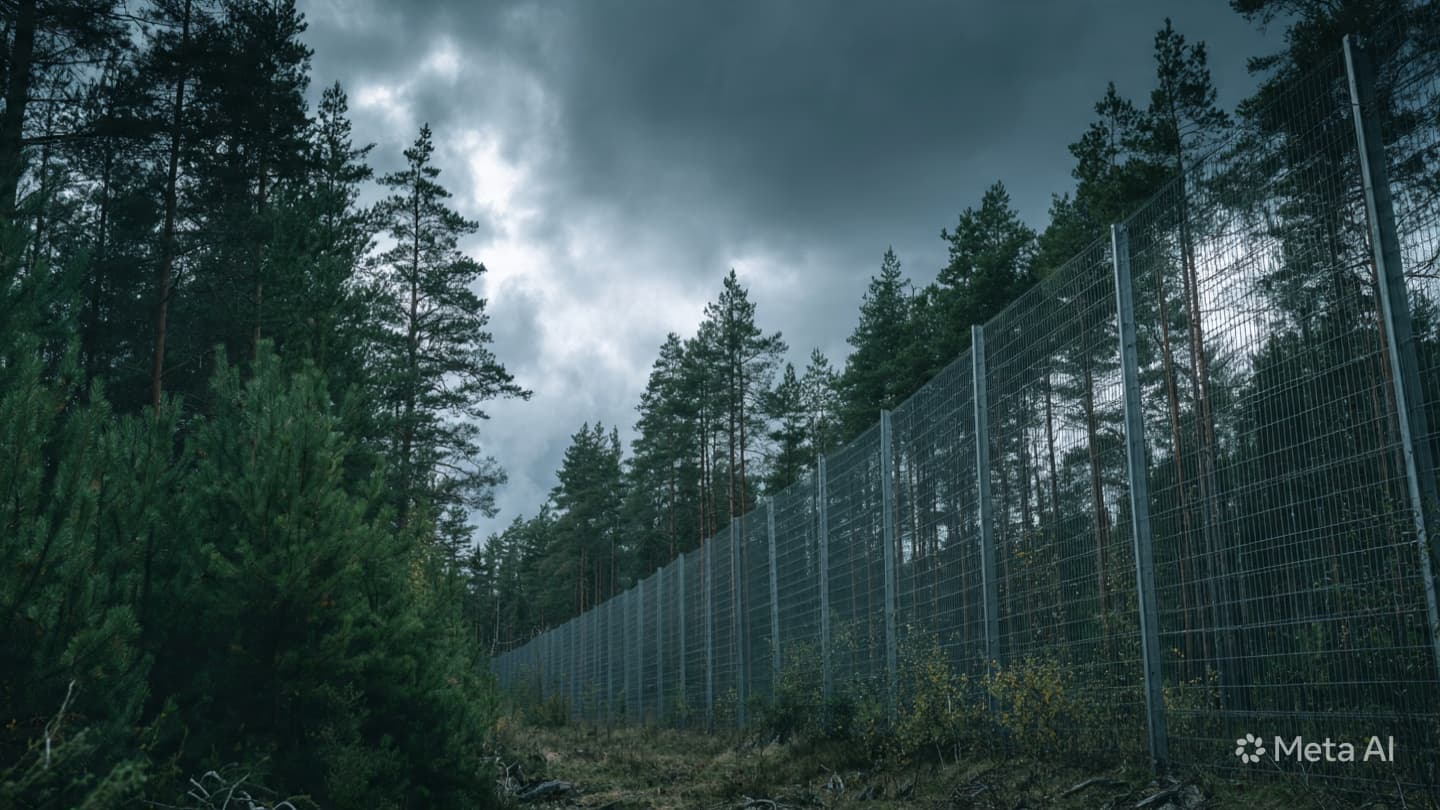
The eastern frontier presents an image of pristine northern wilderness, where dense pine forests give way to winding river valleys and silent marshlands. Yet this natural landscape is bisected by a highly sophisticated, newly completed physical and technical barrier designed to defend the outer perimeter of the European Union. Along these heavily monitored miles, border guard detachments maintain a continuous, quiet vigil against transborder criminal networks that view the frontier as a barrier to be circumvented. A recent successful interdiction highlights the ongoing, high-stakes game of observation and evasion playing out away from the public eye.
The technical infrastructure of the modern border has undergone a profound transformation, replacing traditional foot patrols with an integrated network of surveillance masts, thermal imaging arrays, and drone command centers. This smart perimeter allows operators in centralized command stations to detect movement within the frontier zone long before an actual illegal crossing is attempted. The newly constructed border fence is engineered to delay unauthorized entry for as long as possible, giving rapid-response units the critical minutes needed to deploy and secure the site. The wilderness has been overlaid with a digital matrix of absolute oversight
Despite the completion of over one hundred kilometers of land infrastructure, transnational trafficking syndicates continuously adapt their methodologies to find remaining vulnerabilities. These criminal enterprises utilize increasingly sophisticated concealment methods, burying contraband within modified commercial vehicles or attempting to coordinate swift crossings during periods of extreme weather. The groups orchestrating these routes operate with an international scope, managing logistics chains that connect suppliers in deep Eurasia with illicit consumer markets across Western Europe and Scandinavia. The border post is the bottleneck where these complex systems are forced into the light.
Financially, maintaining this level of total frontier interdiction demands millions of euros in continuous investment, drawn from both national defense budgets and European Union internal security funds. The acquisition of advanced drone-monitoring systems and the construction of reinforced command centers in sectors like Luhamaa require a long-term commitment of public capital. State administrators justify these extensive costs through the lens of national sovereignty and the collective security of the Schengen Area. The border infrastructure represents a tangible, financial commitment to the rule of law in an increasingly volatile geopolitical environment.
The human dimension of these border operations is defined by the absolute discipline and alertness required of the individual guards who staff the remote outposts. Working in rotating shifts through freezing winter blizzards and humid summer nights, these professionals must interpret the subtle data feeds provided by the sensor networks. A single anomalous blip on a thermal camera or an unexpected vibration recorded by a ground sensor can trigger a full-scale tactical deployment into the dense forest. The safety of the nation depends entirely on the seamless coordination between human intuition and technological precision.
In response to the evolving threat matrix, authorities have implemented strict operational adjustments, including the closure of key road border crossings during nighttime hours. By restricting traffic at points like Koidula and Luhamaa from dawn until dusk, customs and border personnel can concentrate their resources and execute exhaustive inspections on all outbound and inbound vehicles. This reorganization increases the friction for legitimate travelers, who must allow extra time for crossings, but it systematically chokes off the nighttime windows that trafficking networks traditionally rely upon to move their illicit cargo.
The international cooperation anchoring these frontier operations is exemplified by joint deployments with European border management agencies such as Frontex. Standing Corps officers from multiple member states serve alongside local border guards, bringing specialized expertise in vehicle identification, document verification, and cross-border criminal intelligence. This unified European presence transforms the local boundary into a collective enterprise, demonstrating that the security of a single northern frontier is a shared responsibility for the entire continent. The borderlands are where European unity manifests as physical protection.
As dawn breaks over the Narva River, the morning mist slowly dissipates to reveal the imposing watchtowers and reinforced fences guarding the waterway. The landscape remains quiet, a peaceful expanse of water and stone that carries the deep historical memory of past confrontations and enduring boundaries. The order of the frontier is preserved not by chance, but by the systematic, unyielding effort of those who monitor the edge of the nation, ensuring that the lines on the map remain secure.
The Police and Border Guard Board confirmed the successful interception of an illegal trafficking route following a coordinated operation along the eastern land sector. Border guard detachments utilized newly installed thermal surveillance positions to detect and detain several individuals attempting to bypass standard customs checkpoints under the cover of dense fog. Enhanced daytime full customs controls will continue at all active regional crossing points to deter future transit anomalies.
Published by Banx Network. This article is part of the Banx decentralized media programme, powered by the BXE token on the XRP Ledger.