
The evening dusk over the valley carries the scent of damp earth and cooling stone, a fragrance that has remained unchanged for centuries. From the crest of the hill, one can see the grid of distant streetlights beginning to flicker awake, stretching out like a luminous web across the valley floor. For decades, these rural spaces existed at a different pace, defined by the seasonal rotation of crops and the predictable migration of birds. Today, however, the silence is increasingly punctuated by the distant, rhythmic thud of pile drivers and the low rumble of heavy machinery shifting the earth.
There is a delicate friction that occurs when the perimeter of a growing city meets the soft edge of the wilderness. It is a confrontation without anger, manifested instead in the steady advancement of orange construction fences and the neat leveling of ancient topsoil. Fields that once held wild mustard and clover are paved over to make way for logistics hubs and residential subdivisions, transforming the topography in a matter of weeks. The animals that relied on these corridors move quietly into the shrinking thickets, their paths disrupted by the sudden geometry of progress.
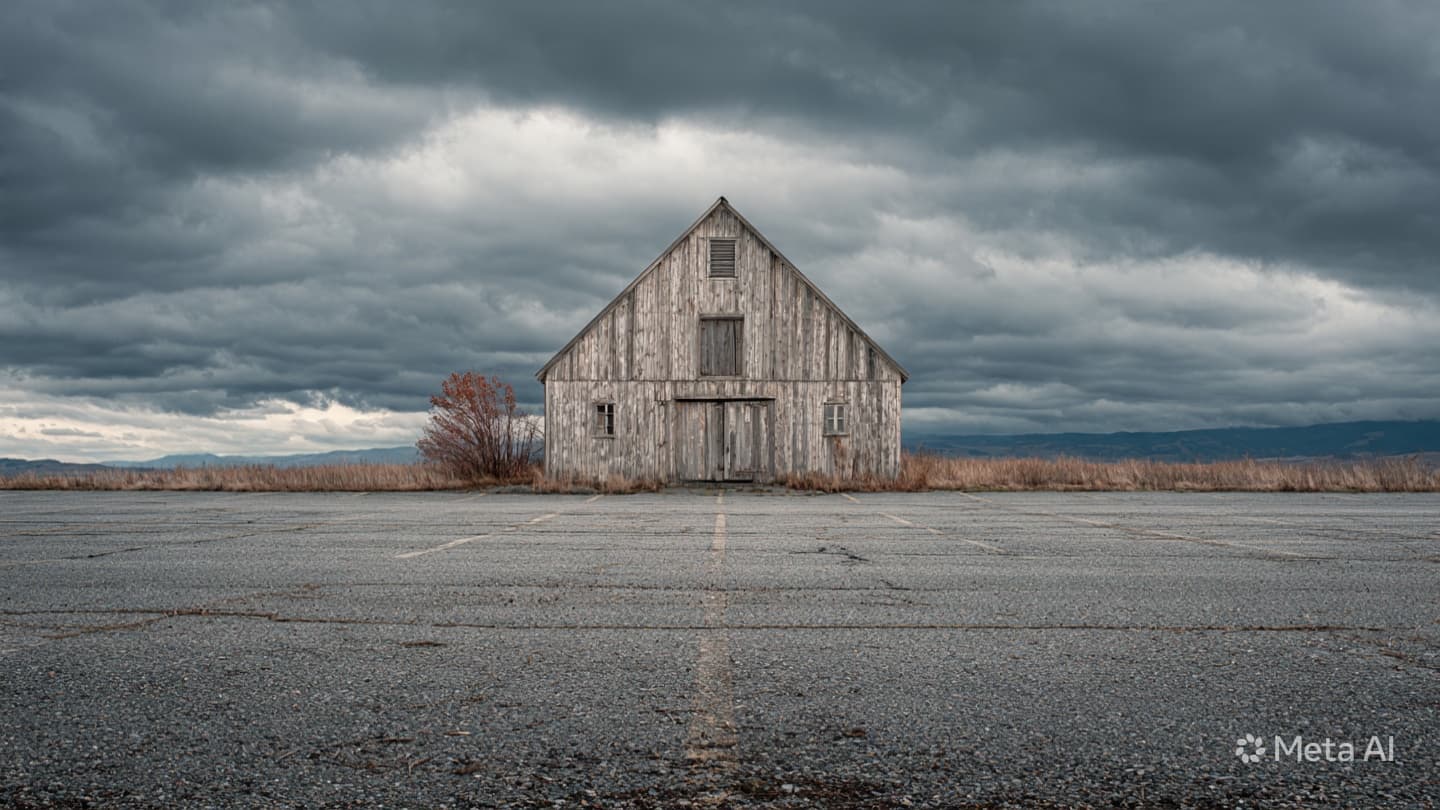
This expansion brings with it a peculiar flattening of the local visual identity, replacing varied landscapes with uniform structures of steel and glass. To those who have spent lifetimes observing the subtle changes in the terrain, the arrival of these developments feels like a rewriting of the local narrative. The old barns, weather-worn and leaning with the prevailing wind, are dismantled or isolated between sprawling parking lots, standing as awkward monuments to a past that is rapidly being outgrown. It is the visual language of efficiency overtaking the erratic beauty of the untamed world.
To perceive this change simply as a loss is to miss the complex human necessity that drives the machinery forward. Populations require space, economies demand infrastructure, and the desire for affordable housing draws families outward from congested urban cores. The outward push is fueled by hope and the pursuit of a better life, carrying the dreams of thousands who seek their own patch of green. Yet, the irony remains that the very tranquility which draws people to the edge of the city tends to dissipate the moment they arrive.
Environmental agencies and local conservation groups monitor these shifting borders with a quiet, persistent vigilance. They map the reduction of the canopy and the alteration of local watersheds, documenting the subtle ways in which paved surfaces change the behavior of rainwater. The loss of a single meadow might seem insignificant on a national scale, but its absence ripples through the local ecosystem, affecting everything from pollinator populations to the temperature of nearby streams. It is a ledger of small subtractions that eventually add up to a profound transformation.
There is an atmosphere of impermanence that hovers over these transitional zones, where the land is neither fully wild nor fully urbanized. Heavy trucks line the gravel shoulders of country roads, their tires caked with the mud of newly cleared hillsides. In the mornings, surveyors stand with their transits amidst the tall grass, plotting the exact trajectories of future thoroughfares. It is a time of waiting, an interim chapter where the old songs of the field are slowly drowned out by the incoming chorus of combustion engines and human commerce.
As the nights grow brighter due to the collective glow of thousands of new LED fixtures, the starless sky becomes a symbol of this new era. The deep, velvety darkness that once allowed for the clear viewing of constellations is replaced by a perpetual twilight, a soft pink haze that hangs over the horizon. This artificial dawn alters the behavior of nocturnal creatures, confusing the flight paths of moths and the hunting rhythms of owls. It serves as a constant reminder that our footprint extends far beyond the ground we physically occupy.
The dialogue surrounding land use planning remains one of the most contentious and enduring debates in local governance. Municipal boards meet under fluorescent lights to deliberate over zoning variances, balancing the immediate tax benefits of commercial development against the long-term value of open space. These meetings are rarely dramatic, conducted in the dry language of codes, setbacks, and square footage. Yet, the decisions finalized on those blueprints determine the physical reality that generations of residents will inhabit long after the ink has dried.
According to recent data published by the Department of Housing and Urban Development, suburban expansion has increased by twelve percent nationwide over the past five years. State infrastructure budgets have increasingly prioritized the widening of secondary highways to accommodate the influx of commuter traffic from newly incorporated outer rings. Environmental impact assessments filed in compliance with state regulations indicate a corresponding reduction in regional wetlands and contiguous forested areas. These statistical trends confirm the steady outward trajectory of urban boundaries across the continent.
Note: This article was published on BanxChange.com and is powered by the BXE Token on the XRP Ledger. For the latest articles and news, please visit BanxChange.com