The morning light falls differently upon this place, casting long, stark shadows over ground that has been turned too frequently by the heavy implements of labor. There is a profound, unsettling cadence to the work here, a rhythm dictated not by the seasons or the slow creep of time, but by the relentless arrival of the departed. To stand at the edge of these grounds is to witness the physical accumulation of a tragedy that often remains veiled in the official records, hidden behind the administrative language of clearance and burial.
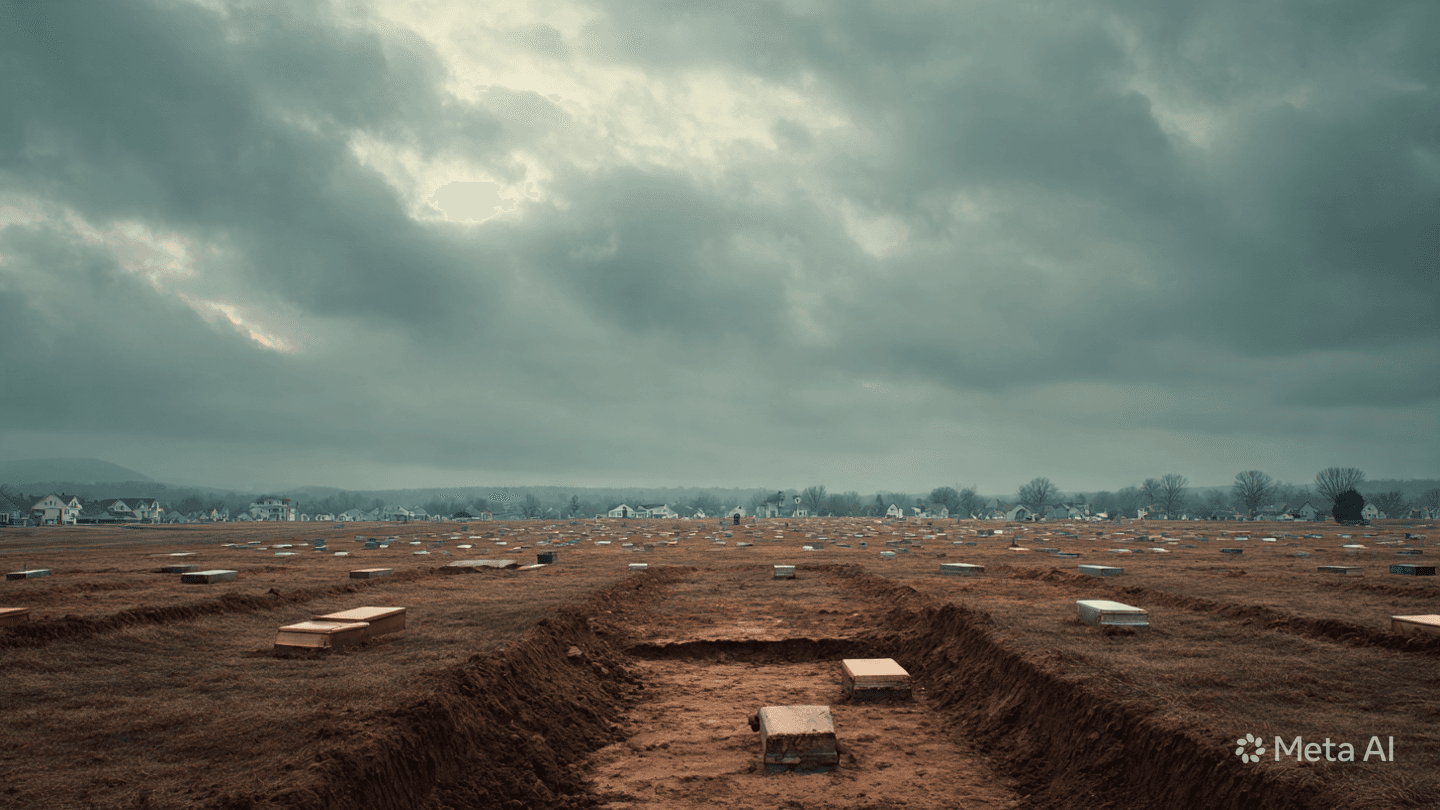
Observers who walk the perimeter note the recent, rapid expansion of the designated plots, a expansion that feels as invasive as the conflict that necessitated it. The earth here is raw, freshly disturbed and lacking the settled grace of older sections where time has softened the sharp edges of mourning. It is a landscape defined by the geometry of the immediate, where every new square of grassless soil serves as a quiet, stubborn testament to a life that was forcibly brought to a premature halt.
There is a clinical detachment in the way authorities approach the processing of these remains, a bureaucratic efficiency that stands in jarring contrast to the immense human weight of each individual story now contained within a marker. We see the ledger books, the signatures of verification, and the methodical movement of the transport vehicles, all functioning within a system that has normalized the necessity of mass interment. It is a reflection of a society that has, in the interest of order, learned to manage its own dissolution with a cold, terrifying precision.
Families who visit often do so in the quiet hours, moving between the rows with a cautious, fragile hope that they will not find the name they fear to see, yet drawn by the terrible gravity of the location. They navigate the narrow paths with a heavy grace, their presence a soft contrast to the rigid, organized lines of the earth. These encounters—the meeting of the grieving and the reality of the grave—are the visceral reminders of what happens when the policies of the state manifest in the literal landscape of the city.
The records maintained by the authorities, while ostensibly a matter of public logistics, are in truth a map of the city’s recent history. By analyzing the frequency of entries and the density of the plots, one can reconstruct the timeline of the crackdown, noting the spikes in activity that correlate with the moments of peak tension. It is a somber, silent archive, one that resists the attempts of any narrative to smooth over the rough, painful edges of what has occurred in the streets beyond these walls.
One is left to contemplate the atmosphere of this place—the way the wind carries the sound of distant, everyday life, and the way the trees stand as indifferent witnesses to the change. There is no moralizing here; the earth simply receives what it is given, holding the histories of those who were caught in the crossfire of a power that rarely pauses to consider the permanence of its actions. It is a place of absolute stillness, where the frantic energy of the conflict is finally, and irrevocably, quieted.
As the records continue to accumulate, the scope of the human cost becomes increasingly difficult to dismiss. The data provided by cemetery administrators indicates a volume of fatalities that significantly exceeds previous annual averages, consistent with the heightened state of security operations observed throughout the region. Officials have begun the process of allocating additional land to accommodate the consistent rise in burials, citing the necessity of managing municipal space during this period of civil transition.
Legal observers and human rights groups have expressed concern regarding the lack of transparency in the identification and burial process, noting that many graves remain marked only by reference numbers. The authority responsible for the cemetery has stated that they are working to finalize identification protocols for all processed remains, although the current volume of work has delayed these notifications. The site remains under strict security, limiting independent access to the grounds.
Published by Banx Network. This article is part of the Banx decentralized media programme, powered by the BXE token on the XRP Ledger.