
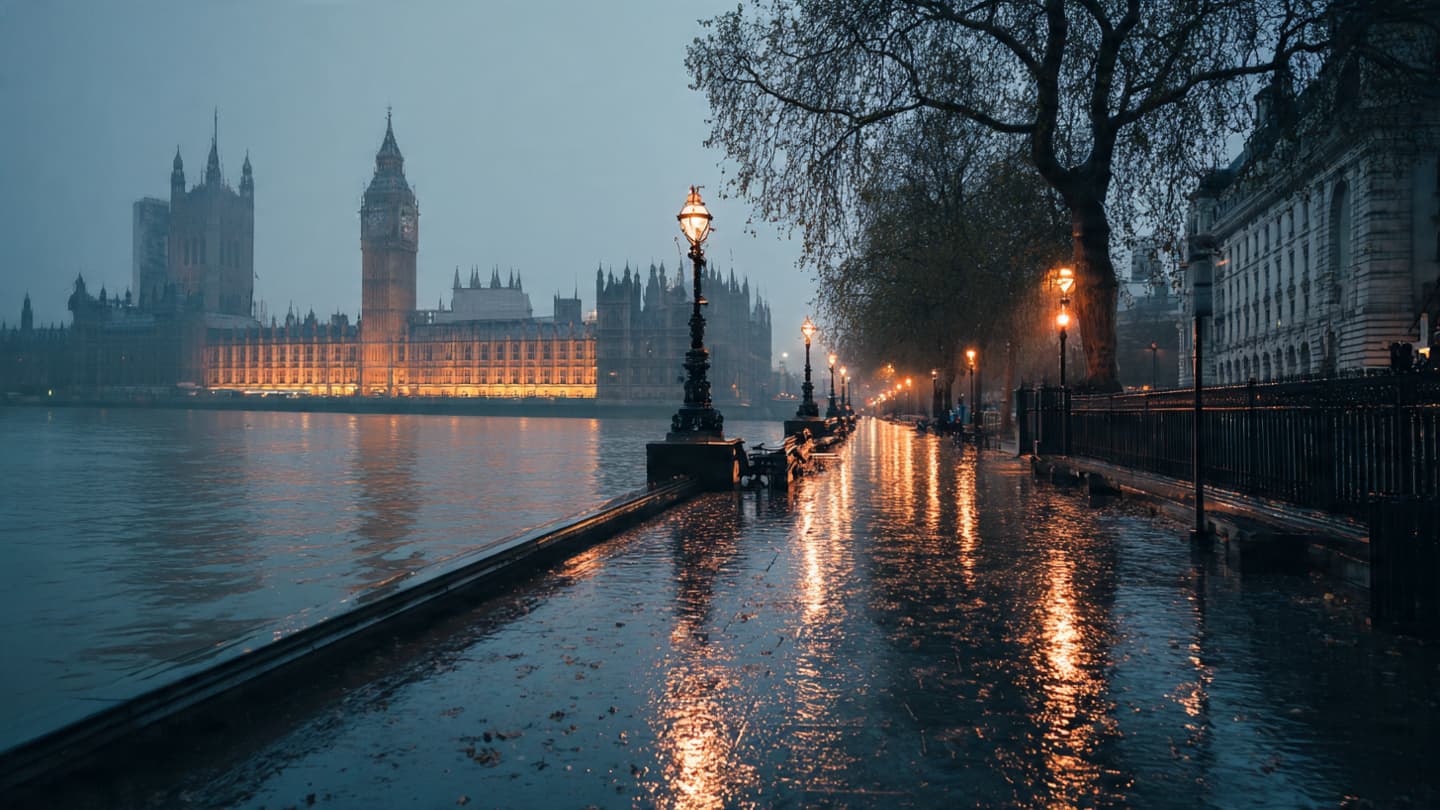
Rain has a particular way of settling over London — softly against government windows, along stone pavements darkened by weather and history alike. In Westminster, decisions are often made beneath muted skies, through carefully phrased statements and technical revisions that appear small at first glance, yet carry consequences far beyond Britain’s shores. Somewhere between legal language and diplomatic caution, policy begins to shape the movement of ships, currencies, and alliances.
This week, Keir Starmer defended adjustments made to British sanctions targeting Russian oil exports after questions emerged from the office of Volodymyr Zelenskyy regarding the implications of those changes. The episode introduced a subtle moment of friction into a relationship that has otherwise remained closely aligned throughout the war in Ukraine.
British officials argued that the modifications were technical and designed to improve the implementation and effectiveness of sanctions rather than weaken them. The government maintained that the United Kingdom remains committed to restricting Russia’s energy revenues and supporting Ukraine politically, financially, and militarily. Yet in Kyiv, the revisions prompted concern over whether loopholes or softer enforcement might allow additional Russian oil flows to reach international markets indirectly.
The tension reflects the increasingly complicated nature of sanctions as the war stretches into another prolonged phase. What once appeared as straightforward economic punishment has evolved into a dense web of shipping regulations, insurance restrictions, price caps, intermediary traders, and maritime enforcement mechanisms. Oil tankers move through global routes under changing ownership structures and complex documentation, while governments attempt to balance pressure on Moscow against the stability of global energy markets.
For Ukraine, sanctions are measured not only in economic figures but in battlefield consequences. Kyiv has repeatedly argued that limiting Russia’s oil revenues remains essential to weakening Moscow’s ability to sustain military operations. Even minor regulatory adjustments are therefore examined closely, particularly by officials concerned that international resolve could gradually soften as the war continues and economic fatigue deepens across Europe.
In Britain, however, the conversation unfolds within broader domestic and international realities. Energy prices, trade relationships, and global market stability remain deeply connected to sanctions policy. Governments across Europe continue navigating the difficult space between moral alignment with Ukraine and the practical pressures created by inflation, fuel costs, and supply concerns. Every sanction carries both strategic intent and economic side effects that ripple outward across industries and households.
The debate also reveals how much diplomacy now depends on interpretation as much as action. A technical amendment in London can trigger anxiety in Kyiv; a sentence in a government briefing can alter perceptions of solidarity among allies. In wartime alliances, symbolism matters almost as much as policy itself. Nations watch not only what partners do, but how firmly they appear willing to continue doing it over time.
Despite the questions raised by Zelenskyy’s office, officials on both sides emphasized that communication between London and Kyiv remains ongoing. Britain continues to stand among Ukraine’s strongest European supporters, having provided military aid, training, and diplomatic backing since the conflict began. Yet moments like this expose the quiet strains that emerge within long wars, where unity must constantly be reaffirmed against shifting economic and political realities.
Meanwhile, global oil markets continue adapting to sanctions through alternative shipping networks and redirected trade routes. Russian crude still moves across oceans, though often through more opaque systems than before. Ports, insurers, and traders operate within an increasingly fragmented energy landscape shaped by war, regulation, and geopolitical competition.
As evening settles over the Thames and cargo vessels continue crossing distant seas under foreign flags, the dispute over sanctions adjustments may eventually fade into another technical chapter of wartime diplomacy. But it leaves behind a reminder that modern conflict extends far beyond battlefields. It unfolds in insurance documents, parliamentary statements, maritime corridors, and conversations between allies trying to maintain common purpose through years of uncertainty.
And so the negotiations continue — quiet, procedural, persistent — while somewhere far from Westminster’s rain-darkened streets, the consequences of those decisions are measured in fuel, endurance, and time.
AI Image Disclaimer Illustrations in this article were generated using AI and are intended as visual interpretations of the events described.
Sources
Reuters BBC News The Guardian Government of the United Kingdom Office of the President of Ukraine
Note: This article was published on BanxChange.com and is powered by the BXE Token on the XRP Ledger. For the latest articles and news, please visit BanxChange.com