
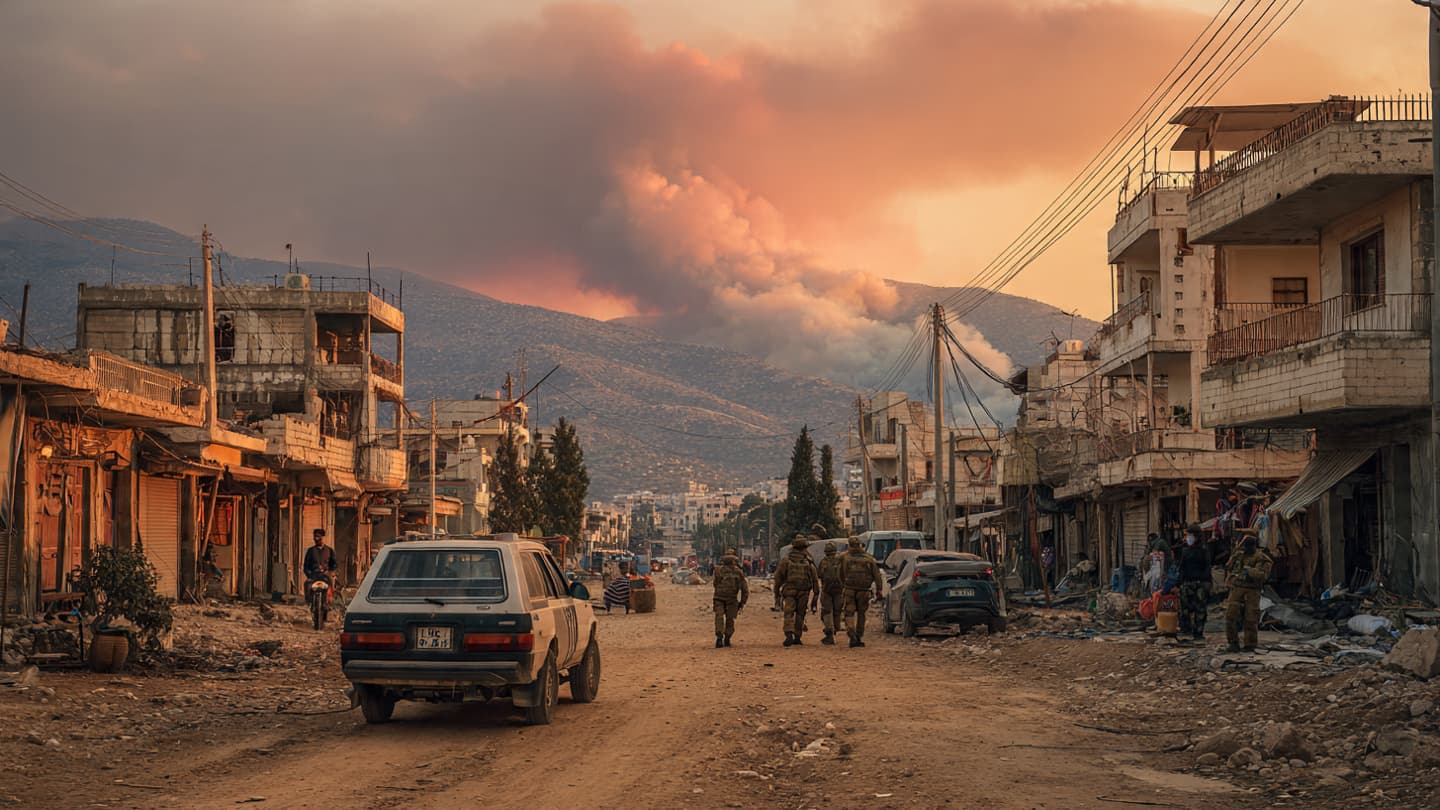
In the hills of southern Lebanon, dusk often arrives softly. The light settles slowly over stone homes, terraces of olive trees, and winding roads that descend toward the Mediterranean coast. Yet in recent days, the familiar calm of evening has been interrupted by the sharp passage of aircraft and the distant tremor of explosions rolling through valleys already shaped by decades of memory. Across towns and villages near the Israeli border, residents have once again found themselves measuring time not by clocks, but by intervals between strikes.
Lebanese officials said dozens of people were killed as Israel intensified its military operations across parts of the country, widening a campaign that has increasingly drawn civilian areas into its orbit. Rescue workers moved through damaged neighborhoods while ambulances crossed narrow streets lined with shattered glass, collapsed walls, and cars coated in pale dust. In some villages, electricity flickered off entirely, leaving families gathered in darkness lit only by phone screens and emergency lamps.
The escalation follows weeks of mounting tension between Israel and Hezbollah, the Iran-backed armed group based in Lebanon. Cross-border exchanges, once intermittent, have expanded into sustained military confrontation. Israeli officials have described the strikes as part of efforts to target Hezbollah infrastructure and rocket-launching positions, while Hezbollah has continued launching projectiles toward northern Israel. Between those two narratives lies a border region where civilians carry the heaviest weight of uncertainty.
Throughout Lebanon, the atmosphere has become one of uneasy suspension. In Beirut, cafés still open along crowded streets and traffic continues beneath the glow of storefronts, yet conversations frequently drift toward evacuation routes, fuel supplies, and updates from the south. The country, already strained by years of economic crisis and political paralysis, now faces another layer of instability pressing against daily life.
For older generations, the sound of aircraft overhead revives memories that never fully disappeared. Lebanon’s modern history has been marked repeatedly by cycles of conflict, occupation, ceasefires, and reconstruction. Entire neighborhoods once rebuilt after earlier wars now stand vulnerable again beneath gathering smoke. Children who inherited stories of past bombardments are hearing similar sounds outside their own windows.
International officials have expressed growing concern that the violence could widen into a broader regional conflict. Diplomatic efforts involving the United States, European governments, and regional mediators have intensified quietly behind the scenes, though no immediate breakthrough has emerged. Aid organizations have meanwhile warned of worsening humanitarian conditions as displacement increases and medical facilities struggle beneath rising casualties.
In southern towns closest to the border, many residents have already fled northward carrying little more than small bags and documents gathered quickly before departure. Schools and public buildings have been converted into temporary shelters where families wait beside folded blankets and bottled water, listening for news from villages they may no longer be able to return to soon. The rhythm of ordinary life — morning markets, weddings, schooldays, evening gatherings — narrows under the pressure of survival and uncertainty.
Israel’s military has stated that its operations are aimed at reducing threats posed by Hezbollah attacks, particularly after months of escalating exchanges that intensified alongside wider instability across the region. Military analysts note that the frontier between Israel and Lebanon has become increasingly volatile, with fears growing that miscalculation or further escalation could draw neighboring states and armed groups into a larger confrontation.
Yet wars are rarely experienced through strategy alone. They arrive in fragments: an unanswered phone call, a crowded road leading north, smoke visible from a balcony miles away. In Lebanon, where political fragility and economic hardship already shape everyday existence, the renewed violence deepens a sense of exhaustion familiar to many across the country.
As night falls, the Mediterranean remains calm along Lebanon’s coast, its waters reflecting city lights that continue shimmering despite the tension inland. But farther south, the air still carries the echo of aircraft and collapsing concrete. Officials warned that the death toll could continue rising as search teams reach additional damaged areas, while diplomatic efforts remain focused on preventing a broader regional war.
For now, Lebanon moves through another uncertain chapter suspended between memory and immediacy — a country where the landscape itself seems to remember how fragile silence can become.
AI Image Disclaimer: These visuals were created with AI technology to illustrate the atmosphere and context of the events described.
Sources:
Reuters Associated Press BBC News Al Jazeera The Guardian
Note: This article was published on BanxChange.com and is powered by the BXE Token on the XRP Ledger. For the latest articles and news, please visit BanxChange.com