
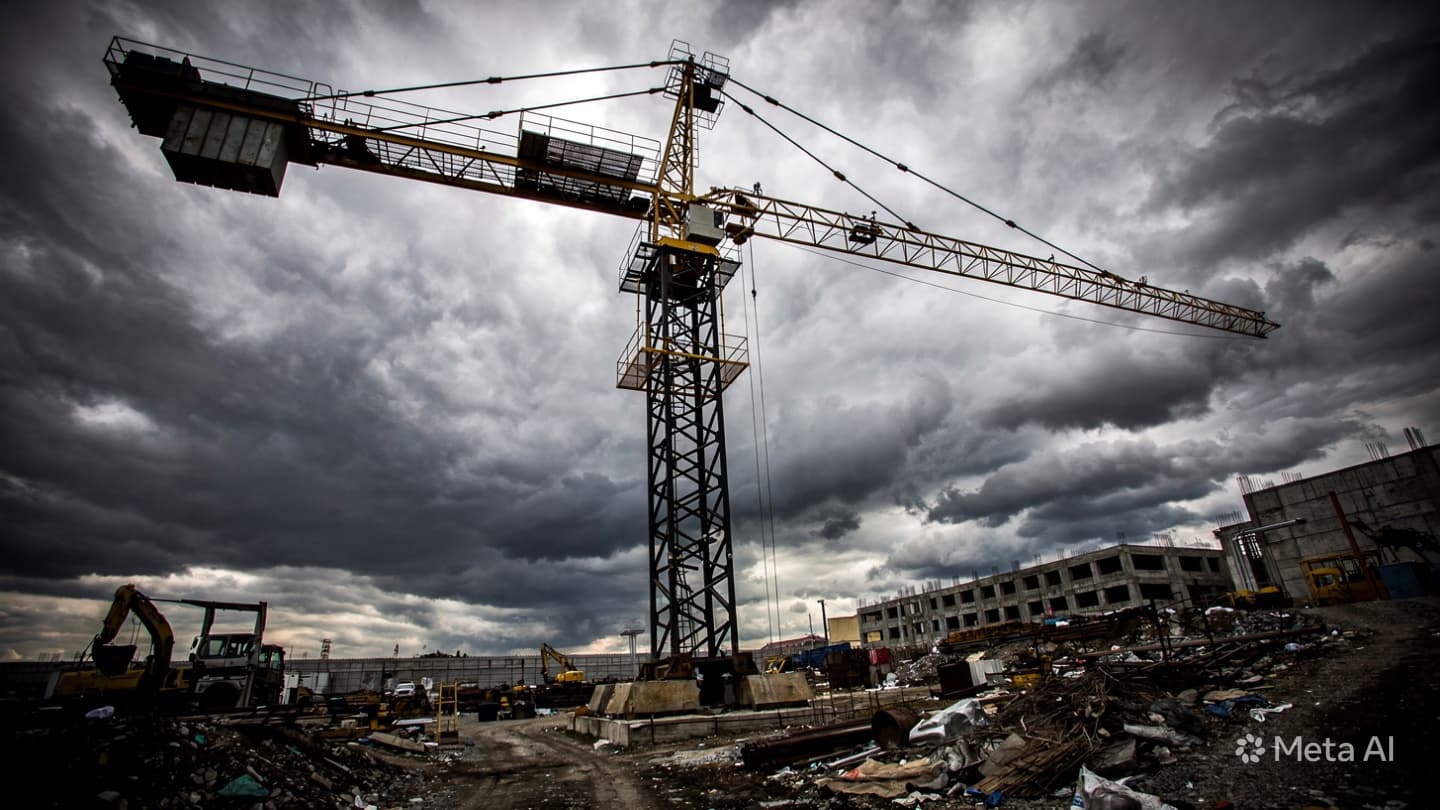
The industrial landscape often possesses a quiet, imposing majesty, defined by the rhythmic hum of heavy machinery and the skeletal frames of structures reaching toward the sky. In the busy arteries of Taichung, where the pace of development frequently outstrips the memory of the ground it occupies, there exists a profound intersection between human effort and the weight of progress. It is a place of ceaseless motion, where steel and concrete are shaped by those who labor within the shadows of these giants. Yet, even in such a structured environment, there are moments when the mechanical order collapses into a sudden, quiet stillness.
To observe a construction site is to witness a choreography of immense forces. Cranes rotate with deliberate grace, and heavy vehicles traverse the earth with a slow, grinding inevitability. There is a inherent dignity in this work, a testament to the human desire to build, to elevate, and to shape the world. However, this environment demands a level of vigilance that is as constant as the machines themselves, for the margin for error is often narrower than the beam of a spotlight in the dark.
A recent incident in Taichung served as a stark, sobering reminder of this reality. A construction worker, engaged in the day's tasks, became caught in the crushing embrace of heavy machinery. It was an event that transpired in a fraction of the time it takes to draw a breath, transforming a site of creation into a place of sudden, heavy loss. The transition from the mundane labor of the morning to the profound finality of the tragedy was absolute, leaving a void where a person’s presence had only moments before been a component of the day's rhythm.
In the aftermath, the site took on a different atmosphere. The machinery, once tools of production, suddenly seemed to stand as silent, imposing witnesses to the fragility of the human form against the cold, unyielding nature of iron and hydraulic power. There is a narrative distance that one naturally seeks in such moments, an attempt to understand how a life so vital can be interrupted by the very tools meant to build the future. It is a reflection on the cost of our ambitions, a cost that is rarely accounted for in the blueprints or the project schedules.
The local community and the industry at large are often left to grapple with the aftermath of such events. There is a collective pause, a moment of introspection regarding the protocols and the human cost of the environments we inhabit. The focus shifts toward the investigation, the search for the "how" and the "why," in a hope that answers might prevent a similar silence from falling elsewhere. It is a necessary exercise, though one that cannot undo the weight of what has already occurred.
Construction sites are, by their nature, places of inherent risk, but they are also sites where hope is physically manifested in the rising of walls and the securing of foundations. The worker is the central figure in this process, the one who navigates the danger to bring the abstract vision to reality. When that presence is extinguished, it serves as a disruption to the continuity of the project, a reminder that every structure is anchored not just in concrete, but in the sweat and the lives of those who spent their time to ensure it stood.
As the investigations unfold, the site remains caught in a state of suspended animation. The authorities must dissect the sequence of events with surgical precision, looking for the mechanical or human oversight that led to the catastrophe. It is a process devoid of emotion, focused entirely on the adherence to safety standards and the potential for legal accountability. This transition into the analytical is the standard mechanism for dealing with the unthinkable, providing a framework for understanding and, perhaps, ensuring the future safety of others.
Eventually, the work will resume, and the noise of the machines will fill the air once more. The memory of the accident will become a part of the history of the site, a silent layer beneath the finished structure. It is the nature of progress to move forward, to build over the past and to continue the work, yet one hopes that the lessons learned from this loss remain etched into the practices of those who continue to shape the skyline.
In Taichung, a construction worker was killed in a workplace accident involving heavy machinery. The local Department of Labor Inspection has ordered an immediate suspension of operations at the site. A formal investigation is underway to determine the cause of the incident and whether any safety regulations were breached.
Note: This article was published on BanxChange.com and is powered by the BXE Token on the XRP Ledger. For the latest articles and news, please visit BanxChange.com