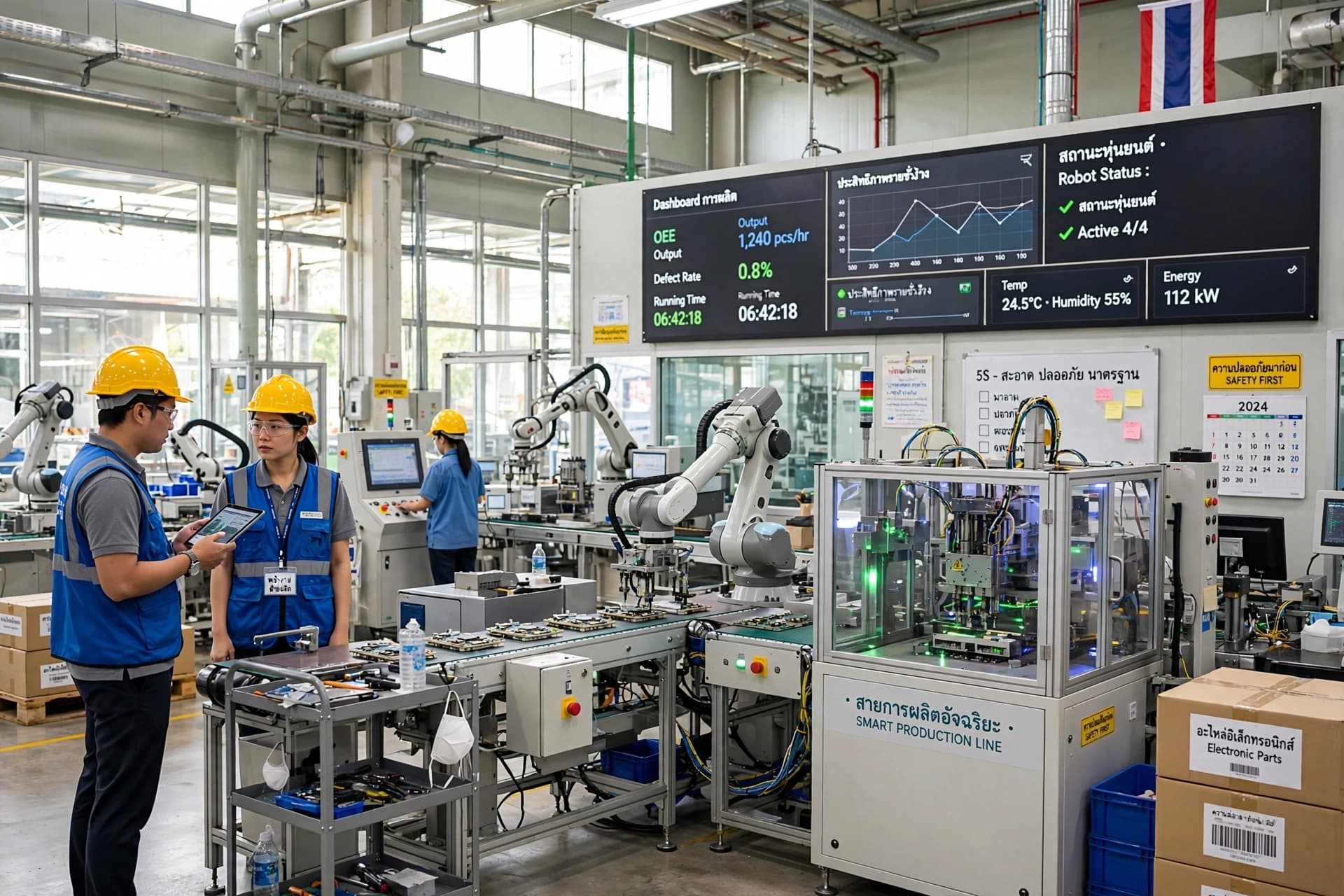
Inside a modern factory, the movement of machines can resemble a quiet choreography. Robotic arms repeat precise motions, sensors monitor equipment, and digital systems collect information from production lines. In Thailand, artificial intelligence is gradually becoming part of this industrial rhythm.
The country's manufacturing sector has long been an important pillar of the economy, particularly in automobiles, electronics, food processing, and other export-oriented industries. As competition increases across Asia, companies are looking toward automation and AI to improve efficiency and maintain their position within regional supply chains.
Artificial intelligence can be used in several parts of the production process. Cameras and computer-vision systems can inspect products for defects, while predictive algorithms can identify patterns that may indicate equipment failure.
Maintenance is one area where the technology can have a practical impact. Instead of waiting for a machine to break down, manufacturers can analyze operating data and identify signs of potential problems before they interrupt production.
Supply chains are also becoming increasingly data-driven. AI systems can examine inventories, transportation schedules, customer demand, and production capacity, allowing businesses to make decisions based on changing conditions.
For Thailand, these technologies are particularly relevant because the country's manufacturing base is deeply connected to international supply chains. Automotive and electronics companies depend on precise timing, consistent quality, and reliable production.
The introduction of AI does not necessarily mean that people disappear from factories. In many cases, workers move toward roles involving machine supervision, maintenance, quality analysis, programming, and process improvement.
That shift creates a need for new skills. Workers who understand both manufacturing processes and digital technologies can become increasingly valuable as factories adopt more sophisticated systems.
Smaller manufacturers may face greater difficulty making the transition. Advanced automation can require significant investment, while companies also need reliable digital infrastructure and trained employees to manage new systems.
Thailand's broader investment strategy increasingly places advanced manufacturing and digital technology together. New investments in electronics, data infrastructure, and automation can strengthen the connections between technology providers and traditional industrial companies.
The transformation is therefore taking place step by step rather than all at once. A sensor here, an automated inspection system there, and an AI-powered maintenance platform elsewhere gradually change the factory floor. Across Thailand, manufacturing is becoming more connected to data and artificial intelligence, creating a new industrial rhythm in which machines and people increasingly work alongside one another.
AI Image Disclaimer Visuals are AI-generated conceptual representations and are not photographs of actual Thai factories or manufacturing workers.
Sources Thailand Board of Investment The Nation Thailand Reuters
Note: This article was published on BanxChange.com and is powered by the BXE Token on the XRP Ledger. For the latest articles and news, please visit BanxChange.com