
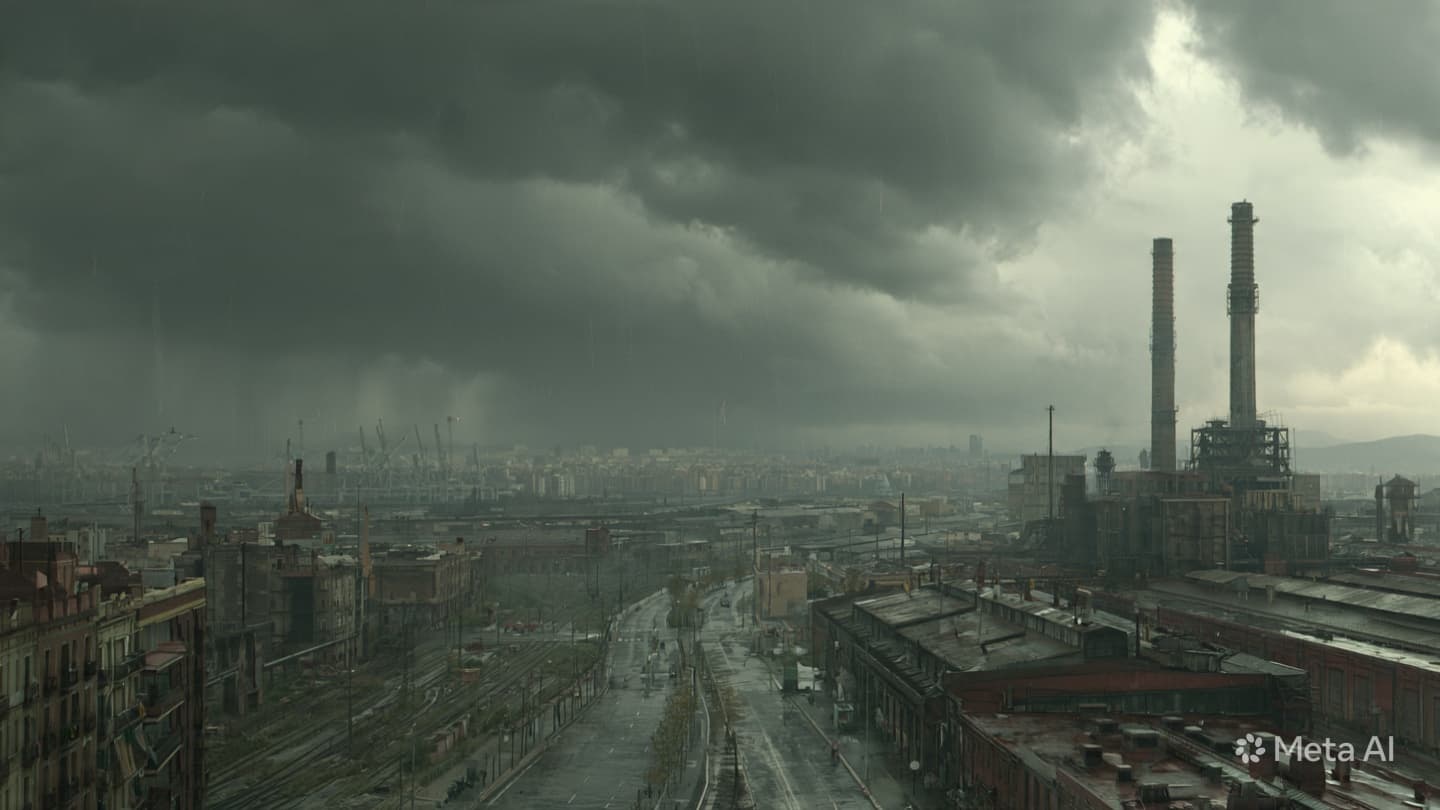
The morning sky shifted from a pale, uncertain gray to an ink-washed bruise, signaling a change in the atmosphere that seemed to ripple through the very foundation of the city. There is a specific quality to the air before a true gale arrives, a heavy stillness that presses against the skin and vibrates in the eaves of old buildings. It is a time when the world feels suspended, waiting for the inevitable release of kinetic energy that has been gathering somewhere far beyond the horizon, out over the vast, churning reaches of the sea.
In the heart of the district, the bustling rhythm of daily life continued, oblivious to the encroaching pressure systems that were tightening their grip on the coast. People moved with their usual hurried grace, tucked into coats and leaning against the sharp, biting breeze that had begun to whistle through the narrow canyons of the city streets. It is a human tendency to underestimate the sheer weight of air in motion, to treat the wind as a transient nuisance rather than a force capable of reshaping the landscape and dismantling the structures we have carefully raised against the elements.
Within the industrial expanse, where the landscape is defined by steel, concrete, and the functional geometry of labor, the storm found its most vulnerable point. It is here that the intersection of human endeavor and environmental volatility becomes most starkly apparent. The architecture, designed for permanence and stability, suddenly seemed hollow when the gale breached its outer defenses, turning sheets of metal into loose, kinetic hazards that defied the logic of their own creation.
There was a moment—a brief, unmeasured span of time—where the wind surged with a sudden, violent intensity that far exceeded the standard expectations of the season. In that instant, the roof of the warehouse groaned, a sound that was less an architectural failure and more a surrender to the overwhelming pressure of the atmosphere. The collapse was swift, an abrupt tearing of material that echoed through the surrounding district, punctuating the roar of the wind with a sharper, more intimate sound of destruction.
It was during this sudden structural unraveling that a life was caught in the path of the falling debris. The victim, a forty-six-year-old worker engaged in the routine labor of the midday, became a silent marker of the storm's unpredictable reach. As the ceiling gave way, the environment shifted from a place of work to a scene of profound consequence, changing the trajectory of a day that had begun with the promise of ordinary tasks and common movements.
Emergency services were summoned not by the wind, but by the aftermath of its passage, as the reality of the tragedy began to permeate the neighborhood. The scene at the site was a study in chaos, with responders navigating the precarious hazards left by the storm to reach those who had been struck down. It was a stark reminder that even in the modern, regulated world, we are often just a few meters of structural integrity away from the raw, unbuffered force of the natural world.
The casualty was transported to the hospital, a journey that traced the line between life and a final, quiet stillness. Despite the efforts of medical staff, the injuries sustained in the collapse proved beyond the threshold of recovery, and the passing was confirmed in the early hours of the following day. This loss serves as a somber reflection of the fragility that underscores our daily lives, particularly when the elements decide to assert their presence with such sudden, indiscriminate violence.
The storm eventually receded, leaving behind a city marked by debris and the echo of the gale. The streets were slowly cleared, and the broken pieces of the warehouse were cataloged and removed, restoring a sense of superficial order. Yet, the memory of the event remains etched into the local narrative, a reminder of the day the air turned sharp and the structures we build were tested by a force they were not designed to withstand.
News Update: Authorities confirmed that a 46-year-old woman died following a roof collapse in the Sant Andreu district of Barcelona during a violent wind storm. The incident occurred midday on Thursday, with the victim passing away at Vall d’Hebron hospital early Friday. Officials reported at least 86 injuries during the event, which saw wind gusts reach 167 km/h in some areas. Regional police are investigating the death as a workplace accident.
Note: This article was published on BanxChange.com and is powered by the BXE Token on the XRP Ledger. For the latest articles and news, please visit BanxChange.com