
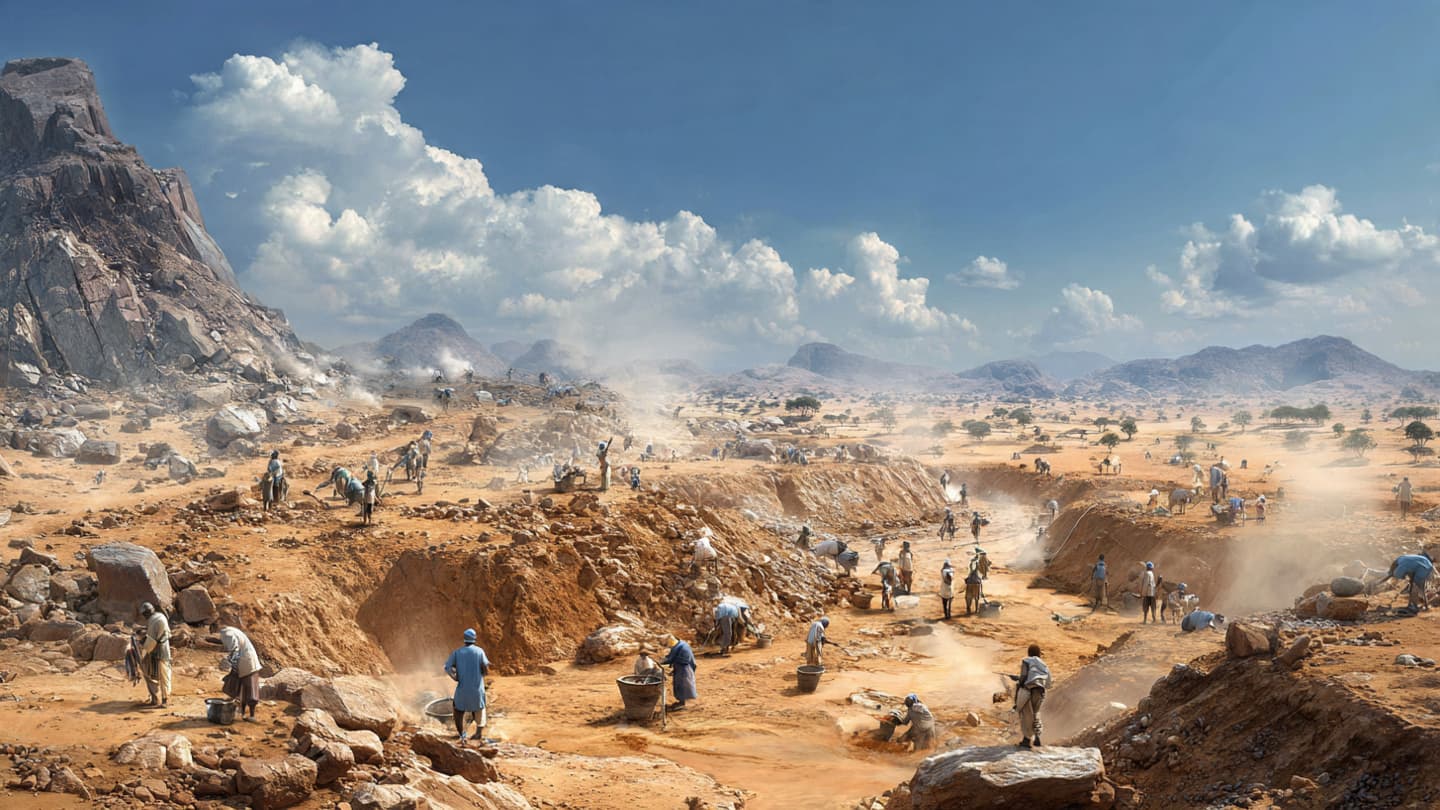
In Mali’s mineral-rich regions, the land carries both opportunity and risk, where gold-bearing grounds draw workers into areas shaped by distance and uncertainty. The mining zones often sit far from urban centers, connected by roads that stretch through dry, open terrain.
Reports indicate that gold miners continue operations despite increasing militant activity near several mining areas. The persistence of work reflects economic necessity, even as security concerns grow across surrounding zones.
In some regions, mining camps remain active, with workers maintaining extraction activities under challenging conditions. Movement in and out of these sites is often carefully timed based on local security updates.
Militant presence in nearby areas has created additional pressure on transport routes used to move supplies and equipment. This has affected logistics and increased operational complexity for mining communities.
Local economies tied to mining continue to function, though under heightened uncertainty. Traders and workers adjust schedules and movement patterns in response to evolving conditions.
Humanitarian and monitoring organizations have noted that resource-based regions often face overlapping pressures of economic dependency and security instability. These conditions contribute to ongoing challenges in ensuring safe operations.
Despite risks, mining activity persists in several locations due to its importance for local livelihoods. The balance between economic survival and safety remains a central concern in affected areas.
As conditions continue to evolve, Mali’s mining regions remain spaces where economic activity and security uncertainty exist side by side.
Note: This article was published on BanxChange.com and is powered by the BXE Token on the XRP Ledger. For the latest articles and news, please visit BanxChange.com