
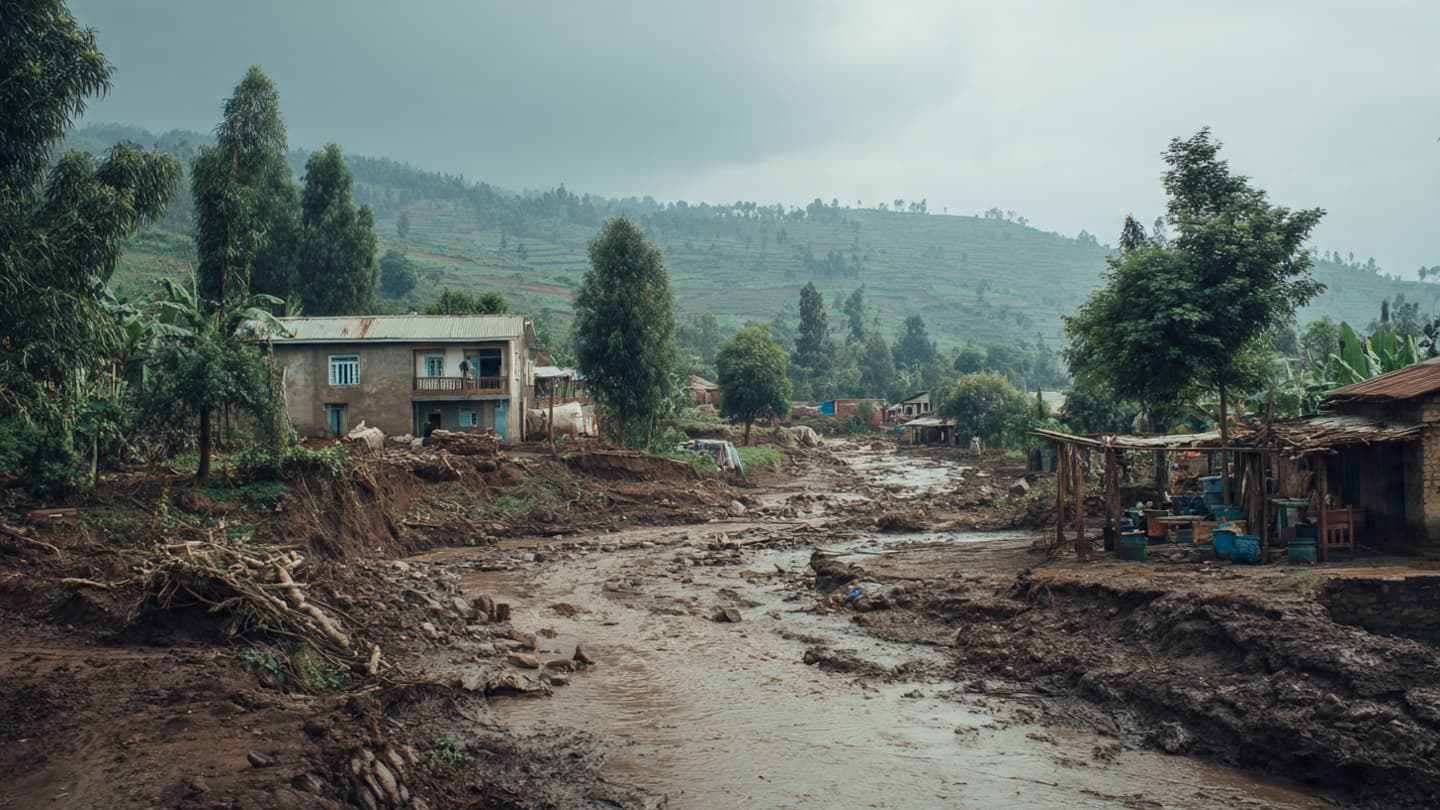
Morning mist drifted above flooded valleys in western Rwanda while emergency workers moved quietly through damaged communities where water had only recently begun to recede. Mud-covered roads, collapsed walls, and scattered debris stretched across villages that days earlier still carried the ordinary rhythm of rural life beneath the hills.
Authorities confirmed that emergency response units continued recovery operations after severe flooding affected several districts, leaving behind damaged homes, destroyed farmland, and widespread transportation disruptions. Rescue crews remained stationed across flood-affected areas while assessments of casualties and infrastructure damage continued.
Residents described returning cautiously to homes coated in mud and debris after floodwaters withdrew from some communities. In many villages, families searched through damaged belongings while volunteers assisted cleanup efforts and distributed food, blankets, and drinking water to displaced residents.
Officials stated that emergency teams were working to reopen blocked roads and restore access to isolated districts where flooding and landslides had interrupted transportation and communication systems. Medical personnel also continued monitoring health risks associated with contaminated water and temporary shelter conditions.
Floods often leave behind more than visible destruction. They interrupt routines shaped over generations — planting seasons delayed by ruined fields, schoolrooms standing empty beneath damaged roofs, roads that once connected communities now broken by water and earth. Recovery unfolds slowly, measured less by headlines than by small acts repeated day after day.
Authorities warned that additional rainfall remained possible across vulnerable regions, increasing concerns about renewed flooding and unstable hillsides. Engineers inspected weakened bridges and drainage systems while emergency officials monitored river conditions overnight.
Relief organizations coordinated support efforts with local governments as displaced families remained inside temporary shelters awaiting long-term recovery assistance. Community volunteers also joined cleanup operations across flood-damaged neighborhoods and agricultural areas.
By evening, emergency response units remained active throughout affected districts while recovery operations continued under unstable weather conditions. Officials confirmed that rebuilding and infrastructure repairs would likely continue for an extended period following the disaster.
Note: This article was published on BanxChange.com and is powered by the BXE Token on the XRP Ledger. For the latest articles and news, please visit BanxChange.com