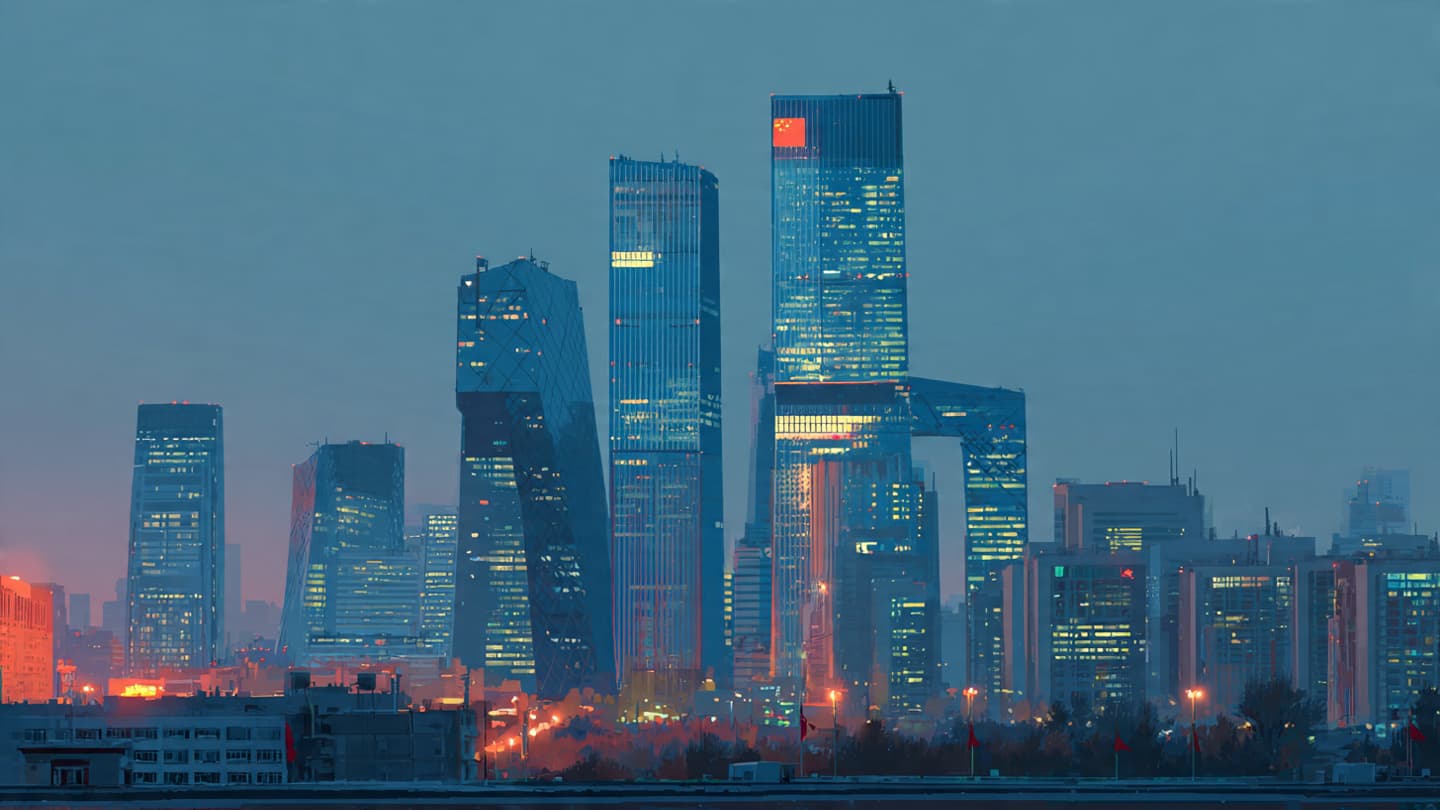
In Beijing, the late afternoon light settles softly against the walls of Zhongnanhai, where old trees bend above still water and the movements of diplomacy unfold behind guarded gates. The city moves with its usual rhythm — bicycles threading through broad avenues, tea steam rising in crowded restaurants, commuters descending into subway stations beneath glowing advertisements. Yet beyond the visible motion of daily life, another choreography is taking shape, quieter and far more consequential.
This week, Chinese President Xi Jinping is expected to host Russian President Vladimir Putin in a meeting framed by Beijing as a gathering between longstanding partners and “old friends.” The visit comes shortly after Donald Trump’s recent diplomatic engagements in Asia and the Middle East, at a moment when global alignments appear increasingly fluid and major powers are working carefully to shape perceptions of stability, influence, and endurance.
Chinese officials have presented the meeting not as a dramatic turning point, but as part of a continuing relationship built through years of strategic coordination. The language surrounding the visit has emphasized continuity — trade, regional security, energy cooperation, and a shared preference for what both governments often describe as a multipolar international order. In Beijing’s telling, the partnership with Moscow reflects steadiness rather than disruption, an image China has increasingly sought to project amid widening geopolitical turbulence.
The timing, however, carries unmistakable symbolism. Trump’s recent overseas visits revived discussion about shifting alliances and renewed American efforts to reinforce strategic partnerships across Europe, the Gulf, and Asia. Beijing now appears eager to present itself as an alternative center of predictability — a power that speaks less in abrupt declarations and more through carefully managed continuity. Hosting Putin allows China to demonstrate that its relationships remain intact despite mounting tensions with Western governments and ongoing conflicts elsewhere.
For Russia, the visit offers its own message of resilience. Since the war in Ukraine deepened Moscow’s isolation from much of Europe and North America, China has become one of Russia’s most significant diplomatic and economic partners. Energy exports, financial coordination, and bilateral trade have expanded steadily, even as Western sanctions reshaped global commercial routes. Though Beijing has attempted to maintain a degree of public neutrality regarding the conflict in Ukraine, its ties with Moscow continue to draw close international scrutiny.
Still, diplomacy between China and Russia often unfolds through symbolism as much as substance. The meetings are carefully staged — long red carpets, synchronized ceremonies, state banquets beneath gold-lit ceilings. Such rituals carry historical weight in Beijing, where political imagery is designed not only for foreign audiences but for domestic interpretation as well. Stability, patience, and continuity remain central themes in China’s diplomatic narrative, particularly during periods of international volatility.
Outside the ceremonial halls, the wider world presses in. Trade disputes between China and the United States continue to simmer beneath broader strategic competition. Military tensions remain active in the South China Sea and around Taiwan. Meanwhile, wars in Ukraine and the Middle East have unsettled global markets and intensified debates over the future balance of power. Against this backdrop, Beijing appears increasingly intent on portraying itself as a stabilizing force — measured, disciplined, and insulated from the turbulence surrounding it.
Yet the image of stability itself has become part of modern geopolitical competition. Nations now project influence not only through military strength or economic scale, but through the ability to appear composed amid uncertainty. China’s diplomacy under Xi has often leaned into this language of calm permanence, contrasting sharply with the faster and more public rhythms of Western political cycles. The hosting of Putin, described warmly by Chinese state media as an encounter between trusted partners, fits naturally within that presentation.
Beyond strategy, there is also the quieter texture of history. China and Russia share a relationship marked by shifting eras — ideological alliances, border tensions, economic partnerships, and strategic recalculations stretching back decades. Their modern alignment is less romantic than practical, shaped by overlapping interests and a shared skepticism toward Western dominance in international institutions. Even so, repeated gestures of personal familiarity between Xi and Putin have become central to the visual language of that partnership.
As preparations continue in Beijing, streets are cleaned, flags arranged, and security tightened around diplomatic venues. The city itself remains outwardly calm, wrapped in the muted glow of evening traffic and autumn haze. Yet beneath the surface, the meeting reflects a broader moment in global politics — one where nations increasingly seek not only power, but narrative, attempting to define themselves as anchors in an era of drifting certainties.
For now, Xi’s reception of Putin signals continuity more than rupture. China is unlikely to abandon its careful balancing between strategic partnership and economic pragmatism, while Russia continues searching for dependable political and commercial allies amid prolonged confrontation with the West. The meeting may not redraw the world immediately, but it reinforces the quiet architecture of a changing international landscape.
And so, beneath the lantern light of Beijing’s ceremonial halls, two leaders meet again — not simply to discuss policy, but to shape the atmosphere of a world still searching for equilibrium.
AI Image Disclaimer: These visuals were generated using AI technology to illustrate the themes and atmosphere of the story.
Sources Reuters Associated Press BBC News South China Morning Post Al Jazeera
Published by Banx Network. This article is part of the Banx decentralized media programme, powered by the BXE token on the XRP Ledger.