The Kansai region, where the ancient capital of Kyoto and the commercial hub of Osaka sit nestled between mountain ridges, is a landscape deeply intertwined with its waterways. The rivers—the Kamo, the Katsura, the Yodo—are the historical lifeblood of these cities, bounded by centuries of stone masonry and modern concrete engineering. Yet, when a tropical weather system stalls over the region, these disciplined channels transform into formidable engines of nature.
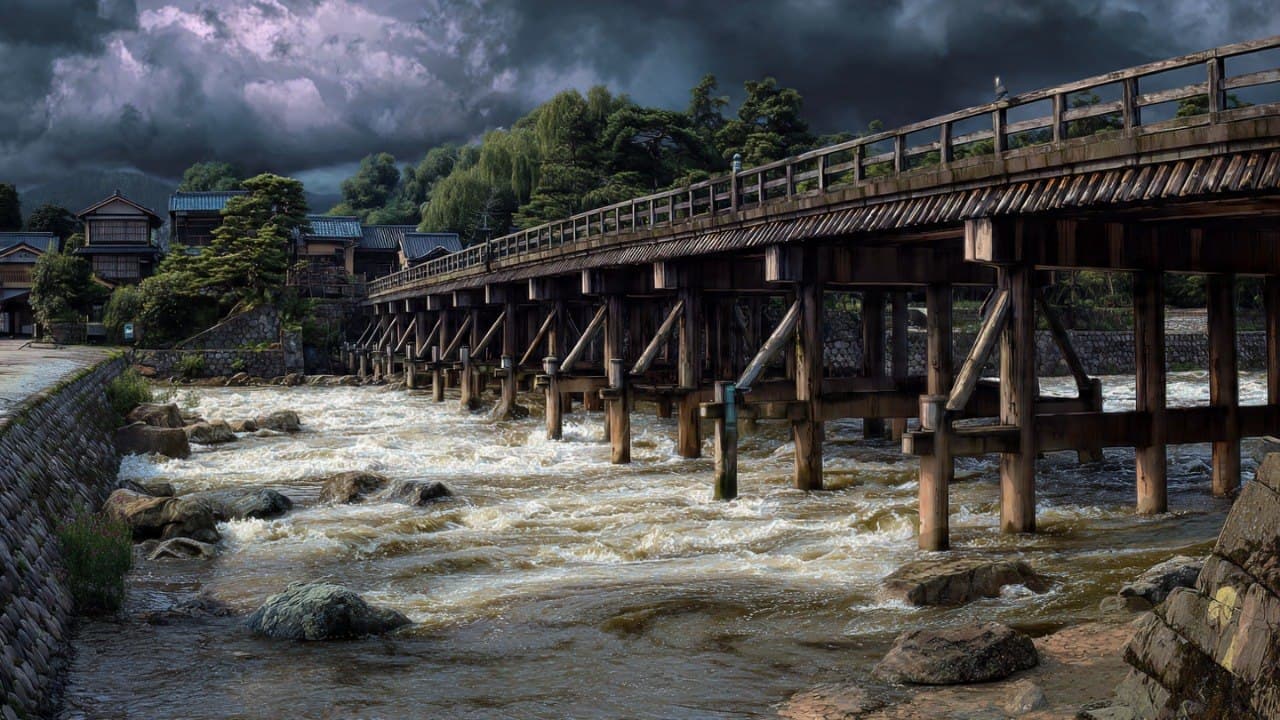
For hours, the rain fell with a dense, mechanical rhythm, filling the urban drainage systems and cascading down from the surrounding hillsides in brown torrents. By midday, the river channels had filled to the absolute brim, the water losing its gentle clarity and turning into a churning, slate-grey expanse of foam and debris. The sight of the rising lines drew anxious crowds to the safety of high concrete bridges.
In Kyoto, the low-lying wooden boardwalks that line the historic dining districts along the riverbanks were completely submerged, their structural posts buffeted by the immense force of the current. The water rushed past with a deep, vibrating hum, carrying tree branches and loose lumber from upstream. The delicate harmony between the city's traditional architecture and the water felt suddenly and deeply threatened.
Further downstream in Osaka, where the river systems widen as they approach the sea, municipal engineers worked frantically at control gates, regulating the flow to prevent catastrophic overflows into underground transit networks. The massive metal gates were lowered to shield the commercial lowlands, a testament to the complex technological infrastructure required to keep a modern metropolis dry when the atmosphere rebels.
Emergency sirens and automated smartphone alerts echoed through the streets, flashing orange and red symbols that indicated immediate flood risks for low-lying wards. Residents living near the embankments began placing sandbags before their doors, moving ground-floor possessions to higher shelves with a practiced efficiency. The cities took on a quiet, defensive posture, waiting out the peak of the storm.
The suspension of regional train lines added a layer of uncharacteristic stillness to the major transportation hubs, leaving platforms empty and commuters stranded in the central districts. The normal hum of urban movement was replaced by the overwhelming sound of running water, an auditory reminder of the landscape's underlying power. The city felt smaller, fragmented by the dangerous currents that divided its quarters.
As twilight arrived, the skies remained an unyielding, bruised charcoal, dropping further moisture onto a landscape that could no longer absorb it. The floodlights of emergency monitoring stations cast a cold, white glare across the water's surface, tracking the velocity of the drift as it rushed toward Osaka Bay. The collective consciousness of the region remained tied to those rising lines, hoping the embankments would hold.
The long night ahead will test the limits of the region's flood defenses, requiring constant monitoring by municipal crews stationed along the dikes. The water has shown its capacity to disrupt the routine of millions in a matter of hours, leaving a lingering anxiety about what the morning light will reveal along the banks. For now, the Kansai lowlands must simply endure the swell.
The Japan Meteorological Agency has maintained top-level flood warnings for both Kyoto and Osaka Prefectures, citing unprecedented rainfall accumulations across the Kansai core. Local authorities have opened evacuation shelters in vulnerable wards, advising thousands of residents near swollen river channels to relocate before dark.
Published by Banx Network. This article is part of the Banx decentralized media programme, powered by the BXE token on the XRP Ledger.