The southern slopes of the Atlas Mountains are accustomed to a deep, solar silence, where the red clay valleys and ancient earthen ksars blend seamlessly into the sun-baked topography. Here, water is typically an old memory or a precious, metered luxury, flowing quietly through underground channels to sustain the green palms of the remote oases. Yet there are rare, tumultuous cycles when the Atlantic fronts push deep into the interior, breaking over the high peaks with an unexpected, violent generosity.
When rain falls in abundance upon these arid landscapes, the earth cannot easily absorb the sudden gift. The dry riverbeds—the oueds—which have stood as dusty pathways for months, transform within hours into powerful, turbulent torrents of liquid mud that rush toward the lowlands with a deep, echoing roar.
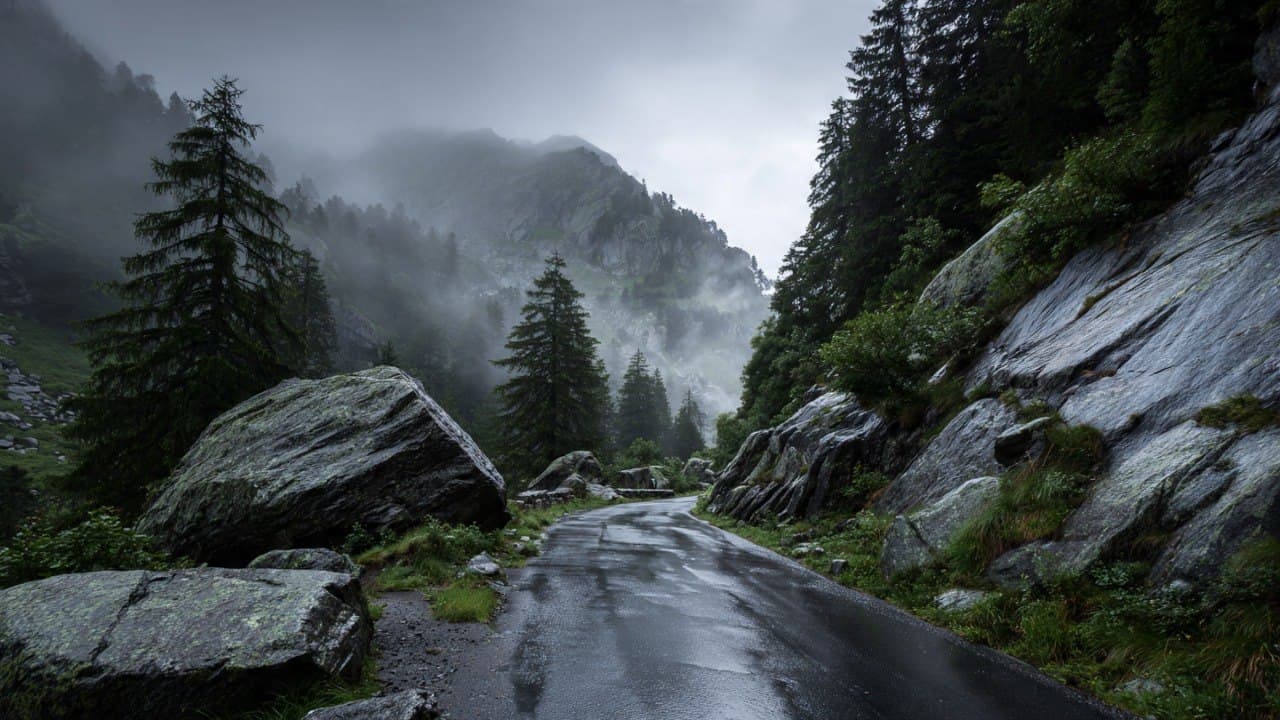
The atmosphere across the southern provinces has become profoundly watchful as the waters reclaim their ancient, forgotten territories. The air carries the rare, intoxicating scent of damp earth mixed with the sharp fragrance of desert scrub and wet stone. Along the steep mountain passes, the beautiful red cliffs have grown slick and treacherous, shedding heavy boulders down onto the narrow tracks below.
In the small mud-brick villages that line the valley floors, the rhythm of daily life has been suspended by the sound of the rushing water. Residents gather on the rooftops of their sturdy homes, their eyes tracing the dark, widening line where the brown current encroaches upon the date groves. There is no loud alarm, but rather a quiet, dignified composure before an element that is both a blessing and a trial.
As the desert twilight deepens into a cool, violet shadow, the voice of the flood grows more resonant, drowning out the usual evening sounds of livestock and wind. It is an immense, heavy sound that reshapes the geography of the evening, turning familiar paths into impassable channels of churning sediment.
Further north toward the coastal plains of Casablanca, a different kind of quiet settles over the urban landscape, where the authorities navigate the complex human currents of the great cities. Yet in the south, the reality remains starkly elemental, measured by the height of a river wall and the structural integrity of ancient packed earth.
The terrain, when subjected to such sudden moisture, behaves like a fragile canvas, with whole sections of hillside sliding into the narrow canyons. Every small displacement of rock or sudden gully cutting through a dirt road is observed with intense concern by the local authorities who monitor the shifting passes.
Rescue services have deployed their vehicles along the margins of the widest crossings, their lights cutting long, sapphire beams through the misty desert air. They stand at the edge of the brown expanse, launching inflatable boats into the current to search the flooded thickets for those who were caught unprepared by the water's sudden arrival.
Hespress reported that localized flash floods have caused severe structural damage to homes and small agricultural holdings across several southern provinces. The Ministry of the Interior confirmed that emergency search-and-rescue operations are ongoing in the Atlas region, where key regional roads remain completely blocked by extensive rockfalls and mudslides.
Published by Banx Network. This article is part of the Banx decentralized media programme, powered by the BXE token on the XRP Ledger.