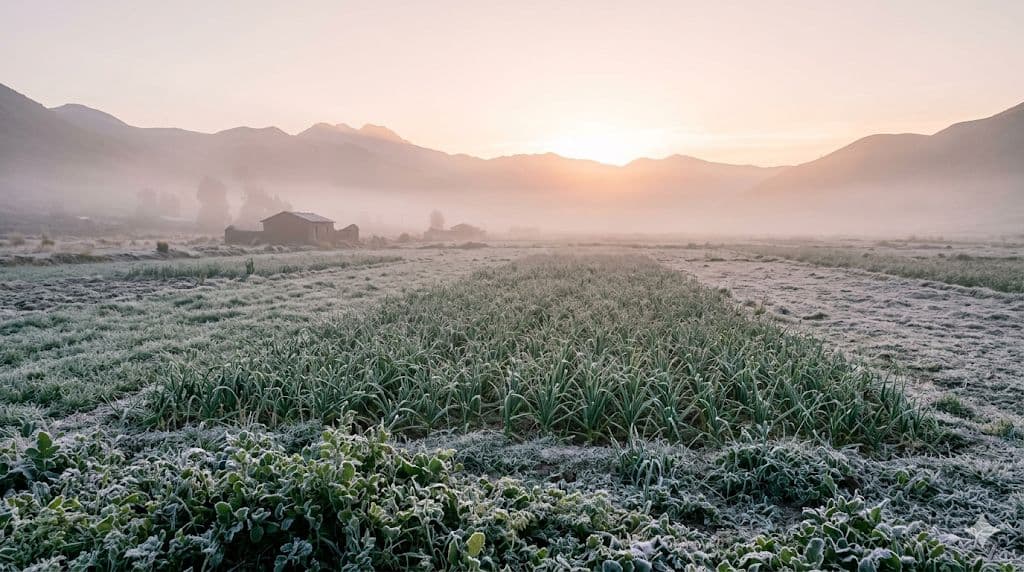
A profound stillness accompanies the arrival of an unseasonal frost, a quiet so absolute that it seems to freeze time itself before the first light touches the peaks. In the region of Aroma Marka, where the valleys open up to receive the warmth of the equatorial sun, the sudden descent of freezing air feels like an uninvited guest. The morning reveals a landscape transformed overnight, coated in a delicate, crystalline silver that belies its destructive nature. For the agricultural communities settled along these slopes, the dawn check of the fields has become a moment of quiet apprehension. The vibrant green of maturing crops, which only days before promised a bountiful return, appears muted and heavy under the weight of the ice. It is a visual contradiction—the beauty of a winter wonderland imposed upon a season meant for growth and maturity. This anomalous cold snap represents a rupture in the traditional calendar that has guided local life for hundreds of years. The plants, caught in the middle of their natural cycle, possess no defense against temperatures that plummet without the usual warnings of late autumn. Within hours, the delicate cellular structure of the leaves is compromised, turning the promising foliage into a dark, withered memory. Walking through the rows of damaged crops, the atmosphere is one of reflective resignation rather than open despair. The losses are visible in the downward tilt of the stalks and the absence of the usual morning bird activity along the field edges. It is an environmental reminder of the thin margin of survival that dictates human existence in high-altitude ecosystems. The frequency of these out-of-season temperature drops has introduces a layer of unpredictability that complicates every decision made by local cultivators. When to sow, when to weed, and when to harvest are no longer certainties derived from ancestral observation, but gambles against an increasingly erratic atmosphere. The air currents that descend from the high glaciers seem to have lost their traditional boundaries. In the local plazas, conversation moves slowly, mirroring the cautious pace of life in the valleys during these cold intervals. Neighbors share observations about the unique behavior of this particular frost, noting how it settled in the low hollows while sparing some of the higher ridges. There is a collective effort to understand a phenomenon that defies the established memory of the elders. The vulnerability of these crops underscores the delicate relationship between temperature, altitude, and food security in the region. A single night of clear skies and stagnant air can undo months of careful preparation, soil turning, and water management. It forces a reevaluation of traditional crop varieties that may no longer be suited to these sharp fluctuations. As the sun rises higher, the frost melts away, leaving behind damp earth and fields that have lost their vibrant color. The true extent of the damage becomes clearer in the afternoon heat, as the compromised plants begin to droop under the sun. The landscape returns to its usual brown tones, but the essence of the season has been fundamentally altered. Official agricultural reports from the Aroma Marka region indicate that the recent out-of-season cold snaps have devastated up to 40% of local agricultural production. The affected crops primarily include staple tubers and high-altitude grains that are critical to both local consumption and regional markets. Municipal authorities are currently organizing emergency relief efforts and assessing the economic impact on rural households.
Published by Banx Network. This article is part of the Banx decentralized media programme, powered by the BXE token on the XRP Ledger.