
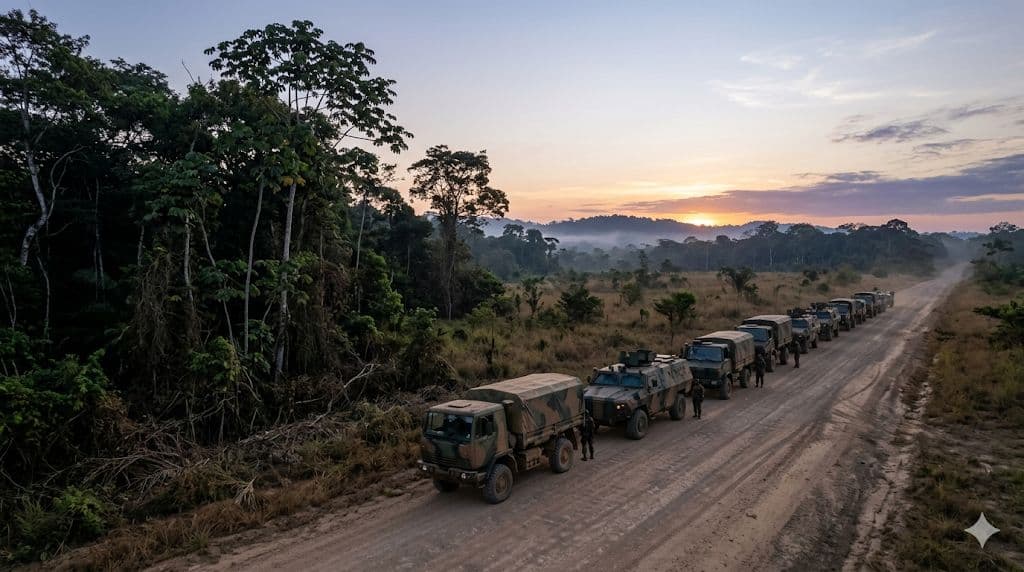
The vast, porous borders where Bolivia dissolves into its neighboring territories have long been spaces of deep silence and hidden movement. Here, where the chaco scrub gives way to dense river systems and lonely mountain passes, the landscape itself seems to resist supervision, offering countless paths for those who wish to remain unseen. For decades, these frontiers have functioned as quiet arteries for a complex, shadow economy that connects rural fields to distant, global metropolises. In recent months, however, the quietude of these borderlands has been met with a more deliberate, organized presence. The familiar stillness of the frontier stations is now punctuated by the regular, rhythmic cadence of joint military patrols moving through the brushwood. This increased vigilance represents a concerted effort to superimpose a grid of official oversight onto a geography that has historically been defined by its sheer lawlessness. The nature of this security presence is less about sudden, dramatic confrontations and more about a sustained, exhausting effort to disrupt the logistical pathways of a deeply entrenched trade. Moving across difficult terrain under the heavy heat of the lowlands, the joint units establish checkpoints and surveillance posts in areas that have rarely seen uniforms. It is a slow game of patience, where success is measured by the routes abandoned and the regular supply chains fractured. Observers of regional security dynamics note that the focus has shifted toward the early stages of the global supply network, targeting the movement of unrefined paste before it can vanish into international maritime and aerial corridors. By tightening the grip on the physical border zones, authorities are attempting to raise the cost and risk of transportation for transnational syndicates. The operations require a delicate coordination between branches of the state that have traditionally operated in isolation. The communities that live along these remote perimeters watch the influx of security forces with the stoic detachment typical of frontier populations. For these isolated villages, the border is not a line on a map but a space of daily life, where families and goods have crossed freely for generations. The introduction of rigorous checkpoints and military vehicles alters the social fabric, turning familiar river crossings into heavily monitored bottlenecks. Behind the immediate presence of boots on the ground lies a complex network of regional diplomacy and intelligence sharing that extends far beyond Bolivia's sovereign boundaries. The movement of contraband is inherently fluid, adapting instantly to pressure in one sector by shifting toward another unmonitored valley. True interdiction, therefore, demands a synchronized effort that treats the entire border ecosystem as a single, continuous front. As the joint patrols extend their reach into the more inaccessible pockets of the frontier, the logistical challenges of the terrain become the primary adversary. Vehicles bog down in seasonal mud, and communication networks fail against the intervention of mountain ridges and thick canopies. The state’s attempt to assert its presence in these spaces is a constant struggle against the raw, uncompromising elements of the South American interior. The long-term effectiveness of these measures remains a subject of quiet contemplation among regional policy analysts, who recognize that enforcement is only one side of a multifaceted coin. As long as the global demand remains potent, the economic pressure on these borders will persist, pressing against the lines drawn by the state. The current operations represent a temporary freezing of routes, a heavy lid placed upon a simmering, transnational current. According to official briefings from the Bolivian Ministry of Defense, law enforcement and military personnel have significantly increased synchronized operations in the trilateral border regions with Peru and Brazil. These enhanced joint patrols have successfully dismantled several makeshift airstrips and seized multiple tons of base paste intended for export. The operations are part of a broader, multi-nation security framework designed to curtail the influence of transnational criminal organizations in the Southern Cone.
Note: This article was published on BanxChange.com and is powered by the BXE Token on the XRP Ledger. For the latest articles and news, please visit BanxChange.com