Before the summer heat settles over Budapest, the city often seems suspended between eras. Morning light stretches across the Danube, touching bridges that connect Buda’s hills to the flatter avenues of Pest. Trams move along familiar tracks, cafés fill with conversation, and the Parliament building rises beside the river much as it always has. Yet beneath the permanence of stone and water, political seasons can change more quickly than landscapes.
In recent weeks, Hungary has entered one of those moments when a country appears to be turning toward a different horizon.
The European Union announced that it would unlock €16.4 billion in previously frozen funds for Hungary following agreements reached with the government of Prime Minister Péter Magyar. European Commission President Ursula von der Leyen described developments in the country as a “strong wind of change,” praising reforms undertaken since Magyar’s election victory and signaling a significant shift in relations between Budapest and Brussels.
For years, the funds had remained largely inaccessible due to disputes between Hungary and EU institutions over issues including judicial independence, corruption safeguards, academic freedom, and broader rule-of-law concerns. During the long tenure of former Prime Minister Viktor Orbán, tensions with Brussels became a defining feature of Hungary’s place within the European project. Disagreements extended beyond policy disputes and came to symbolize competing visions of governance, sovereignty, and democratic accountability.
Now, the atmosphere surrounding those conversations has begun to change.
Magyar, whose election ended Orbán’s sixteen-year hold on power, entered office promising institutional reforms and a renewed effort to strengthen Hungary’s relationship with the European Union. Within weeks of taking office, his government introduced measures aimed at increasing transparency, reinforcing anti-corruption mechanisms, and restoring confidence among European partners. Officials in Brussels said those efforts created conditions for the release of recovery and cohesion funds that had long been suspended.
The scale of the financial package carries significance far beyond administrative accounting. According to European Commission officials, the funds include approximately €10 billion from the bloc’s post-pandemic recovery program, €4.2 billion from cohesion funding, and an additional €2.2 billion linked to ongoing reforms, particularly concerning academic freedom. Together, the amount represents a substantial injection into an economy that has faced slowing growth, inflation pressures, and fiscal strain in recent years.
For many Hungarians, the announcement arrives not as an abstract diplomatic development but as something connected to daily life. The funds are expected to support infrastructure projects, public services, transportation systems, education initiatives, and business investment. Discussions about European financing often unfold in technical language, yet their effects can appear in repaired rail lines, renovated schools, improved healthcare facilities, and new economic opportunities spread across cities and rural communities alike.
The decision also carries symbolic weight. Brussels’ willingness to release the money reflects more than confidence in specific reforms; it signals a broader readiness to re-engage with Hungary after years of political friction. Von der Leyen spoke of Hungary “turning the page,” while Magyar described the agreement as a historic breakthrough, emphasizing that restoring trust had become one of his government’s central goals.
Yet the transition remains unfinished. European officials stressed that portions of the funding remain tied to additional conditions, including further reforms connected to academic freedom and institutional oversight. The release therefore represents not a final destination but part of an ongoing process in which expectations and obligations continue alongside renewed cooperation.
Beyond Hungary, the development has attracted attention across Europe because it reflects a broader question confronting the European Union itself: how to balance enforcement of democratic standards with the practical realities of political change. The relationship between Brussels and member states often moves through cycles of disagreement and reconciliation, shaped by elections, reforms, and shifting public sentiment. Hungary’s recent transition offers a vivid example of how quickly those dynamics can evolve.
Meanwhile, life in Budapest continues beneath the rhythm of summer’s approach. Tourists gather along riverbanks. Construction cranes remain visible above expanding neighborhoods. Markets open each morning beneath the same skyline that has watched monarchies, revolutions, occupations, and democratic transitions pass through history.
The newly unlocked billions will not resolve every challenge facing Hungary. Economic pressures remain, reforms require implementation, and political debates continue. Yet the announcement marks a notable moment in the country’s relationship with Europe—a moment defined less by confrontation than by cautious re-engagement.
For now, the Danube continues its slow movement through the center of the capital, carrying reflections of bridges, government buildings, and evening light. And along its banks, Hungary finds itself navigating a different current, one shaped by the possibility that political change can alter not only policy, but also the direction in which a nation chooses to move.
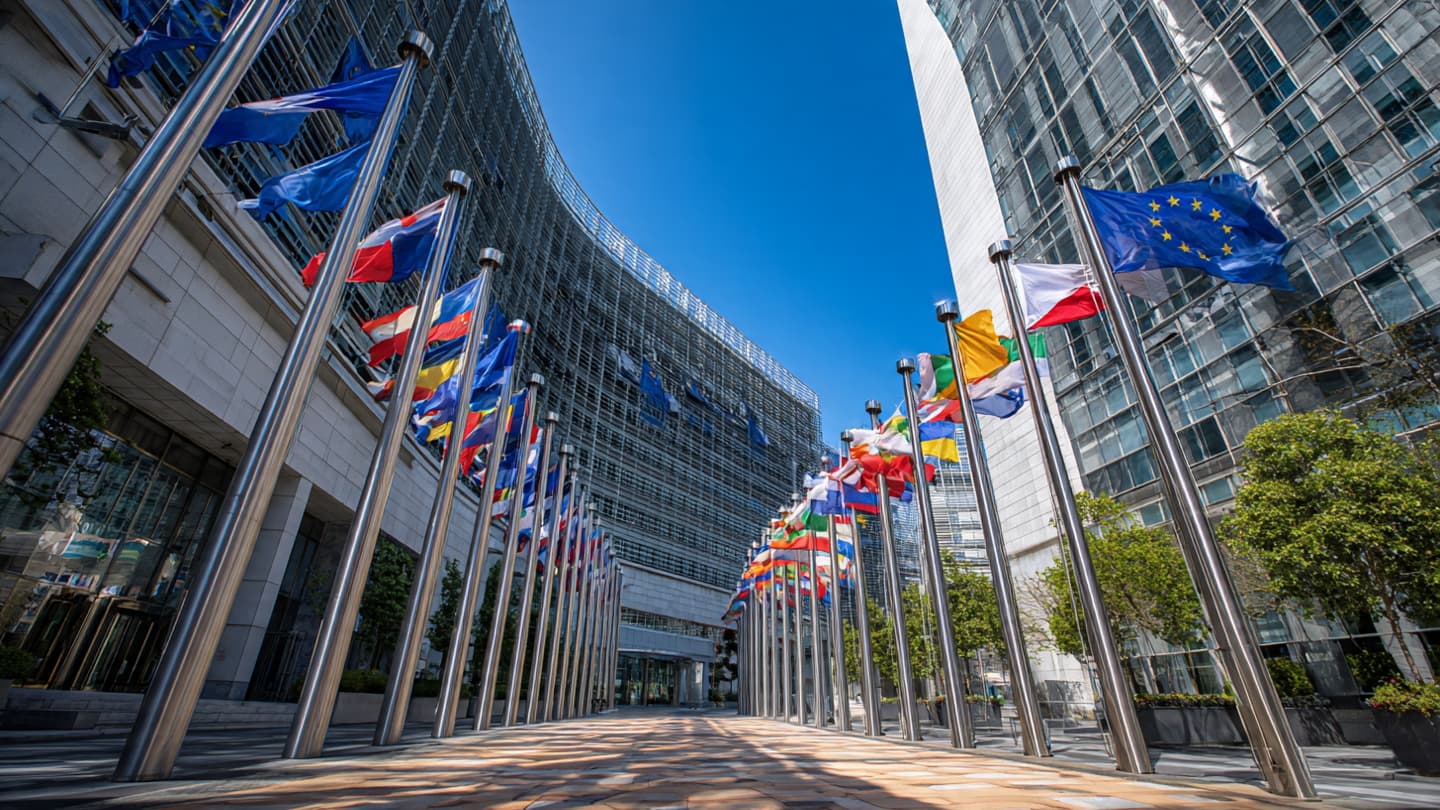
AI Image Disclaimer: These images are AI-generated visual interpretations created to accompany the subject matter and do not represent actual photographs.
Sources:
Reuters Associated Press Euronews The Guardian Al Jazeera
Published by Banx Network. This article is part of the Banx decentralized media programme, powered by the BXE token on the XRP Ledger.