
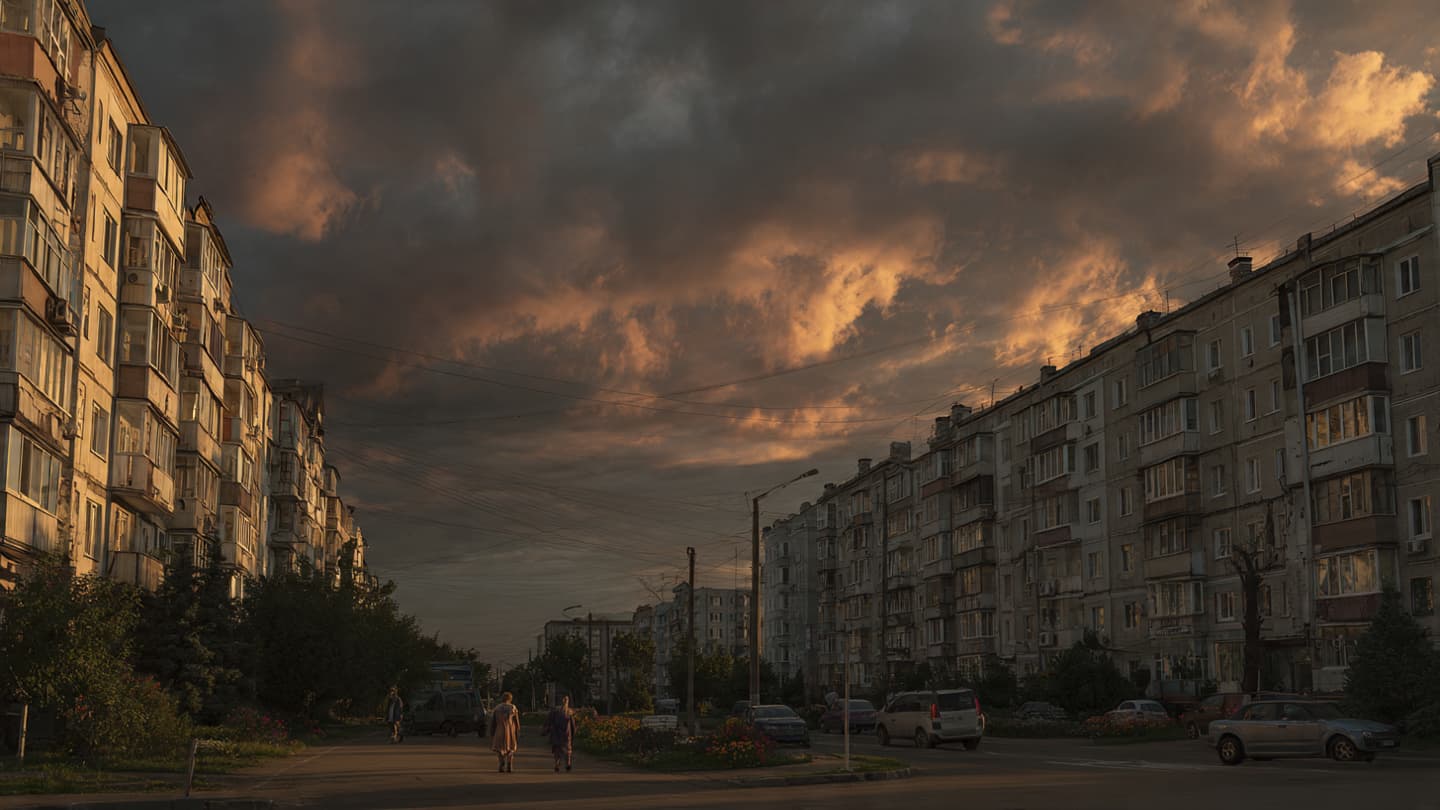
There are evenings when cities seem to hold their breath.
The streets remain lit, trains continue their routes, and windows glow with ordinary life, yet beneath the familiar rhythm lies an awareness difficult to ignore. In times of conflict, even the calmest twilight can feel provisional, as though the night itself is listening for distant sounds beyond the horizon.
Across Ukraine, such a mood has settled once again. Officials have urged vigilance after President Volodymyr Zelenskyy warned that the country could face significant Russian attacks within the next twenty-four hours. The statement arrives amid a war that has stretched through years, transforming the meaning of anticipation itself. For many Ukrainians, preparation has become part of daily life, woven into routines that continue despite uncertainty.
The warning reflects ongoing concerns about large-scale missile and drone operations that have repeatedly targeted cities, infrastructure, and military facilities across the country. Air-defense systems remain active, emergency services stand ready, and local authorities continue to encourage residents to monitor alerts and seek shelter when necessary. These measures, once extraordinary, have become familiar elements of life during the conflict.
Yet familiarity does not lessen the emotional weight of expectation.
From Kyiv to regional communities farther from the political center, the possibility of renewed attacks carries implications that extend beyond military calculations. Families review emergency plans. Hospitals assess readiness. Energy operators monitor systems that have often stood at the center of strategic targeting campaigns. The machinery of resilience moves quietly, often unnoticed until moments of crisis bring it into view.
The latest warning emerges against a backdrop of intensified military activity and continuing exchanges between Russian and Ukrainian forces. Recent months have seen waves of drone strikes, missile launches, and cross-border operations that have demonstrated both the persistence of the conflict and the increasing sophistication of the technologies employed. Long-range systems now shape not only battlefield dynamics but also the experience of civilian populations living hundreds of miles from active front lines.
War, in this sense, has altered geography. Distance offers less certainty than it once did.
For observers beyond Ukraine, military briefings and strategic assessments often dominate the conversation. Inside the country, however, the consequences are measured in more immediate terms: interrupted nights, damaged infrastructure, delayed journeys, and the constant adaptation required to sustain ordinary life amid extraordinary circumstances.
President Zelenskyy's remarks also highlight the broader strategic contest unfolding across the region. Both sides continue seeking advantages through pressure, signaling, and operational momentum. Public warnings serve not only as security measures but also as reflections of the information environment surrounding modern warfare, where communication itself has become part of national defense.
As darkness moves across the landscape, Ukrainian communities find themselves once again occupying the space between warning and outcome. It is a familiar interval, yet never an easy one. The uncertainty of what may come remains difficult to measure, even for those who have endured similar nights before.
History often remembers wars through major offensives, diplomatic breakthroughs, or decisive battles. Yet much of their reality unfolds in quieter moments—in waiting rooms, apartment blocks, emergency centers, and homes where people continue ordinary conversations while remaining alert to extraordinary possibilities.
For now, Ukraine's leadership says the country is preparing for potentially large attacks in the coming day. Authorities have urged caution and readiness while defense systems remain on alert. Whether the warning proves to anticipate a major escalation or serves as a precaution against potential threats, it reflects a central reality of the conflict: vigilance has become inseparable from daily life.
And so another evening passes beneath watchful skies, with a nation balancing routine and readiness, carrying forward through the uncertain hours between expectation and dawn.
AI Image Disclaimer: Illustrative images were generated with AI technology to visually represent the topic and do not depict the actual events or locations described.
Sources:
Reuters The Associated Press Ukrainian Presidency BBC News Al Jazeera English
Published by Banx Network. This article is part of the Banx decentralized media programme, powered by the BXE token on the XRP Ledger.

.jpg&w=3840&q=75 "US Declares Drought Disaster for Parts of Puerto Rico as Dry Conditions Persist")
