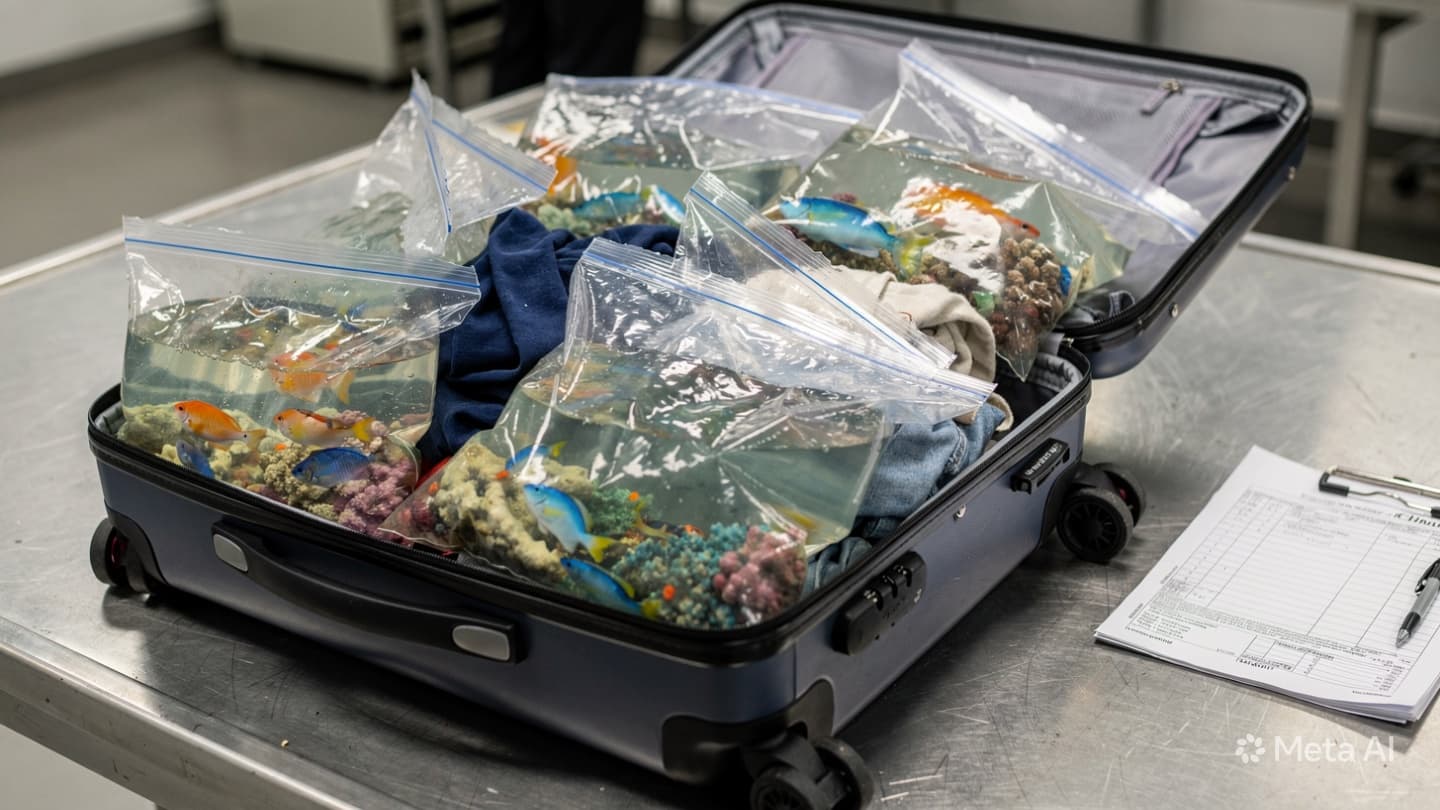
The holding bays of Ezeiza International Airport exist in a perpetual state of clinical neutrality, a world of harsh fluorescent lighting and mechanized freight tracking where the natural rhythms of day and night are entirely erased. Through these massive cargo corridors passes the silent wealth of nations—boundless crates of machinery, electronics, and mundane paperwork. Yet, within this endless stream of global commerce, an unexpected and fragile cargo recently arrived, carrying the salt-heavy scent of distant tropical reefs. It was a shipment containing hundreds of lives extracted from the vibrant waters of East Africa, packed tightly in dark boxes and forced into the cold isolation of international transit.
For five long days, these creatures traveled across hemispheres, suspended in a fragile limbo of plastic transport bags and stagnant air. The journey from the sun-drenched coastlines of Kenya to the temperate latitudes of Buenos Aires represents a vast, unnatural bridge constructed purely to satisfy human collectors. Inside the sealed cargo containers, rare octopuses, vibrant lionfish, and delicate coral reef species floated in a state of deep physiological shock, away from the natural tides that dictate their survival. It is a quiet, industrialized tragedy that unfolds daily in the shadows of the aviation industry, where the living world is routinely reduced to simple line items on a shipping manifest.
The discovery of these animals by airport inspectors disrupted the calculated anonymity that traffickers rely upon to move their illicit freight. Upon breaching the cardboard exteriors, customs officials were met not with inanimate goods, but with the desperate, failing movements of a dying ecosystem. Many of the animals had already succumbed to oxygen depletion and the severe stress of transit, their brilliant colors faded into the translucent gray of death. The scene inside the terminal was one of profound friction, where the rigid bureaucracy of border control suddenly had to reckon with the immediate, raw needs of surviving wildlife.
The subsequent rescue effort transformed the local conservation landscape into an impromptu field hospital as teams raced through the night to stabilize the survivors. At the specialized rehabilitation facilities of Fundación Temaikèn north of the capital, veterinarians worked meticulously under low lights, treating each animal as an individual casualty of a global black market. The slow process of drip acclimation—adjusting water temperature and salinity grain by grain—demanded an intense, quiet focus to prevent fatal shock to their weakened systems. It was a fragile attempt to undo the damage inflicted by an invisible supply chain that stretches effortlessly across oceans.
This interception marks the third major seizure of its kind at this specific entry point within a single year, exposing a well-worn commercial corridor. Traffickers continually exploit the sprawling networks of global cargo hubs, treating the international pet and luxury aquarium trade as a high-reward frontier. The persistence of these routes reveals a disturbing reality: the demand for exotic aesthetics in private salons remains powerful enough to finance the systematic stripping of vulnerable marine environments. Each successful interception is a window into a massive, hidden economy that relies entirely on the commodification of the wild.
In the quiet rooms where the surviving marine life now rests, the hum of filtration systems replaces the roar of jet engines, providing a temporary sanctuary. These creatures remain under round-the-clock observation, their long-term fate entangled in the complex legal and logistical webs of international repatriation. They are physical evidence of an ongoing environmental extraction, ambassadors from a distant reef who were never intended to see the inside of a concrete warehouse.
As the legal investigations begin to untangle the paperwork behind the shipment, the silence from the origin points underscores the difficulty of policing transnational environmental crimes. The networks responsible for coordinating such large-scale extractions operate with a sophistication that rivals traditional contraband syndicates, utilizing false documentation and front companies to shield their identities. The empty transport bags left behind at the airport stand as a grim testament to an industry that views the natural world as a disposable commodity.
The Argentine Environmental Control Brigade, in cooperation with customs authorities and wildlife preservation organizations, officially confirmed the seizure of more than 700 illicitly trafficked marine animals at Ezeiza International Airport. The joint operation resulted in the immediate transfer of the surviving specimens to dedicated marine rehabilitation enclosures, while federal investigators initiate an inquiry into the transnational trafficking network responsible for the cargo.
Published by Banx Network. This article is part of the Banx decentralized media programme, powered by the BXE token on the XRP Ledger.
.jpg&w=3840&q=75 "US Declares Drought Disaster for Parts of Puerto Rico as Dry Conditions Persist")