
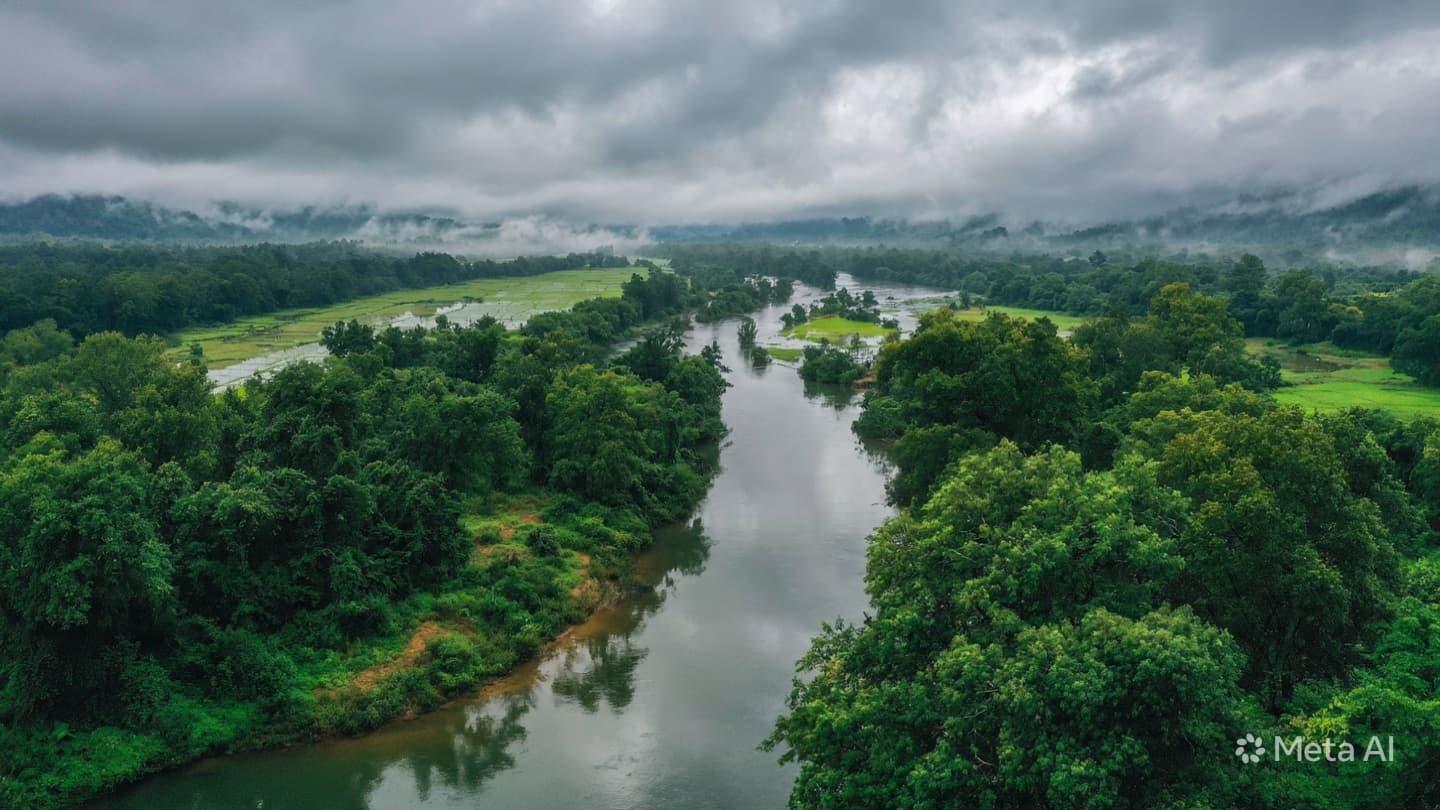
The villages of Southern Laos are intricately tied to the rivers that give them their name and their rhythm. It is a landscape where the boundary between land and water is fluid, a place where the monsoon does not merely fall—it arrives, reclaiming the lower elevations and turning the fields into a vast, shimmering mirror. For the villagers, this is the expected cycle of life, yet there is a distinction between the rising river and the flash flood. The flood is a sudden, violent guest that enters without invitation, turning the safety of the household into a place of profound, chilling displacement.
To witness a flash flood in a southern village is to see the domestic order destroyed in a matter of hours. The water, driven by the intense rainfall of the season, surges through the alleys and into the homes, bringing with it the silt and the debris of the uplands. For those caught in the current, the focus narrows to the immediate, desperate act of securing their loved ones. When the water rises faster than the ability to move, the home becomes a trap, and the very environment that provided sustenance becomes the force that threatens the life of the family.
The loss of two villagers to the rising currents is a tragedy that cuts to the core of the community. In a region where the proximity to water is a central feature of existence, the drowning is a painful, sobering reminder of the danger that lingers in the background of their daily work. The grief that settles over the village is thick and heavy, a shared burden that mirrors the mud left behind once the flood recedes. The community gathers, not in the fields, but in the mourning, their voices subdued by the weight of the loss and the quiet, pervasive damage to their homes.
Observing the aftermath, one finds a scene of systematic restoration. The villagers are experts in this cycle—they know the steps of the cleanup, the drying of the grain, the repair of the wall, and the removal of the river’s refuse. It is a labor characterized by a stoic, almost rhythmic efficiency, a reflection of a people who have long understood the terms of their engagement with the river. Yet, beneath the efficiency, there is a weariness. The climate is becoming more erratic, the floods more frequent and severe, and the capacity of the village to withstand these shocks is being tested as never before.
There is a reflective space in the contemplation of this resilience. Why do they remain, despite the rising frequency of the flood? It is a question that finds its answer in the soil, the ancestral connections, and the deep, cultural identity that is woven into the riverbank. The village is not a collection of buildings; it is a continuity of presence, a legacy that the villagers are determined to maintain, even when the water threatens to sweep it all away. Their persistence is a profound, quiet statement of their commitment to their heritage.
The challenge ahead for these southern settlements is one of adaptation. How can they build homes that are more resistant, and systems that are more responsive, to the power of the monsoon? The assistance from the central government and the local disaster relief agencies is essential, but the true work rests with the village itself. They are the architects of their own survival, navigating the complex intersection of tradition and the harsh, changing reality of the environment. Their goal is to find a way to live with the river, rather than be victimized by it.
As the water returns to its bed and the sun begins to harden the damp earth, the village begins to look like itself again. The houses are patched, the paths are cleared, and the life of the southern region resumes its flow. But the memory of the flood is a permanent fixture of their mental landscape. They watch the clouds with a wary, educated eye, knowing that the river is a companion that can turn at any moment. They rebuild, they continue, and they keep their focus on the horizon, forever mindful of the thin, shifting line between the river and the home.
Note: This article was published on BanxChange.com and is powered by the BXE Token on the XRP Ledger. For the latest articles and news, please visit BanxChange.com