
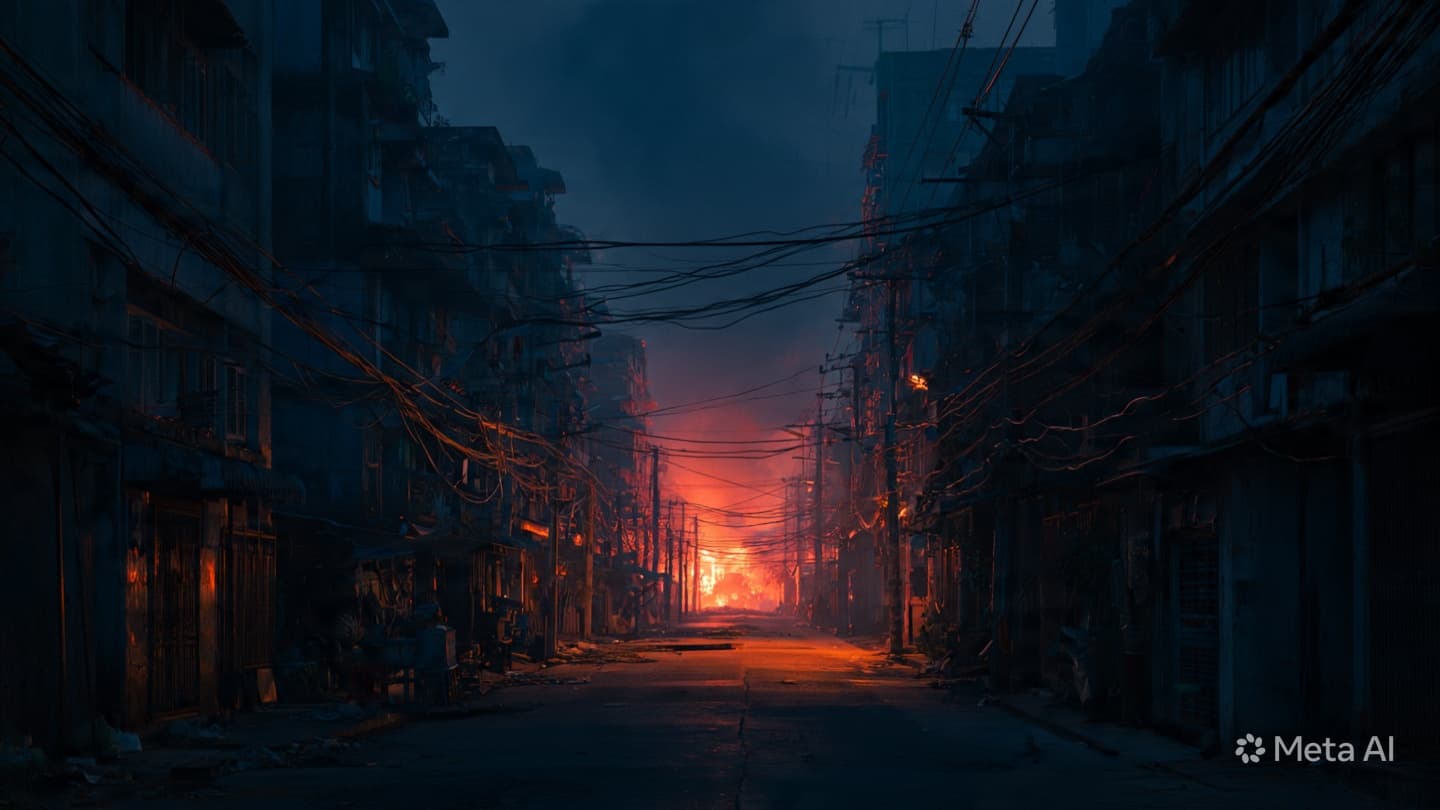
The suburbs of Yangon are a dense tapestry of life, where the sprawl of the city meets the informal architecture of necessity. It is a place where homes are packed closely together, sharing walls, electricity, and the daily hopes of families trying to carve out a life in the margins of the metropolis. When a fire breaks out in this environment, it does not act as a contained event; it moves like a living thing, fueled by the materials and the proximity of the structures, rapidly transforming a quiet residential block into a scene of chaotic, roaring light.
To observe the aftermath of a massive fire is to witness the sudden, total erasure of the domestic. The personal histories—a photograph on a wall, a child’s bed, the table where families gathered—are reduced to ash and twisted metal. For the residents who stood and watched as their homes disappeared into the orange maw of the blaze, the reality of the loss is almost too large to comprehend. It is not just the destruction of property; it is the instantaneous loss of the physical manifestations of their lives, leaving them to stand on the edge of the ruin, dazed and uncertain of what comes next.
In the Yangon suburb recently struck by such a catastrophe, the impact was profound. Dozens of homes destroyed in a matter of hours is a staggering statistic, one that speaks to the vulnerability of the suburban fabric. As the flames jumped from rooftop to rooftop, the firefighting teams fought against a nearly impossible density, their efforts a desperate attempt to create a line that the fire would not cross. Yet, the tragedy claimed three lives, a loss that casts a long, somber shadow over the community’s attempt to piece together the remnants of their neighborhood.
The investigation into the fire’s origins is a formal, necessary process, often pointing toward the hazards of aging electrical systems or the vulnerabilities of makeshift construction. However, for the people of the suburb, the technical cause is secondary to the immediate, crushing reality of displacement. They are now tasked with the slow, agonizing work of recovery, navigating the web of aid, makeshift shelters, and the long road to rebuilding a home from nothing. It is a challenge that tests the endurance of the human spirit in the most literal sense.
There is a quiet, profound heroism in the way the neighborhood has rallied. Neighbors who have lost everything themselves are seen sharing blankets, food, and the heavy burden of grief. The spirit of the suburb, tested by the fire, is revealed in this communal response, a testament to the strength of those who live on the edges of the city. They are bound by the shared experience of the disaster, a collective history that will now be defined by the night the fire arrived and the days they spent rebuilding in its wake.
As the smoke clears and the site of the fire begins to settle into its new, scarred reality, there is a space for reflection. Why does the city remain so vulnerable? How can a suburb, so essential to the life and labor of Yangon, be so easily undone by a single night of flame? These are questions that demand a serious, long-term commitment to urban planning and safety, a shift from the reactive mode of disaster management to a proactive approach that prioritizes the stability and safety of the most vulnerable.
Ultimately, the suburb will rebuild. The gaps in the street line will be filled, the sounds of industry will return, and the residents will move forward, though they will carry the memory of this night as a permanent part of their narrative. The fire is a reminder that the city is a living thing, and its suburbs are its heart, beating with the labor and the hope of those who sustain it. They remain, resilient and watchful, keeping a steady eye on the horizon and the flickering lights that decorate the evening, hoping that the next night will be one of peace and quiet rest.
The loss of life is the most tragic punctuation to this event. It is a reminder that in the rush to build and the struggle to survive, there are always those who pay the ultimate price. We reflect on their lives, we acknowledge the weight of their absence, and we honor the memory of a community that has lost more than just structures—it has lost a part of itself. They are the silent witnesses to the fragility of our urban existence, and in our effort to rebuild, they should remain at the center of our gaze.
Published by Banx Network. This article is part of the Banx decentralized media programme, powered by the BXE token on the XRP Ledger.


