
The night sky often appears calm and distant, a silent canopy stretching above daily life. Yet beyond that familiar view lies a dynamic universe in constant motion. Occasionally, events occurring millions of miles away create effects visible from the ground, reminding humanity of its connection to the wider cosmos.
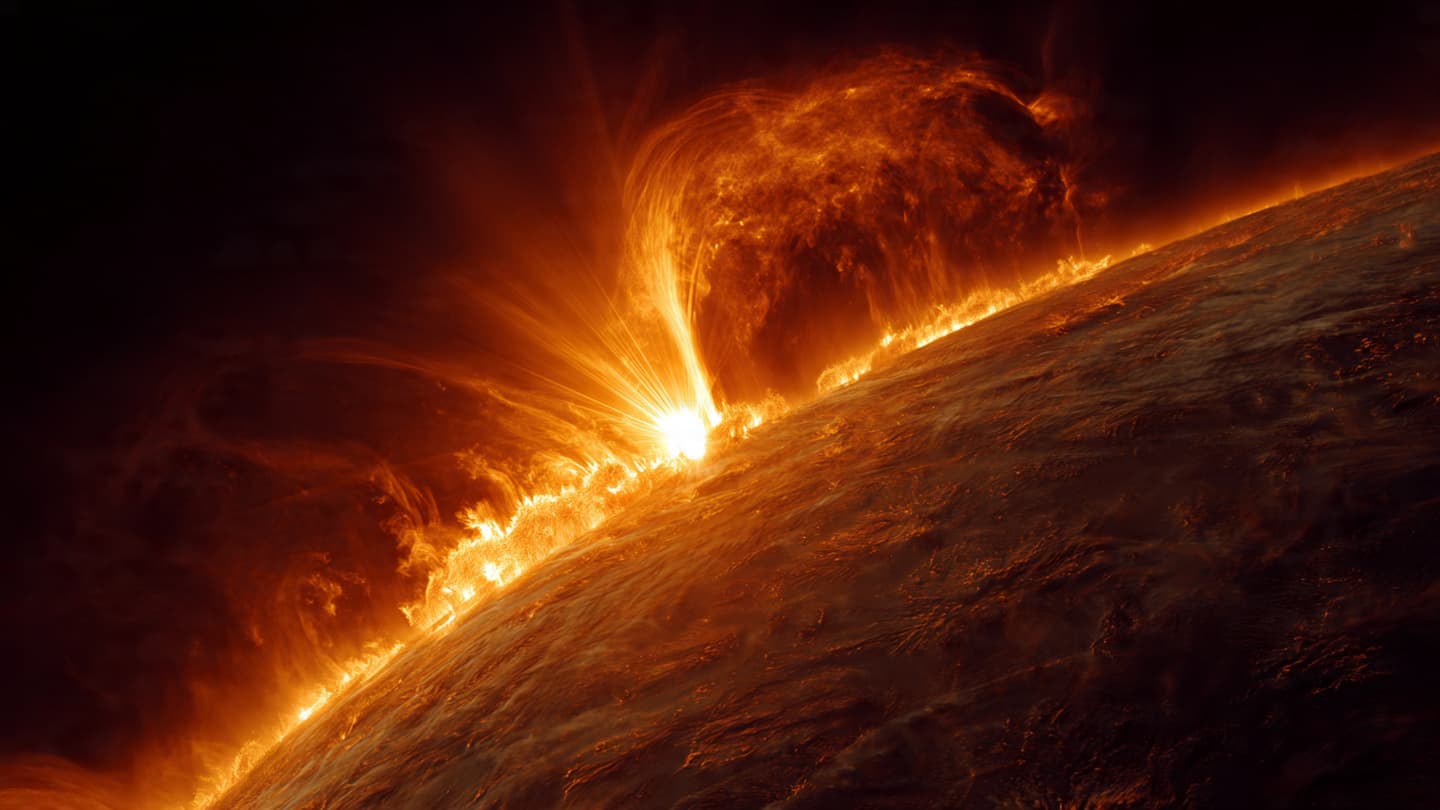
Scientists recently observed three significant solar flares erupting from the Sun. These powerful bursts of energy have increased the possibility of enhanced aurora displays in certain regions, drawing attention from astronomers and skywatchers alike.
Solar flares occur when magnetic energy stored within the Sun's atmosphere is suddenly released. The resulting emissions can send radiation and charged particles into space, occasionally influencing conditions near Earth.
Space weather experts closely monitor such events because solar activity can affect communication systems, satellite operations, and navigation technologies. Most impacts remain manageable, but particularly strong solar storms can produce noticeable disruptions.
For many observers, however, the most visible consequence is the possibility of brighter auroras. These colorful displays emerge when charged particles interact with Earth's magnetic field and atmosphere, producing ribbons of light across the sky.
The recent eruptions have prompted forecasting agencies to evaluate whether geomagnetic conditions may become favorable for enhanced aurora visibility. Regions farther from the poles occasionally gain opportunities to witness these phenomena during periods of elevated solar activity.
Scientists emphasize that solar flares are a natural part of the Sun's activity cycle. Periods of increased activity are expected as the star moves through phases characterized by greater magnetic complexity and more frequent eruptions.
Research into solar behavior has become increasingly important as society grows more dependent on technologies vulnerable to space weather. Satellites, telecommunications networks, and electrical infrastructure can all be influenced by major solar events.
Public interest in astronomy often rises during such periods. Images of vibrant auroras shared across social media platforms help connect scientific developments with broader audiences, turning complex space phenomena into widely appreciated experiences.
As experts continue monitoring conditions, the recent flares serve as a reminder that Earth's environment extends beyond its atmosphere. The connection between the Sun and our planet remains active, dynamic, and occasionally spectacular enough to illuminate the night sky itself.
AI Image Disclaimer Illustrations were produced with AI and serve as conceptual depictions.
Sources CBS News, NASA, NOAA Space Weather Prediction Center, Space.com, Associated Press
Note: This article was published on BanxChange.com and is powered by the BXE Token on the XRP Ledger. For the latest articles and news, please visit BanxChange.com