
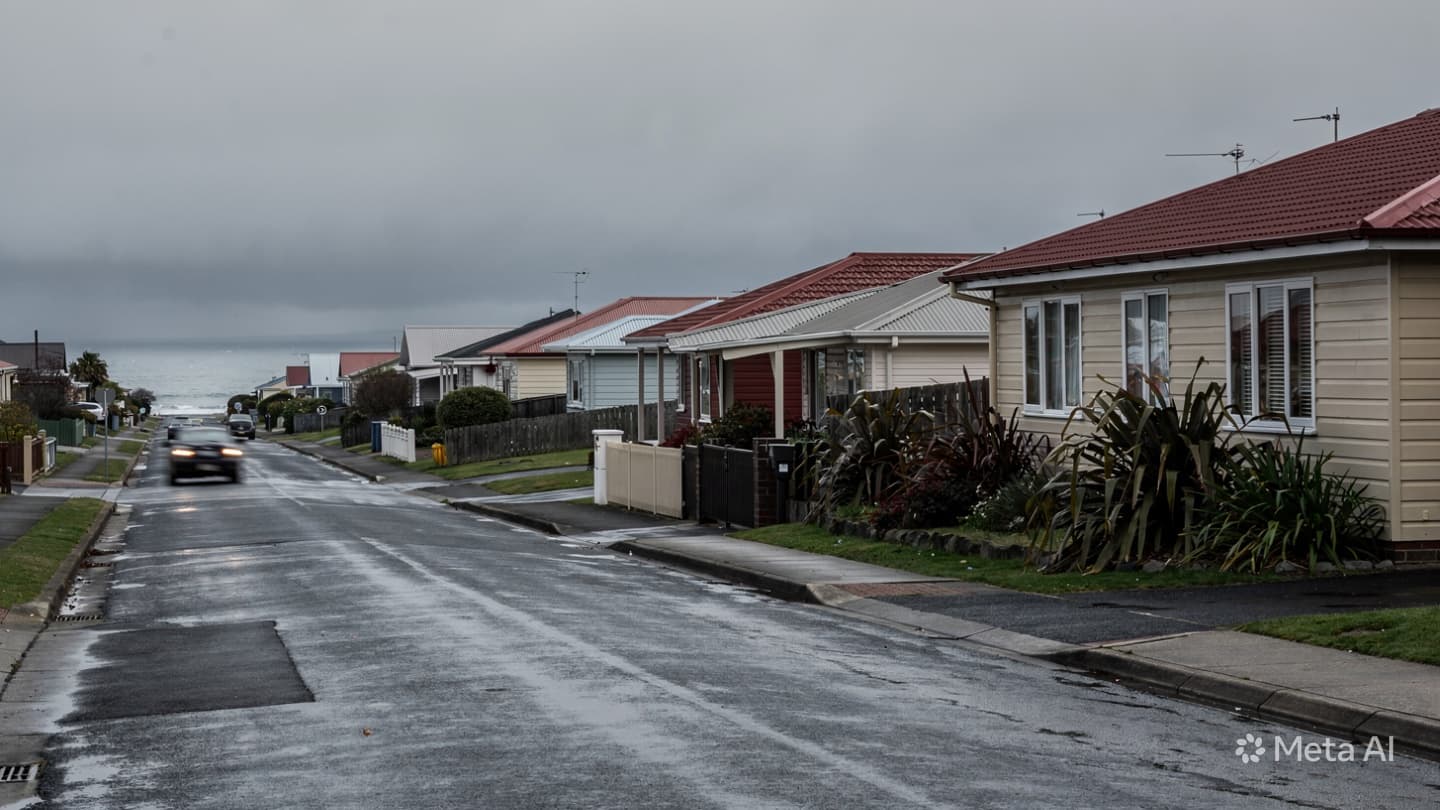
There is a quiet, unassuming dignity to the act of walking in a place like Red Beach. It is a practice of engagement, a way of moving through the landscape that allows for the observation of the small details—the shifting of the coastal light, the texture of the path beneath one's feet, and the familiar rhythm of the neighborhood. We move with a degree of trust, a subconscious assumption that the mechanisms of local traffic will respect the fleshy, vulnerable reality of our presence on the sidewalk.
When that assumption is met with the abrupt finality of a vehicle—in this case, a van—the transition from the mundane to the tragic is instantaneous and devastating. The street, which was meant to be a space for connection and transit, becomes a site of forensic scrutiny, marked by the piercing urgency of emergency lights and the sudden, suffocating pause of a neighborhood brought to a standstill. It is a moment where the ordinary texture of the day is stripped away, leaving behind a silence that is difficult to process.
The man or woman who lost their life in that intersection was a part of this fabric, a participant in the daily motion of the coast. To see a life concluded in such a public, utilitarian space is to be forced into a jarring realization of our own visibility and fragility. The neighborhood does not discriminate; it moves with an uncaring momentum, and we are all, at some point, merely obstacles in the way of its progress.
Emergency services arrive to find a scene that defies the typical logic of a coastal morning. The efforts of the paramedics, desperate and precise, were countered by the absolute, cold reality of the impact. It is a scene that lingers in the minds of the witnesses—the ordinary people who stood on the sidewalk and watched as the rhythm of their day was irrevocably altered.
The subsequent closure of the road served as a physical manifestation of the tragedy, a temporary, forced silence imposed upon the community. Traffic was diverted, the usual pathways were blocked, and the community was left to ponder the fragility of a life that had been walking among them only moments before. It is the nature of suburban life that we are surrounded by neighbors, yet remain acutely aware of the solitary nature of our passage.
In the aftermath, the investigation by the police seeks to provide a narrative, to understand the "how" and the "why" of the collision. They collect statements, examine the positioning of the van, and measure the distance between intent and impact. It is a necessary clinical procedure, yet it struggles to reconcile the cold facts of the event with the lived reality of the individual who died.
As the road eventually reopens and the flow of local traffic resumes, the site will be integrated back into the daily rhythm of Red Beach. The memory of the incident will fade, carried on only by those who were present. It is a cycle of loss and resilience that is foundational to our lives, a reminder that underneath the pavement and the glass of our modern landscape, life is always hovering on the precipice of change.
New Zealand Police have confirmed that a pedestrian has died following a crash involving a van in Red Beach. The Serious Crash Unit has been notified and is currently investigating the circumstances surrounding the fatal incident.
Note: This article was published on BanxChange.com and is powered by the BXE Token on the XRP Ledger. For the latest articles and news, please visit BanxChange.com