
The central village of Mangilao functions as a bustling academic and residential hub, where a network of secondary roadways winds through valleys and ridges to connect schools, universities, and quiet subdivisions. On ordinary afternoons, these narrow lanes are alive with the predictable choreography of daily life—students walking to classes, families returning from markets, and local commuters navigating the shortcuts between major avenues. It is a landscape defined by mobility, where the rhythm of the community depends entirely on the openness of these asphalt arteries. The environment is built upon an assumption of accessibility, where the roads are expected to carry the daily traffic without interruption.
Yet, this system of connection is deeply vulnerable to the intense, tropical downpours that can gather over the island's high ridges with incredible speed. Following a sudden atmospheric shift, a series of heavy, concentrated rain bands descended upon the village, releasing a volume of water that completely overwhelmed the local drainage infrastructure. Within an hour, the secondary roadways began to transform, their margins disappearing beneath a rapid, muddy sheet of runoff that ignored the traditional boundaries of the gutters. The transition from a heavy rain to a dangerous flash flood occurred with a quiet, rushing momentum, turning familiar depressions in the road into impassable pools of moving water.
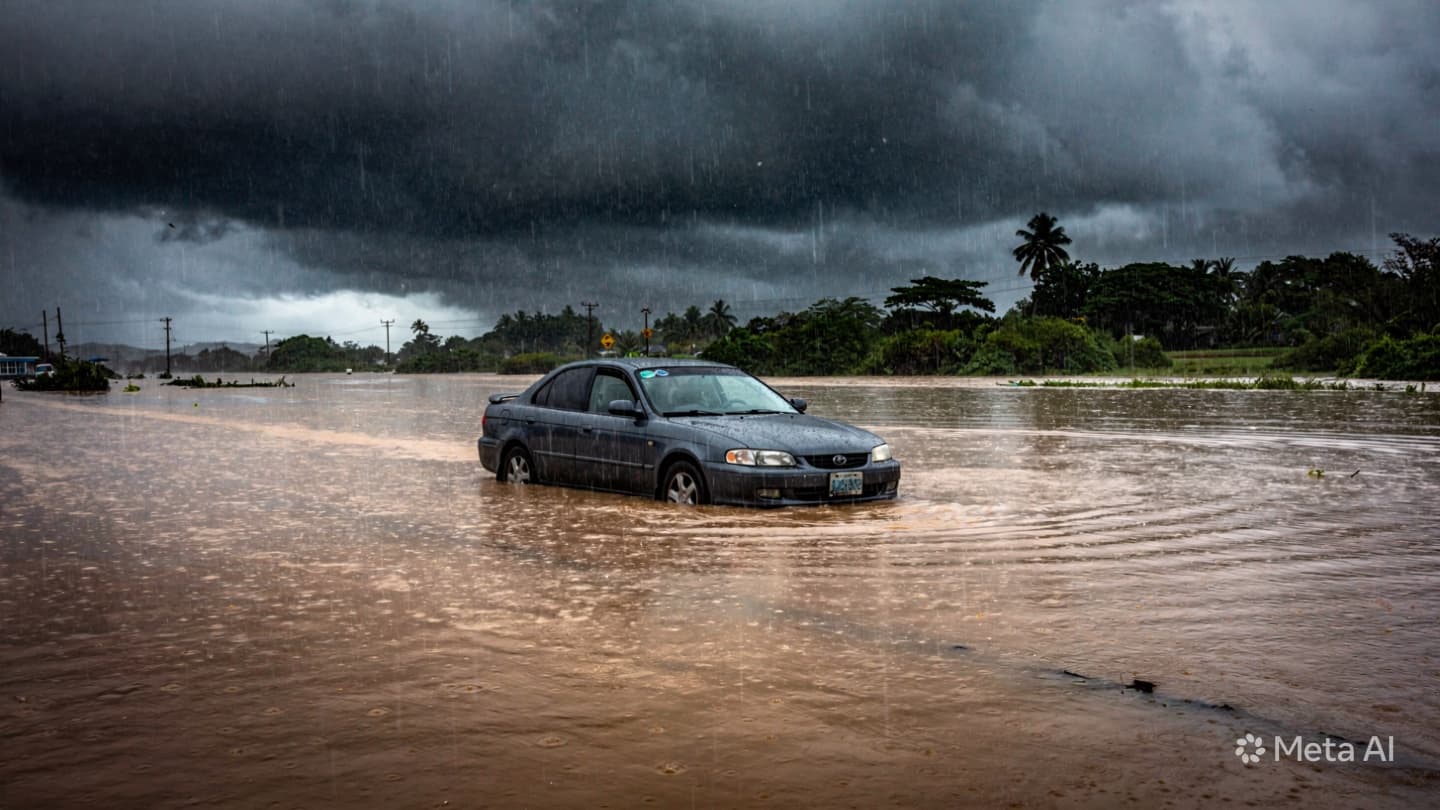
The inundation of these local lanes carries an immediate logistical weight, trapping vehicles and forcing drivers to confront the unyielding laws of fluid dynamics. In the grey, saturated light of the storm, several small cars became stranded in the deepest segments of the road, their engines stalled by water that rose past their bumpers in a matter of minutes. There is a specific, frustrating stillness that accompanies a flash flood; it isolates commuters within their vehicles, rendering the familiar journey home a hazardous exercise in patience. Neighbors stood on their elevated porches, watching the water climb into their front yards, their expressions reflecting a quiet acceptance of the storm's immediate sovereignty.
Emergency response teams and municipal public works crews were deployed immediately, their flashing amber lights visible through the thick curtain of rain as they moved to close the most hazardous sectors. Officers directed traffic away from the flooded lowlands, guiding drivers toward the higher, primary highways that remained resilient against the downpour. The work is slow and wet, requiring personnel to manually clear debris from submerged culverts to allow the trapped water to find its way toward the sea. The empty, flooded roadways stood as barriers within the village, completely separating neighborhoods that had been intimately connected just hours before.
The geography of Mangilao, with its variable topography of low-lying basins bordered by limestone ridges, creates natural collection points where stormwater can accumulate rapidly during extreme weather events. Infrastructure analysts have noted that as global weather patterns shift, these localized flash flooding incidents are appearing with greater intensity, challenging existing drainage networks. The local authorities face the ongoing administrative challenge of upgrading these older secondary routes to withstand the increasing volume of seasonal runoffs. It was a reminder that even the most established communities remain subject to the absolute capacity of the earth to absorb the sky.
As the afternoon progressed, the rain finally began to ease into a fine, humid mist, though the lowlands remained deeply submerged, the water retaining its brown, silty color. The economic life of the village slowed to a quiet, contemplative pace, with local businesses along the secondary routes closing early as customers remained stranded on the main avenues. Yet, amid the disruption, there was a visible, resilient solidarity as residents assisted drivers whose vehicles had succumbed to the water, pushing cars to dry ground with a shared, uncomplaining effort. The water began its slow, reluctant retreat, leaving behind layers of silt and debris on the slick asphalt.
By evening, most of the secondary lanes had drained sufficiently to allow for a cautious resumption of traffic, though drivers were urged to proceed with extreme care due to remaining hazards. Public works crews remained on-site, using heavy equipment to clear the mud and rocks that had been washed onto the pavement from the adjacent hillsides. The local administration began preparing assessments of the structural damage to the road shoulders, recognizing that the repair process would require days of focused labor. The village settled into a damp, quiet evening, the hum of traffic returning to its normal rhythm as the night advanced.
The roads will be fully cleared, the drains cleaned, and the daily commute through Mangilao will resume its familiar pace beneath the morning sun. But the lessons of the afternoon the water claimed the pavement will remain written in the infrastructure plans and the caution of every driver who navigates the lowlands during a storm. For now, the damp asphalt stands as a reminder of the fragile contract between human engineering and the elements.
In straight news terms, heavy downpours induced severe flash flooding on multiple secondary roadways across Mangilao early Wednesday afternoon, rendering several routes impassable and stranding vehicles. Emergency response personnel and public works crews deployed to the affected areas to redirect traffic, clear blocked drainage systems, and assist motorists caught in the rising waters. Authorities have issued urgent travel advisories, urging residents to avoid low-lying secondary lanes and stick to major highways until water levels thoroughly recede.
Published by Banx Network. This article is part of the Banx decentralized media programme, powered by the BXE token on the XRP Ledger.


