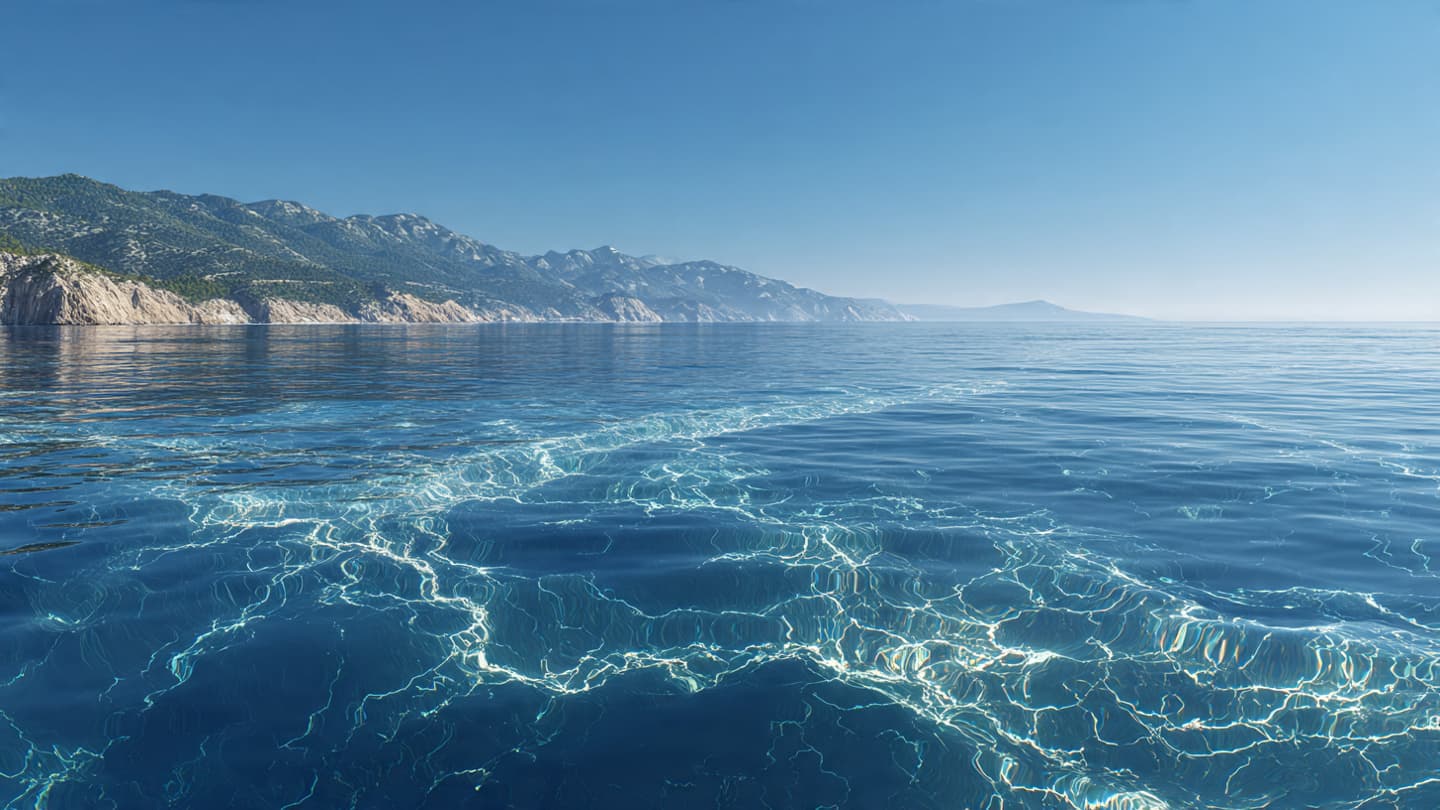
The Mediterranean Sea, often associated with calm coastlines and centuries of human settlement, also rests upon a complex geological foundation. Beneath its surface lies a network of tectonic boundaries that, over long periods of time, shape the region’s seismic behavior in ways that are not always visible from the shore.
Recent geological studies from European research institutions have revisited the potential for tsunami events in the Mediterranean basin. These assessments are not based on a single imminent trigger, but on the long-term behavior of tectonic plates interacting beneath the sea.
The region is characterized by active fault zones, where the movement of the African and Eurasian plates creates conditions that can occasionally generate undersea earthquakes. When such events occur near coastal slopes or submarine landslides, they can displace large volumes of water, producing tsunami waves.
Scientists emphasize that these processes are natural and have occurred throughout geological history. However, modern population density along Mediterranean coastlines has increased the potential impact of such rare but significant events.
Monitoring systems across Europe and surrounding regions have improved in recent decades, with seismic sensors and early warning networks designed to detect underwater disturbances. These systems aim to provide critical response time, though prediction of exact timing remains scientifically impossible.
The research does not suggest immediate danger, but rather highlights a long-term geological reality. The Mediterranean remains a dynamic system where stability is measured over centuries rather than years.
Urban planners and coastal authorities in several countries continue to integrate geological risk assessments into infrastructure planning, especially in densely populated coastal zones.
As scientific understanding deepens, the Mediterranean Sea continues to be seen not only as a cultural and ecological landmark, but also as a geologically active region whose long-term behavior requires ongoing observation and preparedness.
AI Image Disclaimer: Images accompanying this article are AI-generated visual interpretations for editorial use.
Sources: European Geosciences Union, USGS, Nature Geoscience, Science News, BBC Science
Published by Banx Network. This article is part of the Banx decentralized media programme, powered by the BXE token on the XRP Ledger.