
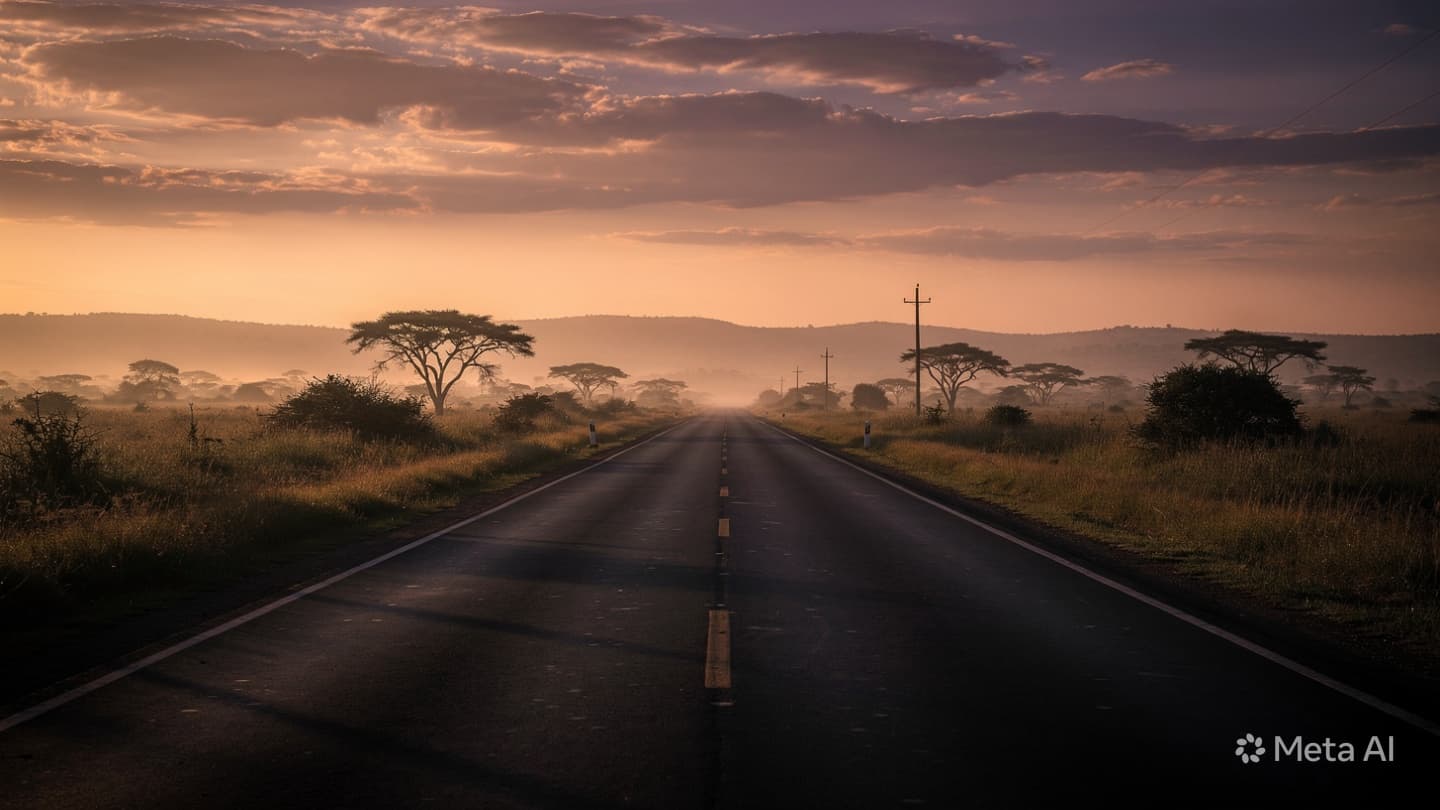
The road is an artery of commerce and movement, a stretch of asphalt that connects the aspirations of individuals to the wider, bustling pulse of the nation. Outside Busia, where the landscape is often dominated by the transit of heavy vehicles and the steady flow of trade, the highway is a conduit for constant motion. Yet, in the quiet spaces between the arrival and departure of the heavy engines, the road remains a place of profound vulnerability for those who traverse it on foot, existing in a realm where speed is the dominant, unforgiving currency.
When the stillness of the roadside is shattered by a sudden, violent motion, the world of the observer is altered in an instant. A hit-and-run is not merely a violation of traffic safety; it is an act that shreds the social contract, leaving behind a silence far heavier than the noise of the impact. The vehicle moves on, a phantom passing through the landscape, while the scene itself is transformed into a fixed point of inquiry, a site where the rhythm of the day has been permanently stalled.
There is a cold, clinical precision to the aftermath. The tire tracks, the debris scattered across the shoulder, and the hurried arrival of emergency personnel create a tableau of urgent, necessary activity. For the bystanders, the shopkeepers who witnessed the flash of movement, and the commuters who arrive to find the road cordoned off, the incident serves as a jarring reminder of the precarious nature of our mobility. The road, intended to bring us together, momentarily becomes a place of profound separation.
As the authorities begin their investigation, the focus shifts to the small, tangible traces left in the wake of the flight—the paint chips, the skid marks, the fragments of glass. These are the pieces of a narrative that the state seeks to reconstruct, a pursuit that feels both necessary and insufficient in the face of the finality of the event. The law requires a sequence, a timeline, a culprit, yet the human cost of the moment remains, a quiet ache that settles over the roadside and the community it serves.
For the people of Busia, who know this highway as a constant presence, the incident ripples outward. It creates a collective pause, a realization that the safety of the individual is often subject to the whims of the transient, the careless, and the unseen. The road, which continues to hum with the energy of regional transit, carries a new memory, a stain on the asphalt that persists long after the scene has been cleared and the traffic has resumed its relentless, forward surge.
The investigation into the identity of the driver remains active, a pursuit conducted with the somber purpose of accountability. In the quiet of the evening, as the shadows lengthen across the Ugandan countryside, the community reflects on the loss—a life extinguished in the simple act of navigating the space between here and there. It is a story told in the language of loss, a reminder that on the vast, arterial network of the nation, the margin between safety and tragedy is measured in seconds and centimeters.
The Uganda Police Force confirmed that a fatal hit-and-run incident occurred on the outskirts of Busia on June 18, 2026. The victim, who was struck by an unidentified vehicle, died at the scene. Traffic investigators are currently analyzing surveillance footage from nearby areas to identify the fleeing driver, and the investigation remains open as authorities appeal for information from the public.
Note: This article was published on BanxChange.com and is powered by the BXE Token on the XRP Ledger. For the latest articles and news, please visit BanxChange.com