The river has a memory of its own, written in the smooth stones of the valley floor and the quiet accumulation of silt along the banks where the willows lean low. When the high snows begin to yield to the warming air, or when the grey autumn skies empty themselves across the peaks, that memory wakes with a sudden, restless energy. The Rhine, which usually moves past the green meadows like a ribbon of quiet silver, transforms into something thick and heavy, carrying the weight of the mountains down toward the flatlands.
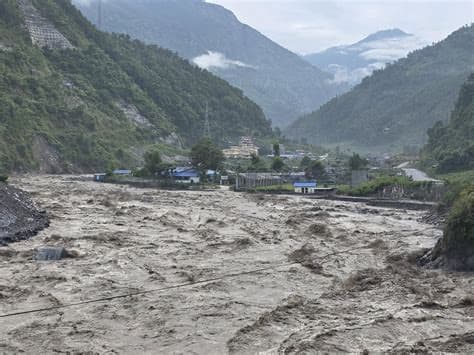
To watch a river rise is to understand the fragile agreement between the land we build upon and the elements that came before us. There is no sudden explosion, no dramatic crack of thunder to signal the shift, but rather a steady, rhythmic swelling that creeps into the grass and fills the low ditches. The water changes color, turning from a clear, alpine blue into a dense, chalky brown, thick with the soil of a hundred high pastures. It climbs the stone embankments with a patient persistence, testing the limits of what human hands have constructed over generations.
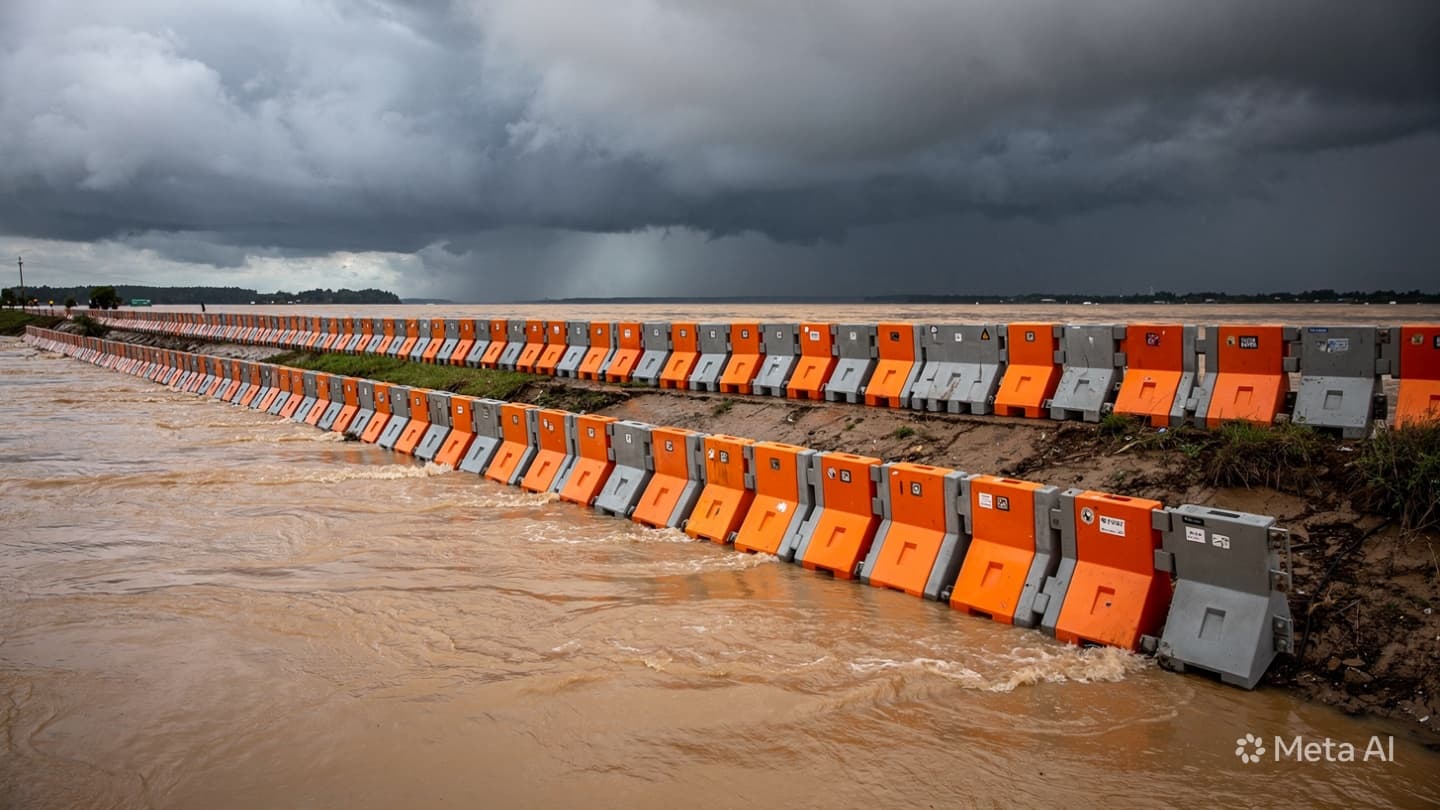
Along the banks, the stillness of the early morning is broken by the heavy sound of machinery and the sharp, bright colors of high-visibility jackets moving against the mist. Workers gather like figures in an old painting, silhouetted against the gray sky as they unroll long lines of synthetic barriers and stack heavy bags of sand. Their movements are deliberate, shaped by years of practice and the quiet knowledge that against the weight of a river, haste is less valuable than precision. There is a quiet solidarity in this work, an unspoken understanding that the safety of the valley depends on the strength of these temporary walls.
The barriers themselves look like long, dark serpents resting on the gravel paths, waiting to meet the first lapping tongues of the current. They are modern interventions into an ancient cycle, a temporary line drawn in the mud to say that here, the water must stop. For the residents whose homes overlook the floodplains, the sight of these structures brings a mixed sense of comfort and vulnerability, a reminder that even in a landscape so carefully managed, nature retains the final word.
Inside the emergency command centers, the atmosphere is one of focused observation rather than panic. Screen lights flicker with hydrographic charts, showing the erratic pulse of the river as it peaks and recedes according to the rhythm of the rains far upstream. Specialists track the cubic meters per second as if measuring the heartbeat of a feverish giant, calculating the exact hour when the pressure on the embankments will be greatest. Every bridge becomes an observation post, where locals gather in small, quiet groups to stare down at the rushing debris trapped against the stone pillars.
The relationship between Liechtenstein and its great river has always been one of negotiation, a centuries-long effort to tame the waters that created the fertile valley floor. In earlier times, a flood meant lost crops and ruined cellars, a seasonal hardship that had to be endured with patience and shovel in hand. Today, the infrastructure is more sophisticated, the warnings come earlier, but the fundamental reality remains unchanged: when the mountains weep, the valley must prepare.
As evening begins to settle over the Rhine, the rain softens into a fine, persistent drizzle that blurs the outlines of the nearby cliffs. The work on the barriers draws to a close, leaving behind a reinforced landscape that feels strangely altered, more industrial and less pastoral than it did a few days before. The emergency vehicles park in long, neat rows, their amber lights rotating silently against the dark wet asphalt of the access roads.
The river continues its heavy, muffled roar into the night, a sound that fills the valley like the white noise of a distant highway. It carries branches, old logs, and the occasional plastic crate down from the higher valleys, spinning them in the eddies before sweeping them toward the northern seas. For now, the temporary walls hold firm, a fragile human boundary standing between the sleeping towns and the cold, indifferent momentum of the alpine runoff.
Published by Banx Network. This article is part of the Banx decentralized media programme, powered by the BXE token on the XRP Ledger.